
Your phone taught you how every camera thinks. The next camera just gives you more room to do it.
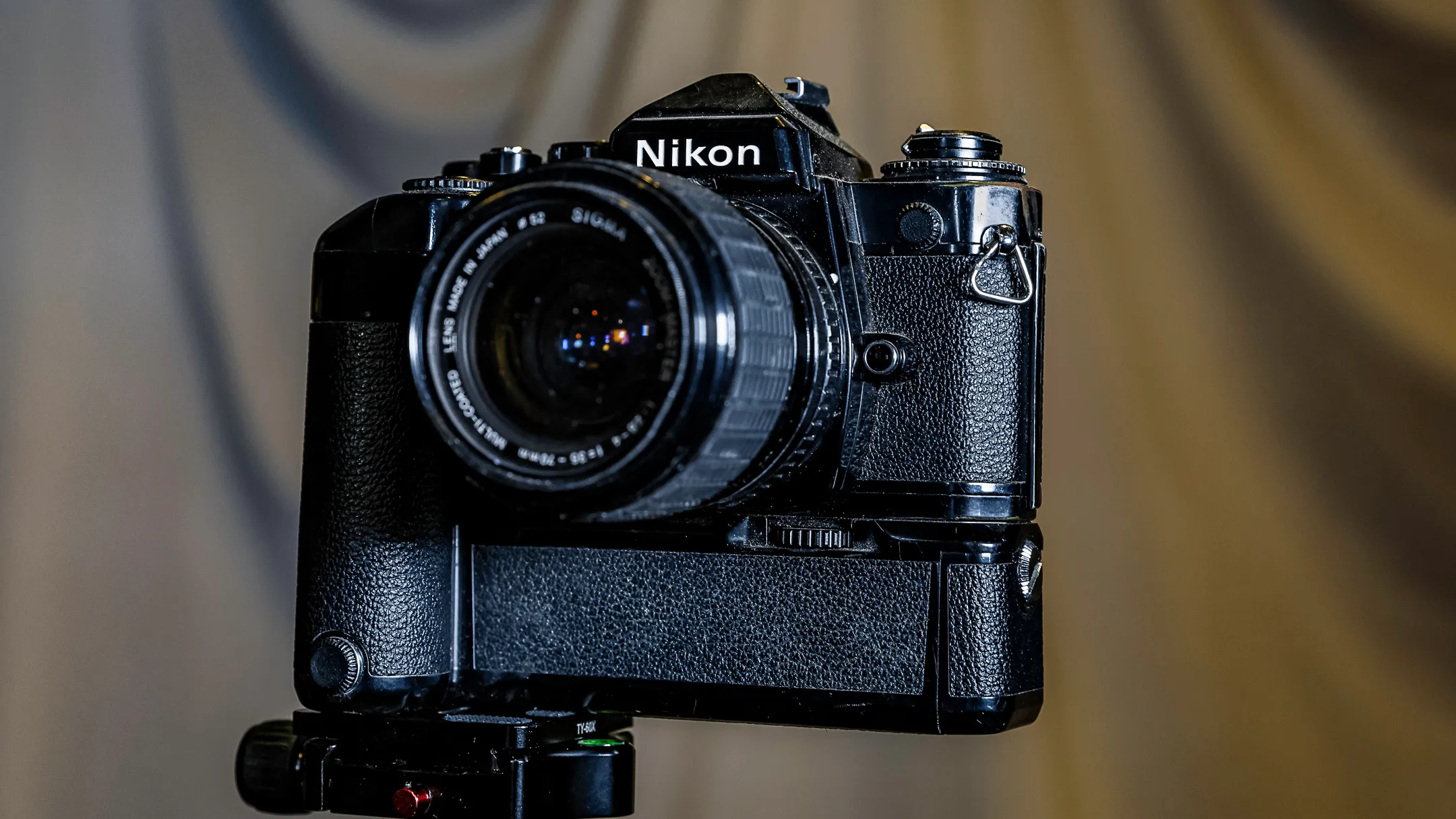
In 1971 I was ten. My camera unboxing was not a social media video. It was a big cardboard box, already open, with about twenty items inside. Three of them changed my life. A hand-me-down Nikon F. A 50mm Nikkor lens. A worn leather strap.
It felt like pulling the sword out of the stone. I remember the worn metal corners, how smooth the film advance lever was, and a flap door in the back that showed me where the magic happened.
For the next fifteen years I figured out what everything did. I wasted a lot of film doing it. When that got too expensive, I started a lawn mowing business to pay for the film.
Somewhere in there I picked up something that’s mostly gone now. Every frame was precious, 24 or 36 to a roll. So I built a checklist of decisions and ran it before the camera ever came up. It’s the same routine I teach now as SAKI. In my film days I quickly learned you don’t shoot first and then ask questions while staring at a blurry or overexposed print I paid for. The technology has changed a lot. I still shoot with intention.
The Miss
Most beginners think a big camera is a harder camera. More buttons. More dials. A manual as thick as a phone book. So they wait. Or they buy one and leave it on the green auto box for a year.
That’s the miss. They think the skill lives in the camera. Mine didn’t. It lived in the decisions.
The Lesson + Lab
Think about your journey in this unit. It started with finding out whether your phone had a manual mode. Then you built repeatable techniques, one at a time.
Your phone was picking the shutter speed, and you found out you can control it yourself. It was picking ISO, and you changed that. It was deciding how bright the frame should be, and you changed the exposure too.
Every one of those decisions has a home on a big camera. Shutter speed is a dial. ISO is a button or a menu. White balance is a setting you already know how to decide before you shoot. Exposure compensation is a dial I touch constantly on my Canons. Same decision. Different hardware.
Nothing you learned gets thrown out. The tool changes.
What the phone couldn’t give you
You hit some walls. In the Photo Lab we call them tradeoffs. They’re always useful, file them away.
Most phones have a fixed lens opening, so the aperture mostly stays put. Your feet did more for the background than any setting. Portrait mode fakes more of it in software, which is the question that opened Unit 7. The sensor is small, so it catches less light and noise shows up sooner in low light. (ISO noise. That’s texture baby. Now you know why it’s there and how to manage it.)
A bigger camera expands those tradeoffs. Bigger sensor, and bigger pixels on it, even at the same megapixel count. The right lens for different jobs. And an aperture you control, the way the iPhone 18 Pro now does in four steps, but with the lens you choose.
You didn’t outgrow your phone. You learned to run it.
The Photo Lab
Lab: Try This
Shoot something that moves, once, with everything you took back. Then ask yourself one question. What did I want that my phone wouldn’t give me?
If you can name it, that’s your reason for the next camera. If you can’t, keep shooting the phone. It’s not holding you back.
Reflection + CTA
That checklist is time tested. It took me fifteen years and a lot of film to build. You built yours on a phone, for free. That’s why you’re more ready for a big camera than you think.
Used, hand-me-down or new, doesn’t matter. Build on the techniques you’ve learned and shoot with intention.
Next up, you’ve just unwrapped it, unboxed it, put the strap on. Now what? Unit 8 starts with the camera in your hands. A hand-me-down DSLR, a starter mirrorless, even one you rented for the weekend. We’ll find where your phone settings went on the body, and why how it feels in your hands matters more than the name on the front.
Sources:
- Resolution and Light Sensitivity Tradeoff with Pixel Size, Farrell, Xiao and Kavusi, SPIE 2006
- Roadmap for CMOS Image Sensors: Moore Meets Planck and Sommerfeld, Catrysse and Wandell, SPIE 2005
- The Limits of “Computational Photography,” Will Yager, PetaPixel
- Digital Cameras: Does Pixel Size Matter?, Roger N. Clark, Clarkvision
- Apple Gives Photographers More Control With the iPhone 18 Pro, Fstoppers
Trust it. Trust yourself.
-TMac #shooton
