
First thing I do walking into a gym I haven’t shot before, before the ball’s even out, is walk the room. Where are the lights? Where do they overlap? Where’s the one corner where it’s mostly one thing instead of three things arguing?
Most people never do that. They plant themselves courtside, hit record, and wonder why the video looks sick mostly orange in one clip, yellow in the next.
The Miss
Most people think there’s one white balance setting that fixes a gym. There isn’t, and it’s not because the setting’s hard to find. It’s because the room itself doesn’t have one answer. Your phone already panics in low light for exactly this reason, too many decisions at once, and mixed gym lighting was buried in that list the whole time, tungsten here, fluorescent there, maybe a skylight bleeding in daylight on top of both. Nobody ever came back and solved that piece. Until now.
And this isn’t the same problem the day-into-night game lesson covered either. That one was about light changing over time, sun going down, stadium lights coming up, one setting getting wrong as the clock moved. This is different. This is several lights, wrong all at once, in the same room, at the same second. Chasing a middle ground between them doesn’t get you close to correct. It gets you a compromise that’s off everywhere.
There’s no middle when the room itself was never one thing to begin with.
The Photo Lab
The Lesson + Lab
Here’s the field-expediency version, and it’s the same move as zooming with your feet, just aimed at color instead of distance. Scout the gym. Find where one light source actually dominates, a corner under one bank of fluorescents instead of the seam where two color temperatures overlap. That spot’s your best shot at something close to correct, and it’s a decision you make with your feet before you ever touch a setting.
This is also exhibit A for why manual control beats full auto, and it’s not close. A phone’s whole design goal is averaging across everything it sees, all the time. That’s the opposite of what a mixed-light room needs. It needs a decision, not an average.
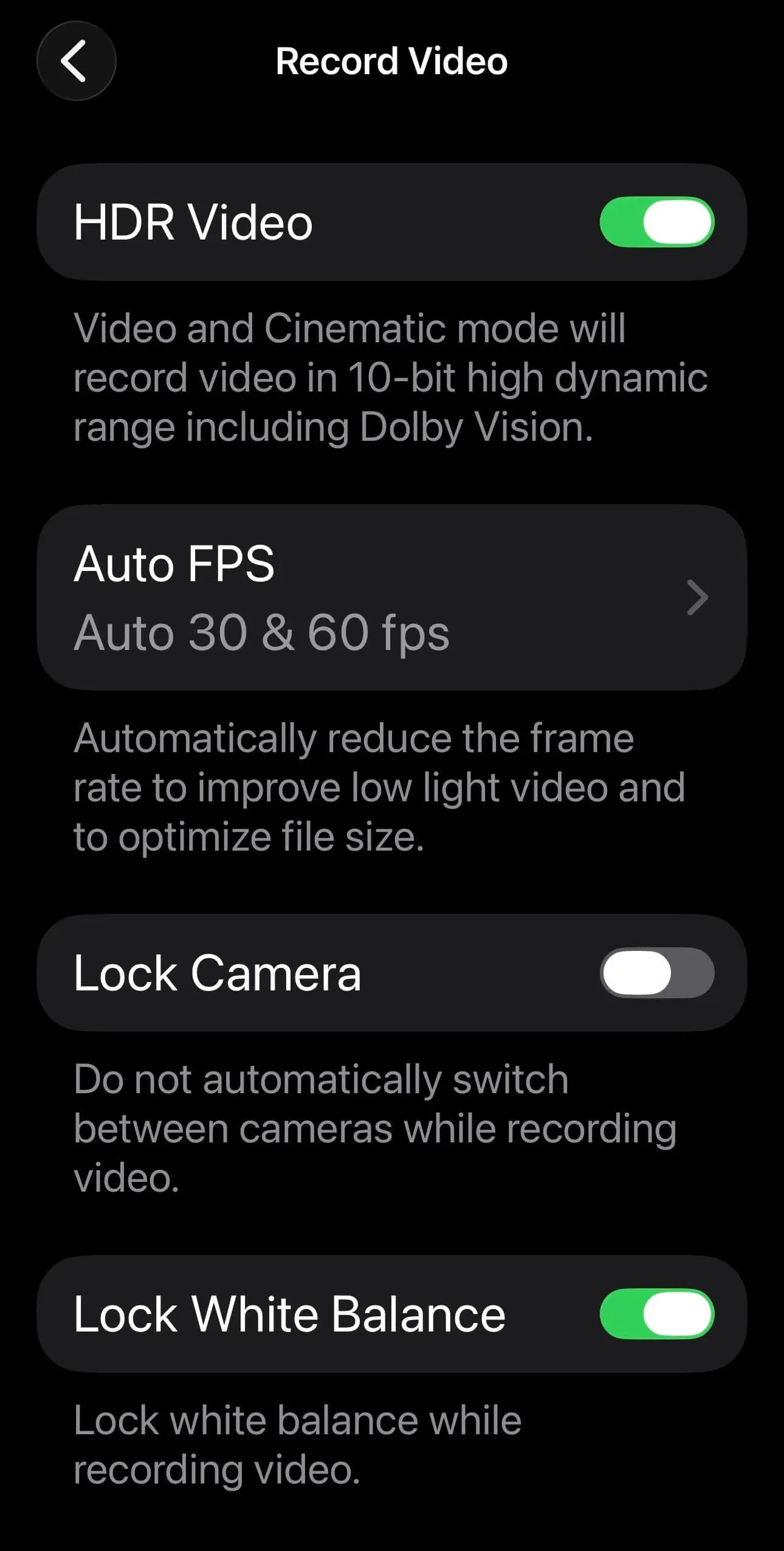
Here’s where I’ll be straight with you about what the stock camera app can actually do. It doesn’t hand you a real white balance dial, no Tungsten, no Fluorescent, no typing in a Kelvin number the way a bigger cameras do. What it does have is a setting under Camera - Record - Video - Lock White Balance. Turn that on before you hit record, and it locks whatever the camera’s reading the moment you start, instead of letting it drift the whole clip. That’s a real tool. It’s just not full manual control. Getting that level of control is an app decision, and that’s coming soon!
So here’s how I actually work a gym with bad lighting. Scout it. Find a spot. Turn on the lock. Shoot a short clip. Move to the next spot that’s a different light situation, and do the whole thing again, new lock, new clip. I do multiple white balances in one game, all the time. Rulebook absolutists will tell you that’s inconsistent. Courtside, nobody cares how you got the shot. They care that you got it.
Lab: Try This
Before your next indoor game, walk the space early. Find two or three spots where the light is a small space of mostly one color. At each one, turn on Lock White Balance, shoot a short clip, then move to the next spot and do it again. Don’t force one long take to survive the whole room. Compare the clips after. You’ll see exactly where the color problem was actually coming from.
Reflection + CTA
The room was never going to give you one right answer with existing light. It was never built to.
Scouting the light is the same decision as scouting the angle. You’re still moving your feet. You’re just moving them for color this time.
Trust it. Trust yourself.
-TMac #shooton
