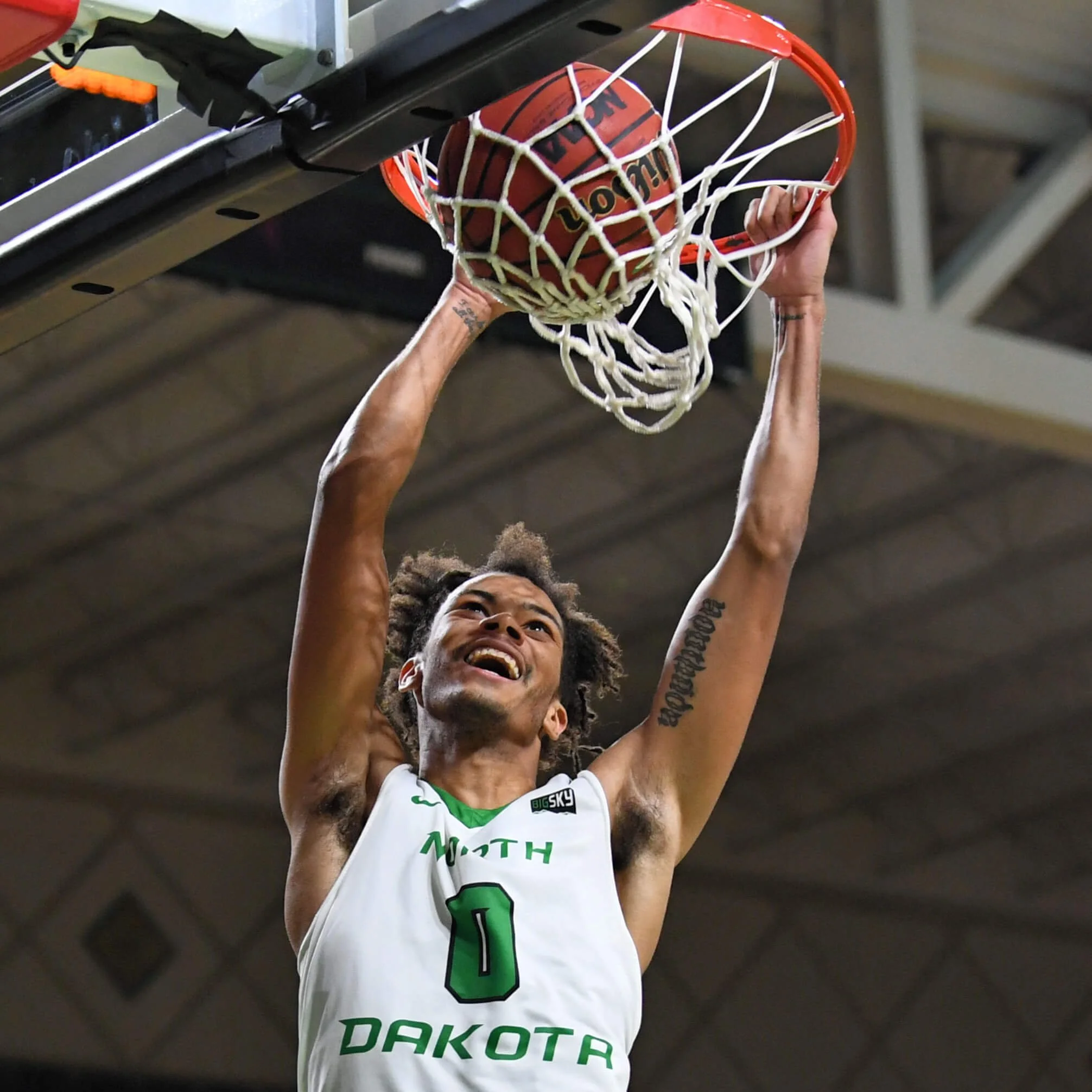
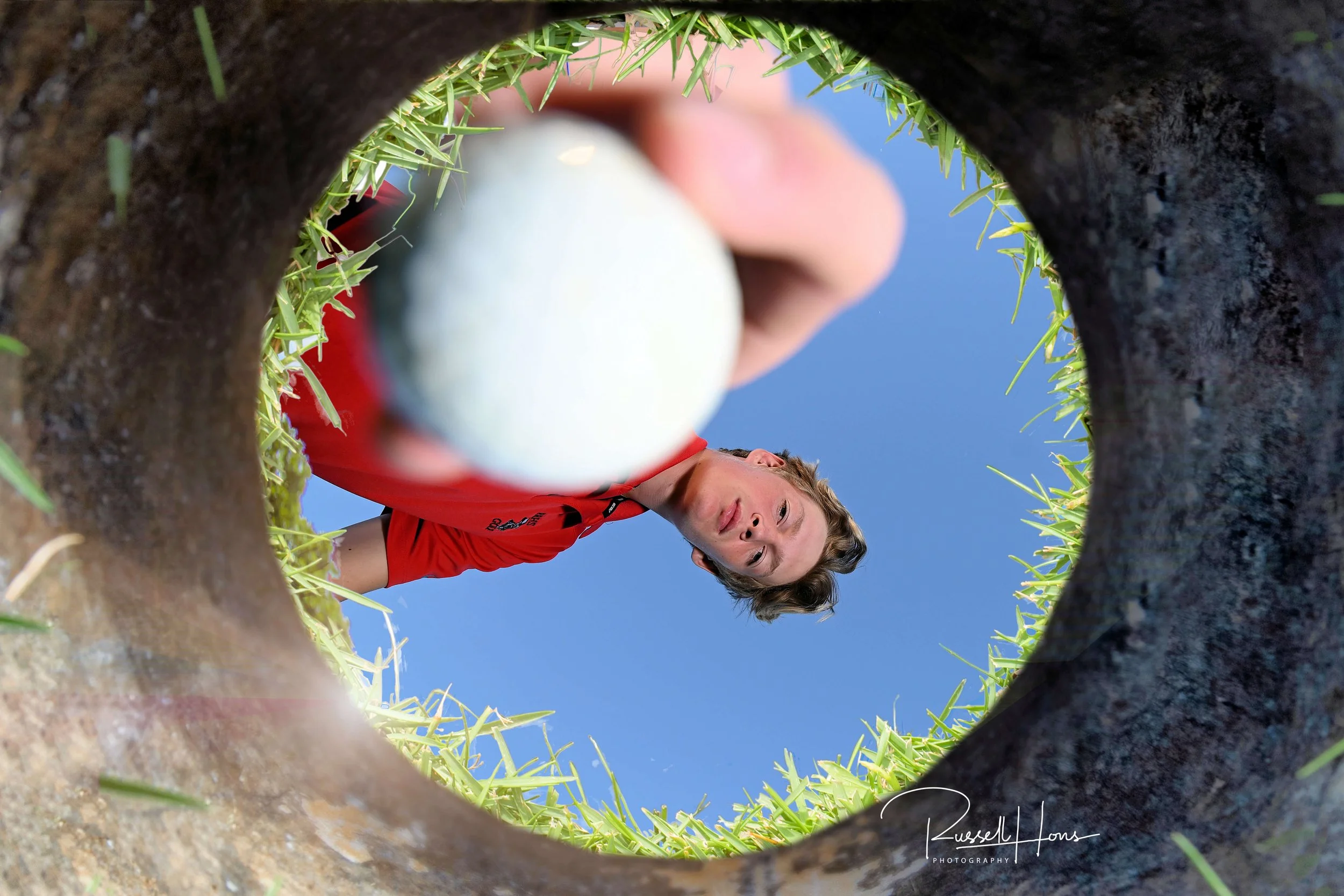
Russ Hons — Sports Photography, Running a Photography Business & Getting It Right In Camera
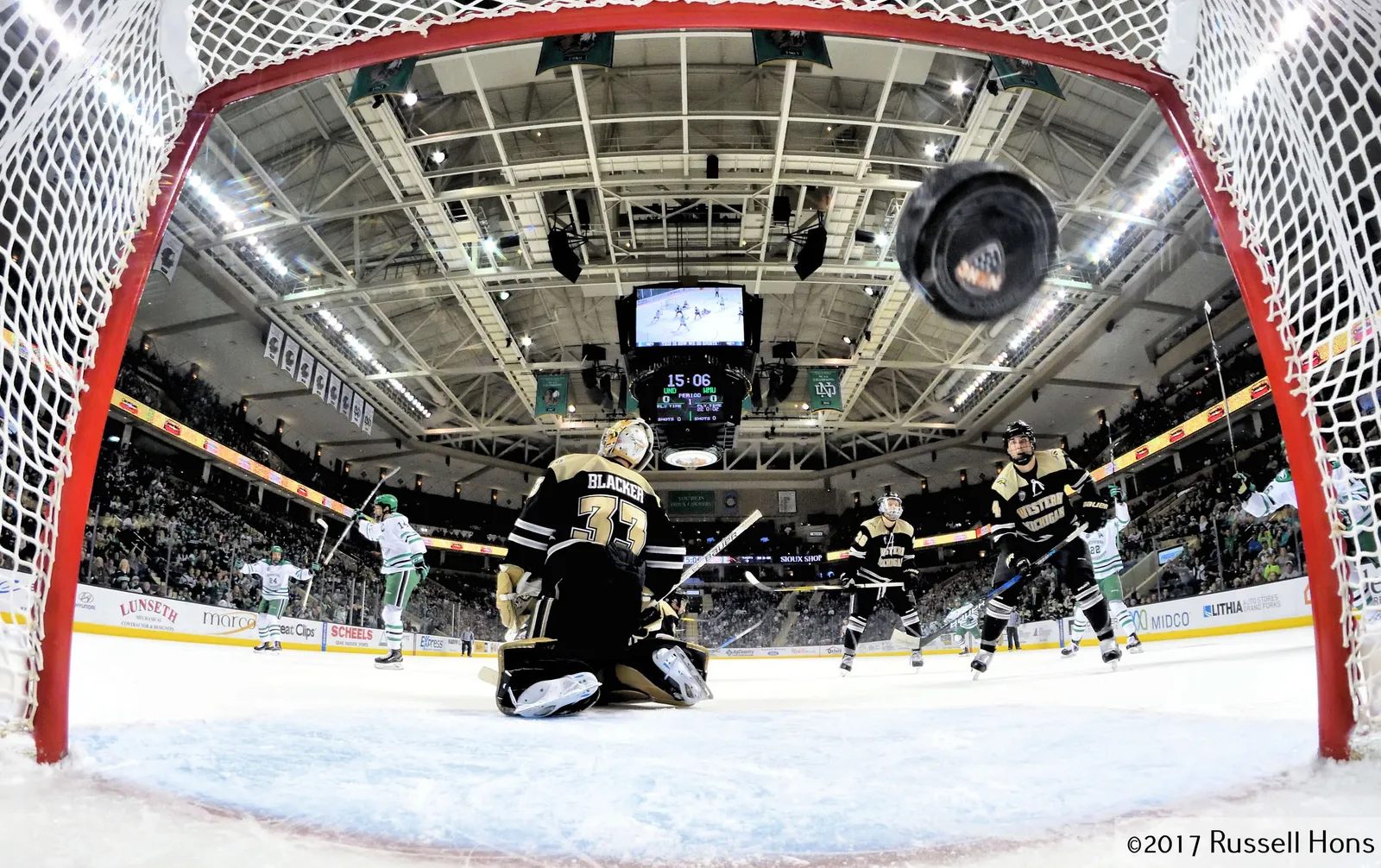
Inside the net, puck inbound. Russ Hons’ remote camera work in action. Photo Credit: Russell Hons Photography. Used with permission.
Russ Hons learned photography from his father, a law enforcement officer who taught him to shoot and develop film before he was out of middle school. Decades later that same skill set became the foundation of his career as a private investigator, using telephoto lenses on stakeouts long before it became his full-time photography business.
Today Russ shoots action sports, senior portraits, fine art, photojournalism, and still takes the occasional investigative job, all out of Grand Forks, North Dakota. In this episode he breaks down his seven-to-eight-minute hockey workflow, why he shoots overexposed on purpose, and the one thing he wishes he’d known before he went all in: how much work it actually takes to make a living doing this.
Why It Matters
Russ’s honesty about the business side of photography is the part most people overlook. It’s not just shooting. It’s marketing every day, having equipment ready, working evenings and weekends when you’d rather be at the lake. But he balances that against the messages from grandparents in Florida who get to see their grandson’s prom photos because Russ was there with a camera. For anyone dreaming about going full-time with photography, this episode is the real cost and the real reward, side by side.
About This Guest
Russ Hons is the owner of Russell Hons Photography, based in Grand Forks, North Dakota, shooting action sports, special events, senior and family portraits, fine art, photojournalism, and private investigative photography. His path into the craft started with his father’s film cameras and early law enforcement work, carried through a career as a private investigator using telephoto lenses on surveillance jobs, and returned to full-time creative photography about nine years ago. He’s built a workflow for live sports that allows him to deliver edited, ready-to-publish images to university marketing departments within minutes of a period ending.
Russ’s Bonafides
“
I wish I would have known how much work this actually entails to do as a full-time business and make a living at it. It’s a lot of work. But it’s so fulfilling. The messages I get from grandmas and parents, seeing their grandson in these sports photos, you wouldn’t believe how much that makes my heart flutter.
”— RUSS HONS, OWNER, RUSSELL HONS PHOTOGRAPHYHear This Episode
Episode Timestamps
Your ZoomPod — Exit Ticket
After this episode, you'll know:
- Why getting the shot right in camera saves you hours on deadline-driven sports photography
- How a seven-to-eight-minute workflow gets in-game photos delivered to clients before the next period starts
- What it actually costs, in time and effort, to turn photography into a full-time business
- Why diversifying across genres builds a sustainable photography career
Gear & Affiliate Links
Trick out your kit, and your wardrobe. Both Adorama and SmallRig are having sales right now. Or wear your photography mood, grab a ZWOF set-wear tee shirt. If you use a ZWOF link, we may earn a small commission that doesn’t increase the price of your item.
Explore More
Check out our other great podcast episodes. Link and follow for more great learn-photography content: IG @zoomwithourfeet | FB @ZoomWithOurFeet.
Russ built his workflow on getting it right in camera the first time. Same discipline applies behind any lens.
Stop Shooting From the Stands →Russ 00:02
I wish I would have known how much work that is actually entailed. To do this as a full-time business and make a living at it, it’s it’s a lot of work.
TMac 00:21
Hello and welcome to the Zoom with our feed podcast, the pod about learning photography. With me, your host, TMac. I am a professional photographer, videographer, and a teacher. So when I was thinking about a topic for this episode, I thought back on all the stages of my development as a photographer. And at one point in my life, I wanted to start a photography business, which I think many photographers do. But for me, by that time, I had discovered television production and went down that path. But I’ve always wondered what’s it like to not only be a working photographer, but also a photographer who owns the business. On this episode of the Zoom Pod, I thought the perfect guy to talk to about what it’s like to run a photography business would be Russell Hans of Russell Hans Photography. Russ is a multi-talented photographer, shooting, get this, action sports, special events, senior and family portraits, fine art, photojournalism, and here’s a surprise: private investigative photography. Russ is based in Grand Forks, North Dakota. Our guest speaker is in the photo lab. Let’s talk to a pro. Russ, welcome to the Zoom with our feet podcast. How are you?
Russ 02:04
I’m great, Tim. Thank you.
TMac 02:05
Tell me about your photography journey. How did it start?
Russ 02:10
Well, kind of an interesting story, but I’ve I’ve been into photography for 40 plus years. I started in probably middle school. My dad was in law enforcement, and back then, you know, with the film cameras, he taught me how to use the cameras as well as how to develop the film and so forth. And then my career, my first career, as a private investigator. And so as a private investigator, when I started back in the late 80s, it was telephoto lenses and film cameras when we’re out on stakeouts and surveillance. And so I always have utilized the camera for work that way. And it’s just progressed. You know, I did photography as a hobby and for work. And you know, for a lot of years it kind of fell to the wayside, with my investigations business getting bigger and getting into you know video cameras and so forth. We didn’t use as much of the still cameras, other than you know, certain investigations that I did would require the still cameras, and so I would get called to come in for certain jobs that needed pictures for courtroom displays and so forth. And then about nine years ago, I had some changes in my life, and I picked up a camera again, and I really just fell in love with it again. And I guess they say the rest is history. I just I fell in love with it. I went into it head over heels, and I’ve been trying to get retired from the PI industry. I still do some of that, but my main love now is photography, and it’s been more than a full-time job to keep me busy.
TMac 04:28
I asked this, I asked this question because it always dates you always date yourself with the answer. What was your first camera that you used?
Russ 04:39
I think it was a Pentax, like a K1000 or something, was it was the first camera that I that I had back in high school. And I switched, I ended up with a lot of Minolta cameras. I have I don’t even remember the names of them. I have some of them on my shelf up there, but some different Minolta film cameras, and then my first digital camera was a Sony Alpha, the first Sony Alpha camera that they came out with, I suppose 20 some years ago. I still have that sitting on a shelf too, but that was the first digital one, and then I had that for many years, and then I went back to Nikon and picked up the Nikon back in 2014.
TMac 05:35
Did you have any photographers that you that you followed or that you that influenced your work?
Russ 05:46
I really did. I just kind of had my own little pictures in my mind of what I wanted things to look like, and I didn’t really follow other photographers. And to be honest, I don’t do that a lot now. There’s some fantastic photographers that I look up to and I love their stuff, and I you know I do study it and look at you know Peter Reed Miller, but in general, I just kind of just did my own thing. So I don’t follow a lot of photographers that way.
TMac 06:26
Part of my reason for wanting to do the podcast was to be able to talk to folks making money from photography and ask them how they learned the basics. How did you learn the exposure triangle, aperture, shutter speed, ISO?
Russ 06:46
Well, you know, I think that goes back to high school. And between, you know, my dad explaining some of it to me, and then we also had photography classes in high school. And you know, I think it was I can’t remember, I’m getting too old to remember back that far as far as what the tricks were to teaching that, but boy, I’m so glad that it clicked, you know, because I’ve tried to teach it now and I can’t imagine as you do. It’s hard to teach to somebody that doesn’t understand it. But boy, the importance of mastering that is so crucial. And I’m so glad that whatever it was that my art teacher, I think, taught photography in high school, and the tricks that they gave us to learn that was invaluable.
TMac 07:53
Do you shoot all manual?
Russ 07:57
I do. I sometimes turn on auto ISO, but that would be the only variable that I sometimes have when I’m shooting.
TMac 08:11
Shh, don’t tell anybody I shoot an auto ISO sometimes too.
Russ 08:15
Yeah, well, you know, when you when you’re you’re getting paid to get a job done, and you’ve got quotas to get a certain number of photos for your clients, and you’ve got changing light, you’re at a football game and half the field’s, you know, in a shadow, and you’ve got to get the shot.
TMac 08:37
Someone’s paying for the shot.
Russ 08:39
Exactly. You know, if I shoot on my own, maybe I would try something different or try to get artsy, but when you’ve got people that are paying you to shoot a game and they want X number of photos, and they want the photos of this catch or you know, the big plays, you can’t risk missing them.
TMac 08:57
Tell me about private investigation work as a photographer. I mean, talk about having to get a shot. I think that would make me very nervous to have that sort of pressure on producing images, knowing what they’re for.
Russ 09:19
It is, and you know, it ingrains in you the importance of getting the shot. And you know, whether it’s you’re out on a surveillance case and you’re you’re watching an injured worker that’s you know performing tasks that they’ve claimed that they can’t do, and they’re out in their yard, you know, lifting weights or whatever. Yeah, you can’t say, oops, you know, and this was in film, you know. So you had to know that you’re getting these pictures right. And so knowing your camera, knowing your exposures, you just you had to had to know it. That’s why I guess now I lean on getting it right in camera.
TMac 10:11
That was long lens work back then, right?
Russ 10:15
Sure, you bet. And a lot of it was the old, you know, maybe a the mirror with those mirrored lenses that you know they would have the big round lenses with the circle in the mirror, so it would be like a an F8, you know, and maybe a 400 F8 or something, you know, at times just to reach out there.
TMac 10:39
Is this for insurance companies for the most part?
Russ 10:44
Yep, we primarily work for insurance companies. Once in a great, great while there would be a cheating spouse or something like that, but that wasn’t something that we specialized in. It was mostly insurance defense work.
TMac 11:01
From the private investigation work, you stepped away from photography. My path is similar. You know, I started shooting at nine or ten years old with an inherited camera. But when I got to college, I switched to broadcasting and television and became a videographer and a camera operator, and then came back to photography and just rediscovered the passion as you describe for photography. Was sports what you came back to? Tell me about that sort of re-entry back into photography.
Russ 11:43
I came back just to get back into photography, but one of the things that I started doing right away was the sports. And I had shot some sports with my kids growing up. My kids played hockey and soccer and different things, and so I took the typical mom or dad photos that you would see, you know. Now it would probably be, you know, the cell phone pictures that lots of parents are taking at a sporting event. That was probably the extent of my sports photos when my kids were growing up. But I had some opportunities. I had an online it’s a website here in town that was developed by some former employees of our local newspaper. And they were the newspaper had been downsized over the years, and some of the contributors and writers had retired, some were let go. Well, they started this website to have a have a place to still write and publish, whether it was you know the chef Jeff who wrote articles on different recipes and stuff, or the outdoors writer, or all these different people. And they came to me and said, Hey, you know, some of these things we need a photographer to go along when we’re writing a story or whatever. Would you be interested in that? And I said, Absolutely. And so even though I didn’t have ties to the newspaper, it was kind of my introduction to photojournalism. And I started going to our local university and shooting some of their sports. I went along to, you know, all kinds of different shoots, and just I got exposed to a lot of different things, and so that was a good a good way to kind of jump into it.
TMac 14:00
Your so from that kind of humble beginnings online, you then what was the next level for you to create your own company as a freelancer? Is that what it evolved to?
Russ 14:17
It did. I went right I just kept getting called you know from other people asking me to do you know photo work. So I started a photography company and got a website and started an online presence and just started showing off my work and marketing myself, and that’s where it’s gone.
TMac 14:43
You one of the things that I think drew me to your to your work was the sort of breadth, the width of all the different types of genres that you work in, everything from the investigative stuff and sports. What else did that evolve into? So the sports folks, and I know some of this from personal experience, seeing your parents start to come to you and say, can we get action shots, a headshot? Was there an evolution even within your own company?
Russ 15:32
But yeah, once I started doing a lot of the high school sports, I started having the parents come to me and ask me about the senior pictures, and once I started doing that, then I really I fell in love with what I call and others call portraits, you know, and the sports portraits where you know I really just love doing those and some harsh lighting, and I’ve kind of got a style that I’ve been you know doing for eight or ten years with dark shadows and off-camera flash and just kind of trying to set myself apart from some of the other photographers out there, just with a little bit different look. And you know, over the years I think it’s it’s become quite popular. You see quite a bit of it now. You know, five, six, seven, eight years ago, you didn’t see nearly as much of that.
TMac 16:32
Right, right. Well, that sort of leads to my next question about sort of the importance of composition. How has your the way you look at composition evolved from those early days to much more purposeful work with portraits now?
Russ 16:58
Part of it is just in the photographer’s eye. You know, part of it is just it’s an innate sense that seems like I look at a picture and I just know this is how I want it arranged, and this is how you know how it needs to be cropped and so forth. And it and sometimes I don’t even know why. You know, sometimes you go back to your rule of thirds and you know, your different general rules, but I think sometimes I think it’s something that you’re just kind of born with. I think that some of that just it’s it’s there. And I, you know, I find I can go through, you know, a gallery of sports photos and I can crop for impact very quickly and it without even thinking about it. It’s just something that’s ingrained in you. I belong to a lot of photography groups on social media, and I have learned so much from those groups. I from the other photographers, and you know, not necessarily anybody in sp specifically, but they ask any anybody posts a picture and they ask for you know some constructive criticism on it, and as you know as well as I do on the internet, some people will they’ll give you what you ask for, and they can be very harsh. I was able to take that feedback as much as it hurts sometimes, but yeah, I learned so much from cropping for impact, composition, certain just certain little rules about you know, don’t use the photos that you know show this or that, you know, peak action, you know, just all these things that I didn’t know. And just from studying and spending time in these groups and reading the criticism on other people’s photos and on my own.
TMac 19:16
It’s funny you mentioned peak action because I know for a fact sometimes when I bring that up to my students, they kind of cock their heads and they’re not really sure you know of that concept. So let’s this is a great opportunity to break something down that I think sports photographers veterans are looking for. Explain what you mean by let’s use football or basketball or even hockey, because I definitely want to get into your work in hockey, peak action and what you mean by that concept.
Russ 20:02
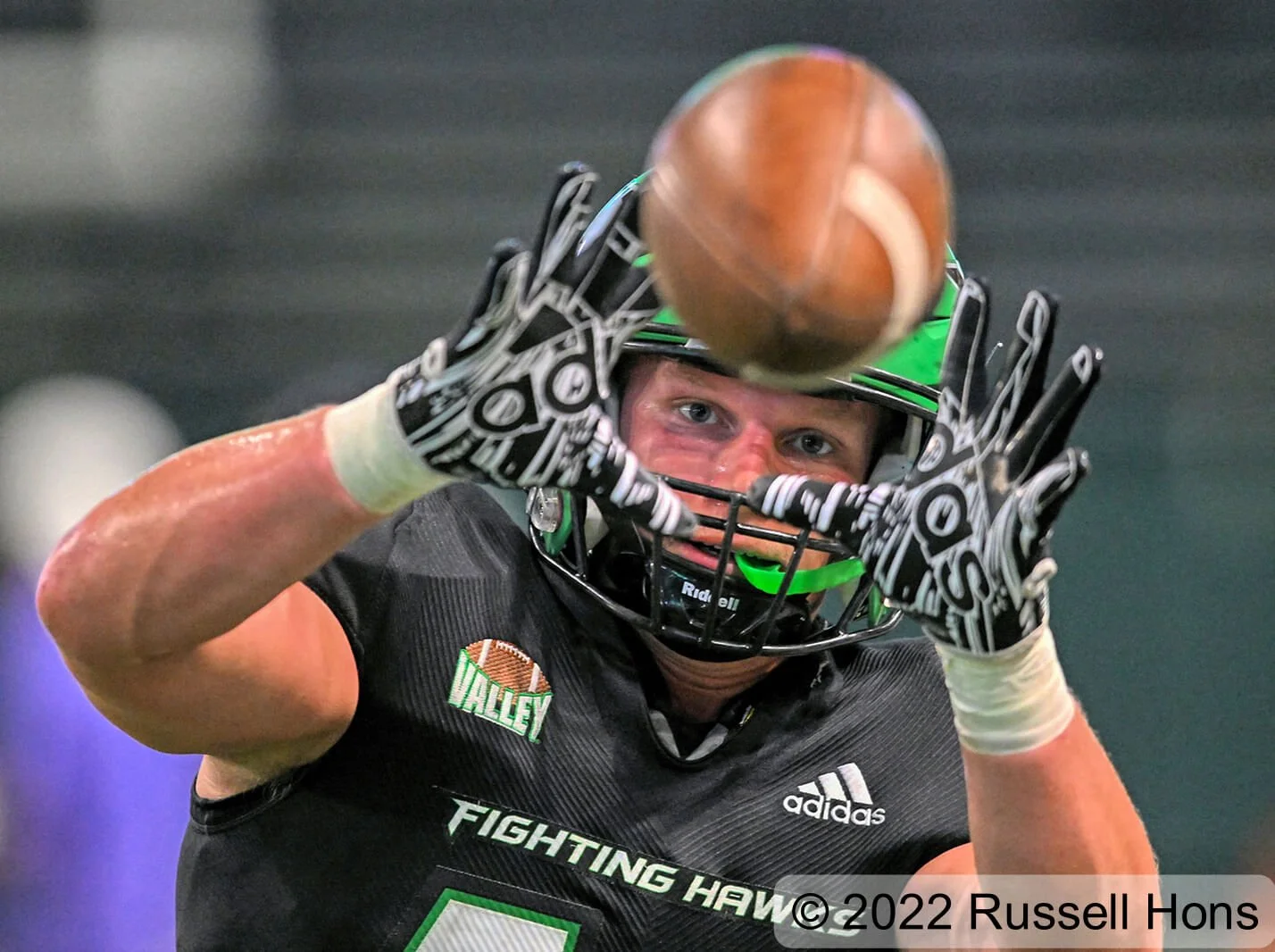
I would use a football catch, for instance, you know, you’re looking for that peak moment when that ball is you know just entering the hands of the receiver, you know, versus after they’ve already caught it and they’re they’re falling down, or they’re waiting for the ball to get there. You know, when you first start, you go, oh, look at his eyes are looking, that’s a cool shot. Well, you know, once you get that ball just right on the fingertips and things, then you start to realize, wow, that has so much more impact. Looking at that, or the basket, you know, when they’re just the ball is just leaving their hands on a shot. You know, hockey, the same thing, whether it’s with that stick flex, they’re taking a shot, that stick is flexed, and you know that it’s just ready to explode off of there. Or the puck is just entering the glove of the goalie, or just entering the net. Those are all, you know, the peak action.
TMac 21:10
Well, three for three frames before, three frames after, you’re describing that moment.
Russ 21:17
There’s so much information and so many great photographers out there that if you’re willing to listen and read and take it to heart and go out and try it, you can learn so much.
TMac 21:30
You bring up the one group on social media, which is where we actually came in contact. I do believe I made some comments on your hockey because it just your hockey work is just outstanding. But also your just your framing and composition. I’m interested in how you look at composition when shooting hockey.
Russ 22:01
I look at several different options when I shooting hockey. One, I spend enormous amount of time with the goaltender in my viewfinder. Because I’m looking for I’m looking for goals, I’m looking for saves. And then beyond that, I’m looking for hits. You know, for the most part, when I’m shooting hockey, those are the things that I’m looking for. Those are the things that the fans and the people want to see. Now, I shoot for a university the majority of the time. I shoot for a wire service as well, but mostly for the university. So I do have other, you know, stock photos that I need where I’m just looking at, all right, they’re they’re coming towards me, and I want an upper body shot that they can use in cutouts later for you know media graphics and things like that. But yeah, for the most part, I’m looking at shots, saves, big hits, and those types of things. So that’s what I’m I’m composing for. So I have that goalie locked in most of the time, and I’m I’m going back and forth with my camera, and I’m watching with my non-camera eye, I’m watching the play going on in the ice while my camera is still over here on the goalie. So I if they shoot from here, I know to start hitting the button because the puck’s coming at the goalie. I try to keep the goal about one-third of my frame. So that’s about if you’re wondering how tight I shoot, that’s that’s about how tight I shoot is I keep the goal about one-third of my frame.
TMac 24:01
When you shoot a college hockey game, this is another thing I wanted to get into, because one of the things that drew me to your work was your work with remote cameras, which I think a lot of folks don’t realize how much they are utilized. So talk to me about so a college soccer game or hockey game. How many cameras are you bringing to a to a game, say a league game for your college?
Russ 24:44
Generally this season I have three cameras up in the in the catwalk above the ice that I just left them there. I put them up there in October, and they’re they’re up there for the season. So I have I have two that are out on the blue line and they’re aimed down at each net, and then another camera over the goal that we shoot at twice that’s looking straight down on top of the net. That one I sometimes use, sometimes I don’t. I always use the other two. And then I have a net camera that occasionally I put in the net and get shots from there. Sometimes I get short on cameras depending on other jobs that I have going, and with the three that I have up in the catwalk. So I’ve been trying to switch over and use one of my mirrorless cameras in the net camera box, but that brought in a whole nother search for a lens that will fit on my mirrorless camera and still fit into that box because it’s it’s pretty narrow. So I’ve got one that’ll be here this week. So hopefully I’ll have a I’ve been trying some different ones. I shoot a an eight millimeter lens in there that works great, but it’s it’s very wide, so you can’t really zoom into your pictures very well without them breaking down. Last week I tried it with a 26 millimeter lens and it’s just way too tight. So I have a 15 millimeter that is gonna be here on Thursday. So hopefully that’s gonna be the answer. So we’ll see. Sometimes I guess answering your question, sometimes I have four remotes going.
TMac 26:39
Wow. So to kind of get into the weeds a little bit, you have four cameras that include or in addition to the one hanging around your neck or whatever, correct?
Russ 26:58
That’s in addition to. Yeah, those four are all just remote cameras, and then I shoot from an elevated platform in the concourse, and that’s where I’m shooting with my regular camera and triggering the remotes at the same time.
TMac 27:18
I’m envisioning like a drummer. Are you are you do you have how do you how do you actuate the remote cameras?
Russ 27:26
I actually kind of do it the lazy way. Just for the fact that hockey is so fast, that I for the most part I have my trigger on my handheld camera that I’m shooting with, and it’s firing all the remotes at the same time. So when I when they shoot the puck and I’m shooting, it’s firing the remotes as well.
TMac 27:54
That certainly makes it easy. It does make it easy, and shows you what I don’t know about remote cameras. So when you actuate your Z9, correct? Yep, you are also actuating all those other remotes, your remote cameras, right?
Russ 28:12
And I do have each of those on a different group on my trigger, so I can turn off any of them. If my net camera, for instance, got kicked or turned sideways in the net or whatever, then I know that’s camera D. I can just turn camera D off. And so then it won’t trigger anymore. If I’m only shooting the our shots on the opposing goalie and I don’t need any shots on our goalie, I can turn off camera B in the second period so that it’s not shooting the other goalie, you know, our goalie. So I can I can turn any of them on or off.
TMac 28:53
And they are powered rigs, not batteries.
Russ 28:58
No, two of the remotes up in the catwalk are on battery, and one is plugged into the wall, and then the net camera is battery too, so mostly batteries.
TMac 29:14
So you make a trip up there to replace batteries, refresh batteries.
Russ 29:19
Yep, I go up before every game, I turn the cameras on, I double check the focus to make sure that nothing has changed as far as they got bumped or something. So I make sure everything’s in focus, I turn on the triggers, and then after the game, I go back up there, I get my card out of each one, I turn them off, I check the batteries. Most of mine, the batteries will work for a whole weekend. So I can use them for Friday night. If I put a new battery in on Friday night, it’ll work Friday and Saturday night and still have plenty of battery power left.
TMac 30:00
Being able to isolate the goal area, so I’m thinking now you have your handheld image, which is sort of front you know, looking at the person, or I should say they’re facing you, but you also have that eye above. So now you have the crease and you have the relationship. Now you have multiple angles of that area.
Russ 30:37
The nice thing about it is, you know, when you’re just shooting from, you know, where I do, so many times your view of the goal is blocked. So you have a you know, you have a guy come in and score a goal, and the goalie is blocking the shot or the puck, or you have a defender between you and the guy shooting the puck or whatever. So all of a sudden you get this goal, but you have no image of it because you were in the wrong spot. I mean, there’s just you can only be in one place, and so it gives me so many more options. I can look at those remotes, and all of a sudden you got that shot down, and you can see the puck going in the net, and so it just gives me so many more options. Being one person trying to cover a game, I get a lot more angles and views.
TMac 31:33
So in do you use is hockey the only sport you use remote cameras for?
Russ 31:41
No, no, I use remotes for basketball as well, college basketball. I usually have a wide angle lens either on the floor at the base of the stanchion below the basket, or more often up on the stanchion, about eight feet off the floor, mounted on the stanchion and looking straight out under the basket. So I do that for basketball. I occasionally use them for soccer, behind the behind the goal, shooting through the goal. I use them for BMX racing. They’re they’re great for BMX. I get some different areas where they might be jumping up in the air or right by the start-finish line. So I’ll use them for that. I sometimes you’ll use them for baseball or softball, trained on home plate, just for another view of that play at home plate, other than it seems like every time I put up a remote, they never have a play-at-home plate anymore.
TMac 32:51
So and how explained explain the so it’s remote in that you’ve got it locked down. How is it communicating to your main camera? Explain that process.
Russ 33:06
Sure. I use pocket wizard triggers, I use the plus three pocket wizard triggers. They’re kind of an industry standard with the pocket wizards. They reach a long way. I can be on one end of a soccer field and they’ll reach the other, the other end without any problems. So the and I can change, I can put different cameras on different channels so that like I said, I can turn one off, turn a different one on. You can either have the camera or the trigger on your camera on the hot shoe so that it’s triggering all the other cameras when you push your shutter button, or sometimes I wear it on a cord, especially like BMX and different things. I wear it on a cord or a lanyard around my neck, and then I can just push the test button on my trigger to trigger my remote. So that way I’m not shooting extra frames in my regular camera. I’m just pushing the button when something’s going on the other end of the basketball court or when they’re coming up on a jump around the corner of the track. I can hit that button and fire that camera as it’s going.
TMac 34:23
That’s it’s amazing, you know, RF technology that, like you say, has evolved in the digital world to have so you know the length of a soccer field, that’s pretty far to be able to actuate a camera mounted to the goal opposite you.
Russ 34:45
Oh, it’s even now they’re coming out with the I think they have the plus three E, and they’re saying that they have they have had results over a mile.
TMac 34:58
Wow, a mile. That’s crazy. You’ve now sort of transitioned from this from one, so this evolution of Russ Hahn’s photography has now gone from sort of one thing, investigative work, taught yourself. I mean, I always tell people, we’re actually we’re really all self-taught. We all figured out the exposure triangle on our own based on whatever our experience was. It sounded like you got a brief break for the holiday, but talk me through a typical work week assignment-wise.
Russ 35:44
I do I do work for a drone park that’s attached to our Air Force base, and they fly UAS play planes out there, drones, with companies like Northrop Grumman and General Atomics and all of this stuff. And I do all the photography out there, and so I’ve got some work that they need me to do out there with some new hangers that have been built, and they want some new photos for the presentations that they make. So I’ve got to get out there and get some photos of that. I believe I have a couple of high school games to shoot this week in the evenings. I have a senior picture session, I believe Friday afternoon, of a hockey player. I usually do most of my senior pictures in the fall, but some of my some of my clients are hockey players, so we do a split session where in the fall we might do them playing football or soccer, as well as just their normal suit and tie shots and things like that. And then we come back now that they have their hockey jerseys and the ice is in the rink, so then we go back and we do some sport trips in the in the rink. So I’ll be doing that on Friday, and so yeah, so we’ve got the hockey one coming up this week, and then Saturday I’m back to the university. They play the US under 18 Team America game on Saturday, so I’ll be back over there shooting that, and then be probably the same type of thing next week, you know. We got more senior pictures that have to get done with hockey players, and I get events, you know, constantly getting called to shoot events, whether it’s you know, a corporate seminar or something going on at you know, and they want pictures taken of the booths and different things that are going on. Sometimes they have a I guess we call it a step and repeat wall where I’ll be set up and the attendees are coming all dressed up in gowns and suits, and I take their pictures as they’re they’re coming in. Lots of events, just it’s a little bit of everything, to be honest.
TMac 38:24
Exactly. What’s in your kit? Tell me about your tools of the tread. What do you shoot? Give me your give me your cameras, your lenses.
Russ 38:36
I’ve probably got way more than I need. I’ve just been from my years in business as a private investigator and everything else, I’ve always just been of the mindset that make sure you have the tools. If you’re gonna advertise the work, make sure you have the tools to do the job right. Not only that, but you need backup tools as well. I certainly wouldn’t go to a wedding and shoot a wedding with one camera and risk something happening to that camera. So I make sure that I’ve got a backup camera. And my kit that I mostly shoot with is a pair of Nikon Z9s. Those are mirrorless cameras that I do the far majority of my work with. The lenses that I use on a on an everyday basis is the 24 to 70 and the 70 to 200 f2.8 lenses. My other lens that never leaves my bag is my Nikon 120 to 300. That is one of the best lenses that Nikon ever created. It’s an amazing lens, and I that’s that’s my sports lens. I use that for 90% of my sports. For all my hockey is shot with that. Outdoor sports. I put a 1.4 on that and I use that for outdoor football during the day or soccer. If we’re indoors for football, our football team plays in a dome, so we’re indoors. I switch, I have a 400 to 8 that I use for indoor football or night football or any of that kind of stuff. But those are those are the main the main kit that I use. I of course use 14 to 24, you know, wide angle lenses and you know a mixture of other stuff as well.
TMac 40:53
But talk me through your hockey game over. You mentioned that you are slinging some images during the game. How and it’s funny, I tell students that, or I’ll tell folks that, and they kind of look at me and I go, oh no, it’s pretty much required these days because of social media that most clients want you slinging images ASAP.
Russ 41:29
Two different ways. The majority of the time for hockey, in between each period, I’m uploading 20-30 images for the on average. Football, I do it at halftime. Again, maybe 30, 40 images, and then again immediately after the game. That’s not counting my remote cameras. So I because those I have to go and get my cards out of those cameras. So those images are kind of uploaded later. Although, you know, I usually at the end of a hockey game, I know if there’s something I’m looking for on those remotes. So it takes me seven or eight minutes from the end of the game to have my images uploaded.
TMac 42:26
Seven to eight minutes. Let me repeat, let me let me underline clock strikes zero. In seven or eight minutes, you have what I would call immediate batch that you’re able to send to the client. Is that because you are on their network in their building and you have a place, a full a folder? How is that work? How does that workflow work?
Russ 42:56
I develop I set up a folder before every game. I use Google Drive. And so I set up a Google folder for that game, and I email a link to the marketing department and to the SID who’s gonna be grabbing those and doing the graphics on, you know, they have templates already set up that all they have to do is enter the score and add a add a picture, and then they can throw them up on Twitter and Instagram, and yeah, so they’re waiting for the image. So I have specific requirements as far as the size that my photos have to be, so that I know that they all need to be 1920 by 1080 at 72 pixels per inch. So my photo mechanic is set that when I crop everything, it’s outputting the images exactly the size that they need. So yeah, so my workflow goes, I tag my photos or lock my. My photos as I’m taking them. So as I’m shooting a period of hockey and something happens, and I know that I want one of those photos, then I go back and I lock the photos, maybe five, six photos around that one. And then I continue on. Yeah. And so I just not even a whole birth, but just those couple photos around the one I know I want. And it gets a little bit different if you’re shooting for the wire because I have to also make sure that I have something that shows a photo, a number, so that I can identify the player later. But for the college stuff where I don’t have to caption images, I just I’m just looking for the visuals and visuals. And so I lock those photos as I’m going. And or the next whistle, you know, go back and lock over those photos. So at the end of the period or the end of the game, I’m just ingesting those locked photos. So even though I might have taken a thousand pictures in that period, I’m only ingesting maybe hundred, 150 pictures. So I can scroll through those very fast and pick, you know, okay, here’s the goal, and here’s three pictures from the celebration, and then I’m on, here’s a big hit, here’s a big save, you know, and I grab those photos, and then those photos I’m cropping and making sure they’re straight, and save them into the size that the that the university needs, or if it’s a different client and they need a different size, same thing. And then I double check them to see if I need to do any other work to them, whether they’re too bright or too dark. But you know, I pretty much have it dialed in so I don’t have to do any toning on those for in-game images. So once I’ve done that, I just take them and drop them right into my Google Drive, and I’m done. I go right back out to my shooting location, and they’re uploading. So I walk away. So usually I have about six minutes left in the period break when I’m done, depending on, you know, it depends on how much stuff happened in a period. Sometimes you might only have 10, 12 pictures to upload, and you’re done really fast. Sometimes you had five or six goals in a period, and so you’re, you know, you’ve got 50 pictures that you’re trying to get done and uploaded before the next period starts. So it all depends on the action that happened that period.
TMac 46:54
So you mentioned being dialed in for hockey. Talk to me about your sweet spot of settings for hockey. Now, I understand and you understand that it’s based on that particular venue lighting, but just for discussion purposes, you’ve got it dialed in so you know what the light is that you’re dealing with. Talk me through your three main settings when you’re when you’re shooting hockey.
Russ 47:33
To be honest with you, this is for most sports. I will set my shutter speed at about one thousand. If it’s if I know it’s a little bit brighter, then I’m gonna go maybe to one sixteen, one sixteen hundredth, you know. And then I’m gonna generally be at f2.8 in the in our college hockey rink, I shoot at f3. Just and I don’t need to. It’s it’s easy because it helps me remember because I shoot at 11600th, 3.2, and 3200. So that’s my setting. So it’s just it’s easy to remember if I leave it at that. And whether I shoot at 2.8 and drop it down to you know, ISO 2500, yeah, it’s that doesn’t really make a difference. So but yeah, so I set my shutter speed kind of as fast as I think I can get away with. I open up my aperture and then I dial in my ISO to whatever I need to get a proper exposure. Now, if I’m going over to one of the high school rinks, which obviously doesn’t have the TV lighting and so forth, they’re anywhere from a stop to two stops darker than the college rink. So there I’m gonna be back at probably one thousandth and f2.8, and then I’m gonna adjust that ISO probably to 5,000, maybe 6,400. So that generally the ISO is my variable. I know I gotta be at least a 1000th of a second, and I’m stuck at 2.8 for the most part. So I my ISO is my wiggle room, and I can go up or down with that as I need to. Hockey, I shoot quite a bit overexposed. I shoot probably if I’m aimed just at the ice, I’m about a stop and a half overexposed on my meter. And that’s just the way I shoot it. I like that. I it helps me get the white ice that people are used to seeing. Helps me get facial expressions on the players, because I tend to shoot pretty close and tight. So I like to be able to see the faces, and so it works for me. Some people don’t like them that overexposed, but you know that’s again that’s one of those things where we’re all we all have our own style. Photomechanic Lightroom? I don’t use Lightroom. I got started on a program 20 years ago that’s called Paint Shop Pro. And it’s actually Corel’s version of you know, the whole bundle. And so I’ve I do have the Adobe Creative Cloud. I have Lightroom, I have Photoshop, and all of the other programs. I just I’ve never used them. I use this Paint Shop Pro. It basically has the same modules as Lightroom. I can pull it up into adjust and I can move my sliders for clarity and lighting and shadows and do the same thing that you do in Lightroom. And then if I want to go into the edit mode where I can do a lot more, just like you can in Photoshop, as far as layers and masking and so forth. So it’s it’s basically the same thing, it’s real similar to Adobe Bridge. So you know, I same concept, just a little different program.
TMac 51:40
Whatever works, Russ, whatever works, and it’s something that you use, I’m sure you’re extremely fast on it, which is the other part of it. Yeah, yeah.
Russ 51:54
Speed, speed is the you know, that’s why I’m so I tell everybody, get it right in camera. Work to get it right in camera because it saves you so much time when you’re on a deadline, whether I’m shooting for the university, whether I’m shooting for the wire service, where I need to be uploading photos again in between periods at the end of the game. They’ve got to be right or so close because you don’t have time to sit and fix white balance and fix you know dark photos, or you gotta get it right.
TMac 52:34
Well, that answered my tip question. And what advice would you give aspiring photographers? So I’m going to definitely use that. Let me make it more personal and make this the last question. What is the one thing? And it could be it could be anything. What is the one thing that you know now that you wish you knew back when you were making that transition back into photography? I love this question, by the way.
Russ 53:14
The one thing that I know now that I wish I knew then. I guess one thing, maybe it yeah, it’s it’s quite a question. I guess on a I wouldn’t say that it’s a negative, but I wish I would have known how much work that is actually entailed to do this as a full-time business and make a living at it. It’s it’s a lot of work. It’s it’s shooting every day and marketing every day and having the equipment to be you know being ready to go. And sometimes it’s it’s clients need stuff done in the evenings and on weekends and things like that when you’d rather be at the lake or you know, go into the game yourself with your wife. So that’s one thing that I guess I didn’t realize was how much work that it was gonna be. But I also didn’t realize how fulfilling it would be. And you know, sometime maybe we’ll talk again and I’ll tell you some more stories about why and what led me into the deep dive into photography and you know, the hole that I was filling there. But it’s so fulfilling putting the smiles on people’s faces and seeing satisfied clients and receiving the messages from grandmas and parents of you know that I this is my grandson and I live in Florida, and being able to see these pictures of him, you know, in these sports or at prom or what have you, it’s you know, you wouldn’t believe the messages that I get that just make my heart flutter. So it makes it all worthwhile.
TMac 55:22
Russ Hans, I can’t thank you enough for being a part of the project. I wish you much success. Thank you very much, sir.
Russ 55:31
You bet, thank you. It’s fun.
TMac 55:41
Thanks again to the amazingly talented Russell Hans. You can check out his portfolio and more at RussellHansphotography.com and all of his social media channels. The Zoom With Our Feet Podcast is a production of TV Commando Media. Be sure to take a peek at the blog and other episodes of the Zoom Pod at zoomwithourfeet.com. The Zoom pod theme is by Novembers and they’re Funky Groove Cloud 10. Until next time, photographers, if you’re not shooting, you’re not learning.
More From Russ