Adam White — Filmmaking, Cinematography & Learning Your Craft
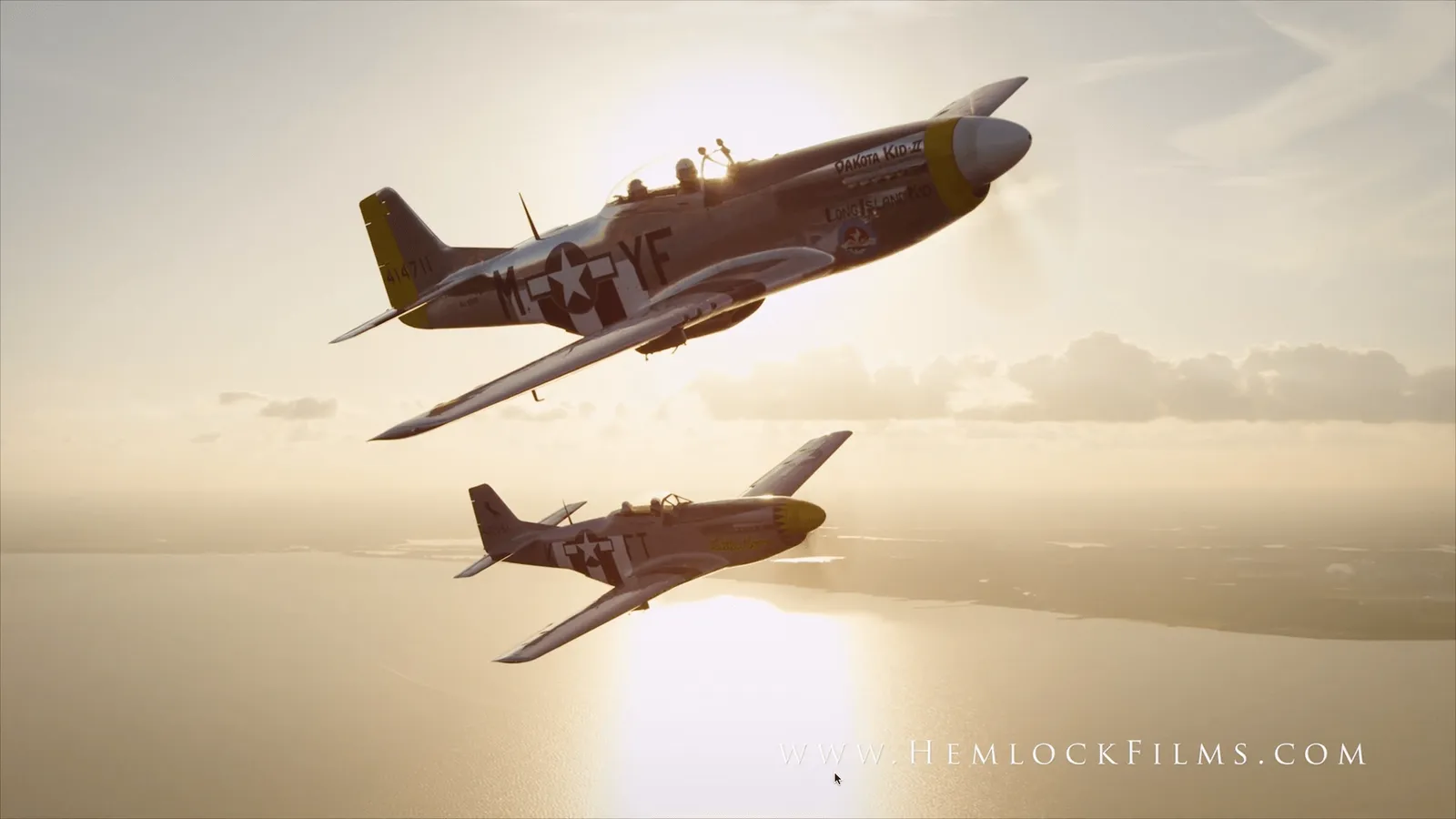
No car windows here. Adam White’s aerial work captures two P-51 Mustangs banked into golden light — the shot most filmmakers would not even attempt. Image Credit: Hemlock Films. Used with permission.
Adam White learned cinematography the same way most great DPs do, by studying light in real films before he ever picked up a professional camera. From Raiders of the Lost Ark’s contrasty 80s film stocks to Clint Eastwood letting a character sit in shadow, Adam built a visual instinct long before he built a career.
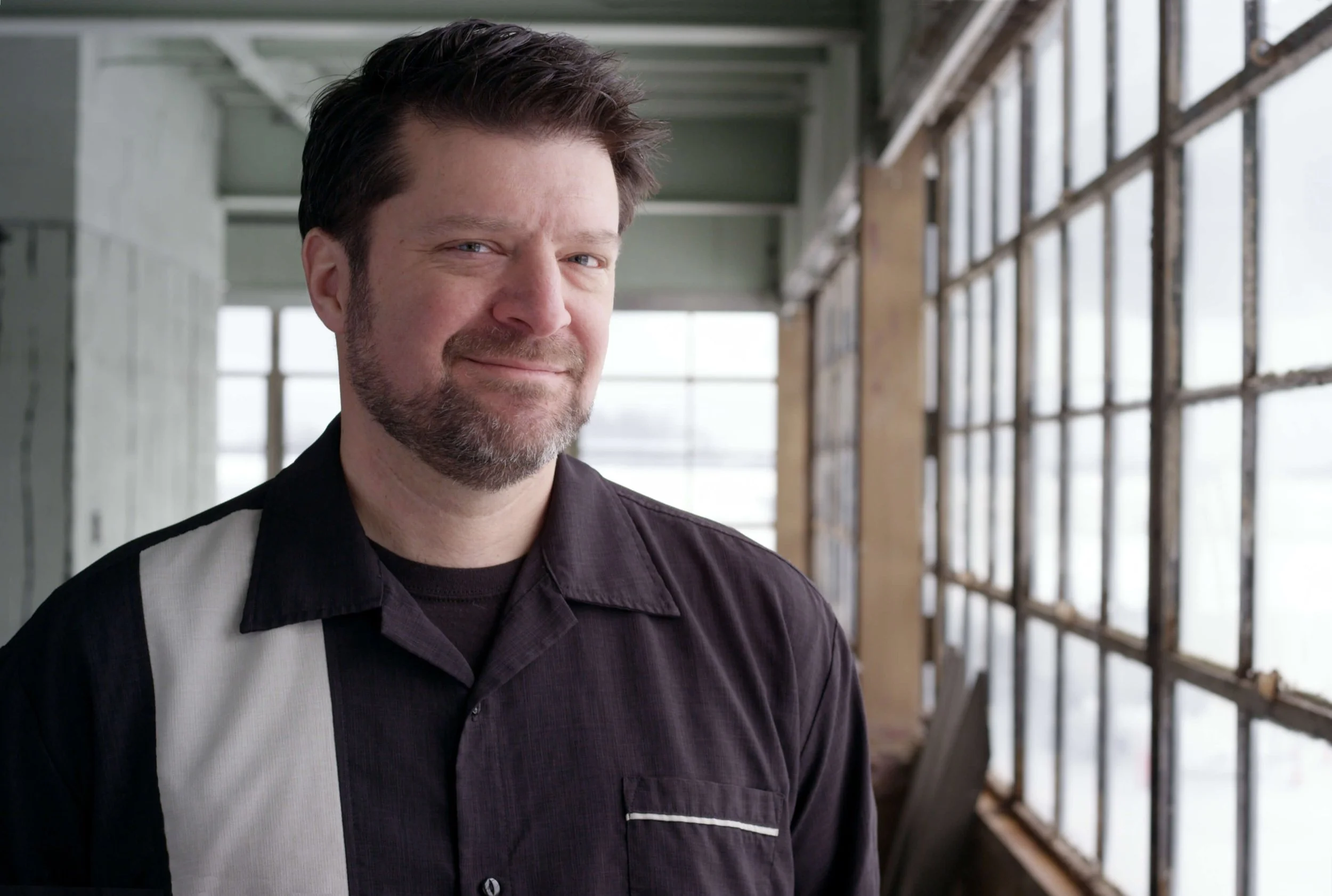
Today he’s a Cleveland-based Director of Photography and Master Steadicam Operator working documentaries, narrative film, and the historical hybrid-doc series The Restorers. In this episode he breaks down screen direction, exposure decisions on set, and why he tells every young filmmaker the same thing: go work for other people first.
Why It Matters
Adam’s career advice runs counter to the instinct most people have right out of school, take the safe in-house job. He says the opposite: go sling around in the world, work with different crews, meet your heroes and your monsters, because every single one of them will teach you something. Staying in one place too early in a career trades exponential learning for comfort. For anyone early in a film career trying to decide between stability and growth, this episode makes the case for growth.
About This Guest
Adam White is a Cleveland-based Director of Photography and Master Steadicam Operator at Hemlock Films, working across documentary, narrative film, and the historical hybrid-documentary series The Restorers, which recreated events including the WASP training program at Sweetwater, Texas and the Doolittle Raiders reunion flyover at the National Museum of the United States Air Force. He studied film at Wright State University, where a balanced curriculum of practical technique and film theory shaped his understanding of lighting, contrast, and visual storytelling from the start.
Adam’s Bonafides
“
You should go out and sling around in the world. Don’t take a production job where you’re going to be in-house too early in your career. Get out there and meet some heroes, meet some monsters. Every one of them is going to be able to teach you something.
”— ADAM WHITE, DIRECTOR OF PHOTOGRAPHY AND MASTER STEADICAM OPERATOR, HEMLOCK FILMSHear This Episode
Watch Here
Episode Timestamps
Your ZoomPod — Exit Ticket
After this episode, you'll know:
- Why screen direction is one of the most important and most overlooked rules in shooting a scene
- How studying film theory alongside practical technique builds a deeper visual instinct than technique alone
- Why working for multiple production companies early in a career builds skill faster than staying in-house
- What it actually takes to recreate history on location, down to shooting on the exact field where it happened
Gear & Affiliate Links
Trick out your kit, and your wardrobe. Both Adorama and SmallRig are having sales right now. Or wear your photography mood, grab a ZWOF set-wear tee shirt. If you use a ZWOF link, we may earn a small commission that doesn’t increase the price of your item.
Explore More
Check out our other great podcast episodes. Link and follow for more great learn-photography content: IG @zoomwithourfeet | FB @ZoomWithOurFeet.
Adam built his eye by studying light in films before he ever shot one himself. Same discipline applies to learning to see before you raise a camera.
Stop Shooting From the Stands →Adam 00:04
And I always suggest, and everybody’s you know part of their own situation, but I always advise that you should go out and sling around in the world. Don’t take a job. Don’t take a production job where you’re gonna be an in-house too early in your career. Get out there and meet some heroes, meet some monsters. Every one of them is gonna be able to teach you something. And it just makes you that much better.
TMac 00:39
Hello and welcome to the Zoom With Our Feet podcast with me, your host, TMac. I am a professional photographer and videographer who also happens to be a teacher. Yes, I’m liked to teach, and the photography lab is now open. In this edition of the Zoom Pod, Cleveland-based director of photography Adam White joins me to talk about documentaries, aerial filmmaking, and the resistance. We’ve got our guest speaker for the day, and the photography lab is now open. Let’s talk to a pro. Adam White, welcome to the Zoom with our feet podcast.
Adam 01:23
Pleasure to be here.
TMac 01:24
How did your filmmaking and specifically cinematography begin?
Adam 01:31
I suppose I did a lot of photography in high school and many, many presidential administrations ago. And then when I, you know, like almost everything I do, it was another thing that the guidance counselors couldn’t give you any information on. So then somebody that I knew actually went to Wright State University down in Dayton, and they had a fairly robust film program. Of course, something I was interested in, something everybody’s interested in. But I went down there and some reason I had the unrealistic confidence that I could make a living by being a filmmaker instead of an aerospace engineer, which is what I told my parents initially what I wanted to be until you know math existed. And then I started on my way and applied what I knew from photography to filmmaking and cinematography. And fortunately, the and this the this does not occur at every school, but they had a pretty even split on practical and theory. So you could learn about deep shadows and key lights and three-point lighting, but then you could also watch Casablanca and see how film noir is applied and see it in real time. And you know, I think that gave me kind of a jump start on how to go down the cinematography road.
TMac 03:04
Who influenced you and why? What were your influences? You dropped your name dropped Casablanca. What else?
Adam 03:13
Yeah, I mean Casablanca is later on, but it I don’t know if it’s particularly influences, but it’s kind of the taste that you grow up with. And as an 80s kid, you know, I see the right stuff that was shot like by Caleb D. Chanel, or see Raiders of the Lost Ark that was shot with the film stocks of that time. You watch it in the opening sequence, where Indy comes from, I mean they’re outside in broad daylight, but somehow he is in full black, which you could get with those film stocks back then, and then Doug Slocum lets him move into the light. And I’ve always been a super fan of that high contrast lighting, and Deacons continues on with that sort of thing. In the 90s and 2000s, it kind of went into the ditch and everything was overly lit and everything, but they look like my shot here. But yeah, growing up during the 80s, the early 80s time when you could actually get sort of contrasty filmmaking like that really affected my tastes.
TMac 04:29
There’s a LUT for that.
Adam 04:34
I was this is around 2000. I was helping a friend with a short, and we were shooting it on 35mm film, and we were in a dark room with a cigarette lighter, and we had trouble getting black. We couldn’t make the walls were light colored, but we only had a lighter that was lighting the character’s face, and black was tough to get in the film stocks at that point.
TMac 05:01
So well, that lead me leads me to the basics. So the exposure triangle means one thing to photographers. I talked to you know some different genres and how they use it, Astro guys with their long exposures and the like. How do filmmakers manipulate that exposure triangle?
Adam 05:30
Yeah, here comes a some blanket statements. Yeah, we I mean you know, filmmaking across the board is way too broad of a spectrum. If you’re talking about, you know, you’re making Laverne and Shirley, or you’re or you’re making you know Batman. I Clint Eastwood said a really great thing one time when they were making Unforgiven. Jack Green shot that. And you know, Clint’s in full shadow. You just see the outline of him and his hat a little bit. And I don’t know, somebody brought up something to bring in some fillies. Like the audience sees us for two hours. They know who I am, they know the character. Let the let the scene be the scene, let the guy be in the shadow. So but yeah, you start pouring through ideas when you get a script, and the genre and the application, whether it’s on a phone or whether it’s on an iMac screen, and you get to kind of play in the sandbox accordingly on how deep your shadows can go, how you know, are your actors gutsy? Do they need a beautiful flat lighting to take the crow’s feet out, or are they gonna are they gonna get down in the mud with their character? There’s a lot that starts at the top and then filters down, that then begins the conversation with how are we tackling exposure? How are we tackling the final output? Because yeah, when I was shooting film, I liked look backwards. Yeah. Where you know, where’s it ending up? Which was an easier conversation back in the day. It’s like it’s going to the theater, it’s like, oh, okay, now I know what we’re doing, or and I know how to frame it, versus television even with a 16 by nine. Or is it, you know, is it PG or R? And that doesn’t mean violence or anything like that. It’s means grown-ups are gonna watch it so you can hold on the shots longer. You can design the shots longer because they’re not they don’t have small attention spans when it comes to that.
TMac 07:50
I’m as a photographer, I’m all manual on the time all the time. I may if I’m covering sports and it’s sun in and out, don’t I may put ISO in auto and let it chase me and don’t really have bad luck with that. But in terms of shutter speed, you know fast, you know, sometimes depending on lighting, as high as four thousand.
Adam 08:26
Right, you know.
TMac 08:27
But that’s you know, for filmmaking, you’re preset on your shutter speed, right? And now you’re talking right, aperture and your and your light.
Adam 08:42
Yeah, at some point you gotta you gotta plant a flag somewhere and say this is because you can’t have too many variables, but it’s nice to have those three things of ISO shutter speed and f-stop. That then you can spin the wheel in your brain when you’re presented challenges. But almost always I plant the flag with my ISO. And then the next thing I do is plant the flag with my F stop in progression. Yeah, and then I dance with the ND filters. Just and this is you know, narrative film, that’s one thing, or you have a little bit of time where you can make those assignments, but when it’s shooting doc when you’re out in the field and doing that sort of thing, I’m I’m dancing with ND filters in front because I don’t want to, I don’t want I know in the cut. If I go from if I’m cross-cutting and I’m cutting from an F4 to an eight back to a four to a sixteen, it’s people don’t normal people don’t know why it’s wrong. They just know it’s wrong. So you have to sort of behave yourself.
TMac 09:53
It’s psychological. Yeah, that’s my that’s my theory. I’m sticking to it. But it’s it’s a psychological abruptness that is it’s not a it’s not a wrong or right, but it’s like it makes it different.
Adam 10:09
You’ve caught you’ve called attention to something that probably shouldn’t have been.
TMac 10:14
Correct.
Adam 10:14
Now they’re not watching the movie.
TMac 10:18
They’re thinking about Yeah, what happened there?
Adam 10:21
When I when I’m teaching, I tell students every everything, everything is important, and it’s about audience manipulation. Why is he wearing a green sweater? Why is there a light right there?
TMac 10:33
Eyeball manipulation.
Adam 10:35
And you follow the rules of 150 years of filmmaking, and then you do break them, but you have to know the rules so you break them responsibly. Otherwise, you just look sloppy. But if you break them responsibly, now you’re manipulative. Now you know, now you when the unpleasant character comes in, the guy that you’re eventually going to reveal is an abuser or something, you frame him uncomfortably. So you’re already tipping your hand to the audience.
TMac 11:06
With my students, I use a musical analogy. It’s I’m here to teach you the scales. You want to bend some notes and play jazz, you’ll be better able to think your way through that because you know the scale.
Adam 11:23
Absolutely. Absolutely. You gotta you gotta you gotta know it all to begin with. I know it’s boring, but you have to start there.
TMac 11:31
Correct. Well so that leads to composition. Does here’s the here’s the chicken or the egg. Does college teach you composition or does many frames experimenting teach you composition?
Adam 11:49
That you have whether it’s college or a book or something, somebody has to bestow the knowledge to you. A bunch of newbies can’t be all in a room and inventing knowledge between themselves. Even scientists stand on the shoulders of who came before. So then you go from there. Let’s talk about high key lighting and composition, that sort of thing. And now it’s it’s not stealing, it’s an homage. Now you can start working your way through, you know, here’s here’s what they did in West Side Story. So how you know, now that it’s 2023, what would we do in that regard? If they did this framing in the searchers, and you if you wanted to talk about the resistance, that, but yeah, and the way I was taught, my cinematography class in college, we shot slide film, and we were given a script, and we would shoot all of the coverage, the scenes like here’s the over-the-shoulder, click, here’s the reverse, click, and we shot slide film because there’s nowhere to hide, you can’t save it in the print. So now you throw it in the projector in the back of the room, and everybody gets to tell you everything you did wrong. But yeah, it’s first and foremost a booker college or a mentor, and then shoot, shoot, shoot, shoot, shoot. You can’t shoot enough, keep shooting until you’re in a hole.
TMac 13:20
Yeah, yeah, yeah. I mean, somebody ultimately told me about the rule of thirds. But until I tested it, yeah. I didn’t really, you know, I didn’t really know what I was doing until I shot a ton of frames and understood there are even variations on those on those rules and those standards in that. I mean, that to me explains the importance of composition and filmmaking, but I like how you tied it to story right away.
Adam 14:00
It I mean, everything is top-down. Whoever’s film it is, if the producer is the big dog on the show, then it’s theirs. If they hired a director, it’s the big dog, then it’s fine. And then you have the conversations early, and then you go from there. And no matter what job you’re in, your job is to make your boss’s life easier and accomplish their vision. If their vision is a great craft service table, then go make a great craft service table. But if it’s the director, you can’t go off willy-nilly. It’s like, well, I’m gonna I’m gonna shoot this damn thing like East of Eden. And they’re like, no, that we want this to look like wrong burgundy. And you have to you are hired for a reason, so you probably know it how to get there, and you have to abide by the vision that they’re looking for.
TMac 14:51
I think for me, it teaching aspiring filmmakers is they think they can shoot their way into a story. So one of the one of the things I wanted to talk to you about was the boring stuff like planning and organization and how that directly there’s a direct line to the end frame frames based on the organization, the planning and the blocking and the positioning and the and you talk to filmmakers and they go, Well, it’s in the script, it’s in the story. So and I try to get aspiring filmmakers there. So this is sort of the advice part about planning and blocking. So pick a scene from your film Resistance. We’re we’re promoing it here, we’ll talk more about it specifically coming up, but pick a scene, describe it like on the page, right, and then give me some thought processes for some of those basic how to shoot a scene thing.
Adam 16:16
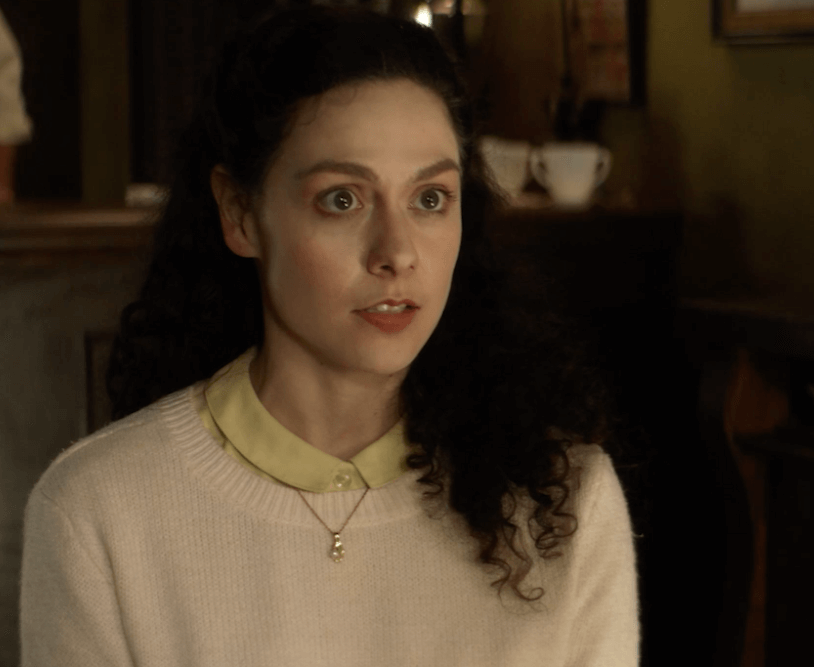
Well, in the ending of the of the resistance, ultimately it’s a kind of a cat and mouse game between a Nazi officer during World War II and a woman he suspects is part of the French resistance. So, and it’s the two of them sitting at a table wondering who’s doing what. Are you am I busted or whatever? So the woman is the good guy, the Nazi is the bad guy. So early on, the director Kara White, who wrote and directed it, that we were making a western. It happened to be about Nazi-occupied France, but we were making a western. And instead of in the French cafe was an old West tavern. So we knew how that we were gonna design it like that. That has, even though it’s in broad daylight, it has one big light source that’s a wash from the front windows, and said, okay, they’re gonna sit at this table, and the Nazi is gonna have his back to the window, so he will always be in shadow. And our good guy, which is this woman in a light pink sweater, that she has this soft glow radiance on her to design her in a flattering light. And also it seems like an interrogation that she’s like can’t quite see the Nazi a little bit. So just by not even knuckling down into the framing, our setting now has placed them and has done before they talk, it has done 60% of the work.
TMac 17:56
Setting matches story.
Adam 17:57
Yeah. And we could have put them anywhere in the bar, but that seemed to facilitate what the story required, and it gave all the unconscious beats. And then the words on the page can be off and running as well.
TMac 18:18
And now that you have that scene set, you got your lighting, you got your characters, you got your story leading up to the essentially a such a second plot point. We’re gonna we’re gonna resolve this. How are you blocking it? So are you or how are you shooting that blocking like a Western? Like how are you shooting that?
Adam 18:54
It did end up it did end up because we couldn’t go outside. They were keeping it all within the confines of the bar. And it was basically a shootout. It was a verbal shootout that if everybody finally stands up and the Nazi is far away and he starts walking towards her. So it’s basically the jingling spurs or walking towards each other until the final moment where they’re facing each other. When it comes to something like that, and I do this with the and I’ll do whatever the director wants, but most of the time they like this that we’ll do a scout with nobody’s around. It’s me and the director, and we start in 10% general terms talking about all right, they’ll be over here by this fireplace, and then the blocking, we need them to pull over here, and I’ll make a suggestion like can they not be maybe against that wall, but maybe you pull them over here to this chair because now I have a fighting chance to get some light on them and that sort of thing. Yeah, and then the director has we’ll build it up to like 40%, and then it will have the director will have a director rehearsal with the talent, which could or could not involve me. And now, with that knowledge the director has knows like, all right, now let’s let them find their bit. And I’ve already told the lighting people, you know, we’re gonna put a key light that comes up over there because they’re going to be there-ish. And as the as the saying goes, you shoot wide, then shoot wide, then tight. So I light a scene. I don’t like shots. I like the scene, let them move within it for the wide shot or whatever that may be. And then when you know it’s time and I know where the coverage is gonna be, then we can move in tighter and I can bring in some things to make them look nicer. But shoot wide, then tight, and you turn around once. It’s like we’re shooting all this way, this way, this way. All right, we got it. Now we’re turning around and we’re gonna shoot all the coverage. I’m not coming back because that’s wasting the day. And if you don’t make your day and you don’t waste, or if you make your day and you don’t waste it, you are employable. The producer usually does not care about your reel or that you know who Francois Truffaut is or anything like that. They want to know that you’re going to make your day and they’re not going to add days on the end of the schedule, and that makes you employable. And that’s the planning. That’s where the planning goes. If you want to be a king shit filmmaker and shoot for anybody, and you’ve read all of Roger Deacon’s books and listened to his podcast, that’s all great. The producer does not care unless you can make your day.
TMac 21:42
And fans by making day, he means on time and on budget.
Adam 21:46
Yeah. So we got we got seven pages to do. You are shooting seven pages today because if you miss one, it’s going on the next day, and now you’re playing behind. So don’t waste don’t don’t mortgage your day shooting close ups of whiskey glasses. And things like get what you need to get.
TMac 22:04
You should be teaching.
Adam 22:10
When they tell me I got 10 hours, man, I will get this thing across the finish line in 10 hours.
TMac 22:16
Right. Understood. I think I think what’s hard for folks to understand is so the stuff that goes on that they don’t think that goes on. Director is talking to actors. And she’s giving them the like you said 20 to 40 percent of their of their movements which in your case weren’t a lot until and then you’re on the other side talking to lighting saying they may yeah they’ll bring us in those are rehearsal and now that the talent is there and maybe the town is like you know I have to get angry with that character.
Adam 22:57
I need to be over here instead and then I’ll work with them like all right you know we’re we’re ready for that and then everybody then when they finally have a full on then they’ll get up to about 80% and then they’ll do a blocking rehearsal with the with the can’t with the ACs and everybody watching and now and we don’t we’re not concerned with mood or feelings or anything. Where did the humans stand? And because if I don’t know that they’re not going to be in the movie. So and while they’re doing that blocking and they’re doing the scene the first AC is putting tape marks on the floor and the Dolly grip is putting tape marks on the floor. Everybody’s taking notes in a big way and then the actors are like and you say thank you very much go off to hair and makeup or whatever and we’re going to be ready for you in 45 minutes. And then crew has the set and here we go.
TMac 23:47
And now we’re going to make it a hundred percent a very large part of your career and I understand still part of your career is steady cam work. So talk to me about I mean that is in a in a in a specialized world of filmmaking that’s a specialty within a specialty how did you how did you Adam White go from right state graduate pumping in the film world I’m gonna I’m gonna do steady care.
Adam 24:22
It was the least likely path that possibly could have happened I was I did a couple of jobs with a group called Gaslight Productions that were in Canton Ohio and they yeah those guys and they were getting ready to do a real estate program touring high-end houses and this was decades before there were gimbals and they thought well you know maybe a good way to do this would be with a steady cam. And right about that time they were coming out with lower cost steady cams so they’re only the cost of a used car. And they paid for me to go out to Los Angeles and get trained. And Garrett Brown who invented the steady cam was my teacher and the boss thing about that was Dude inventor dude Garrett Brown. Mentor dude is mentor dude at the at the end of the day each day it’s like oh let’s watch something so then he wings in the DVD of the shining which was a director’s commentary that you could pause and ask questions and Garrett told us how they did each and every shot so then I come back and I shoot 2600 houses over the course of six years and that’s how I practice to get good at steady cam. And that was several president administr administrations ago. Okay Hotshot Steady Cam guy tell me like what is your favorite use of that tool it would be and it’s different if I’m not the user of it like if I’m just watching a show and I’m the I’m suddenly and I’m not easily distracted like I’m not getting into the filmmaking head like oh they put their key light there I’m not doing any of that but if I’m noticing study cam and it might have been too much then it might have been a little bit inappropriate.
TMac 26:25
When it’s integrated into the story it works wonderfully when they did it in Goodfellas and he does the walk through the back kitchen and all that outstanding way to introduce a character I was watching Queen’s Gambit and they had a big long steady cam shot of her walking in a hotel and it just kept going on and on and I think I was just for the they were just showing off which may be less of a reason when producers sometimes will hire a steady cam or a gimbal and they do it because they think it will make the job go faster that’s usually not the best usage of it you just answered you just answered my second question which was gonna be because you were the one all those years ago that you know kind of laid that concept on me that of course it’s a creative tool yeah which you just talked about but it’s also an economic tool.
Adam 27:30
Yeah they think they can fire the dolly then and they’ll learn very quickly whether it’s a steady cam or a gimbal or anything else it does not it’s not a catch all the Pentagon loves get buying planes that they think can do everything and nothing can do everything but it’s but in when you’re operating I’ve had somebody point at me and say for this shot we’d really like you to not move which I stood in the corner and shot because they thought it would take too long to pull the camera off. So instead my body is on the clock for a five minute shot where I didn’t move a muscle. And every steady cam operator out there is at their best for their first shot and they get worse throughout the day because their body is on the clock. The best shot is when it really leans into the tools.
TMac 28:26
I was doing a thing for PBS up at the cathedral in Cleveland and they’re doing a choir Santa Lochia choir and there’s a choir girl only with a candle she walks out into the audience and I’m pulling her with the steady cam and you can hear in the headset they’re like all you camera five go camera five and I just roundy round around her for a three minute solo yeah and that’s that’s when it and then and when it was done they go that’s great five take six ready six and that was my congratulations that’s great five and then I went off and cried in the corner because I didn’t have anything left well I’m guilty of that full disclosure Adam and I worked together on a project for our dear friend Phil Hoffman shooting the steel drum band yeah I was it was really the first time for me that I got to pick my band and you of course were on steady cam and that’s really where that story and that whole thing came to be real for me because I’m I’m you know it was a live event and I’m cutting it like the sports dude that I am and you went sir oh like oh crap yeah right go on over there sit down and put on the shoulder it’s it’s not it’s not I love that the first shot you peek and then you are you are burning gas it gets towards the end of the throughout the day even if you have a nice big resting lunch you know you’re you’re not gonna be rested up until the next day having said that I went out to LA I was seeing a friend of mine and he’s like yeah come to set and I met their steady cam operator they were getting ready to go to lunch and he shook my hand and he’s like I gotta I gotta go I’m not going to lunch and I’m going to the gym it’s going in between morning and afternoon of steady cam.
Adam 30:36
He’s gonna go to the gym and work out like you are next level that is not me.
TMac 30:41
So lots of lots of film work 2600 homes yeah give me and you’re still here so I can ask this but give me give me a good steady cam mishap.
Adam 30:56
Well of yours yeah I broke my golden rule and I wasn’t young or beginning I had gone a number of years doing study cam so I was doing better scene and this was this was knowledge given to me by Garrett that you don’t do this and so we were doing a scene they were in the woods in the metro park somewhere and there was a woman running through the woods and I was I was on a path she was in the woods but and I have the camera turned sideways so I’m running in a straight line with the camera pointed that way and she’s running pretty fast and I’m keeping up with her and I’m running as fast as I can and that’s the original sin. You do not run as fast as you can because now you have nothing left to save yourself. So I’m running with her and keeping up and the path I’m on starts slowly going downhill and I’m going downhill and the rig starts pulling away from me on the it’s on the arm but it starts moving away from me and it’s like okay this is happening. While this is happening now I need to figure out how I’m going to fall because I’m going to fall because I can’t stop and I sorted it out I was flying a red one at the time and I grabbed the post I fell onto both knees I ran the camera into the ground and I broke the steady cam post right in half I broke the carbon fiber post in half and took all of the skin off both knees. I was gonna say my AC comes over I’m on my back like a turtle he comes over and picks up the red one and walks away and the red one’s built like a Russian tank. I think we cracked a filter everything else of it was perfectly fine. And I rammed it in the ground with like the force of a 300 pound man. And yeah Steady Cam was done for the day and I had to go by significant repairs but I broke my own rule. And even he Garrett was telling stories when he shot Wolf with Jack Nicholson that he had to we had a half day of how to tell no to an actor because like look in the training or to the director I’ve done that saying no to doing steady cam on ice skates and then they made me do it anyway I had to sports person I had to go up to Ken Griffey Jr. One day and I was flying a BL4 and you all can Google it that is a whale of a camera it’s but the body’s about that big 50 pounds on its own and I shake Junior was shagging fly balls in the outfield and I was chasing him down it was I don’t think it was great American no it was great American and eventually I just had to come like you’re Ken Griffey Jr.
TMac 34:00
I’m not I’m carrying this you’re not you want it you want me to run slower let’s try it with you running slower because and I was like 27 at the time and as best as I could possibly be but he’s an all-star yeah slow down fun fact by the way he’s a really good photographer is he you know that oh yeah I just he’s totally into sports photography I learned something new today so next evolution so you are now you got talk to me about how the did the docs come before your company hemlock films or did hemlock films get formed because you knew you were going to do that type of work yeah and it is a friend a guy I knew he was gave me the advice early on and he’s like you are hemlock films is not going to give Paramount a run for its money but you formed you formed a company basically to so you can have production insurance and so you have some protection and so it just doesn’t seem like you know you’re just some goofball in a house somewhere but you have you know some structure to your life but for as a filmmaker whether it’s myself or Kara that’s that as a filmmaker that’s what you put out forward.
Adam 35:26
And every production whether even if Paramount hasn’t done it’s an independent film but so you’re making an independent film about you know igloos then you make an LLC you make a company igloo movies LLC so you have some protection so that so that got formed that got formed and I made docs after that. Alright so let’s because I’m fellow airplane nerd talk to me about I really want to talk to you about the restores and then what came after that and red tails so talk about how you I think you can correct me if I’m wrong you sort of leveraged your existing airplane nerd tone like hey I could shoot the airplanes I’m sure at some point yeah it was again added to the list of things that your guidance counselor can’t advise you on it would be subject matter and I had filmmaking and aviation as interest and they’re like why don’t you go get a communications degree I’m like that’s kind of not what I asked but okay when growing up in Cleveland at the Cleveland air show as it was at the time that it’s on a hot ramp and it’s jets all day and I kind of hated it out loud. My parents would take me to that and I just could not want to be somewhere else more. And I hate hot and I’ll go out at Christmas night here in shorts and go and grill steaks. You will not outcool me when it comes to that but I’ll melt if I go somewhere south. But then after college I got introduced to another a different air show in Batavia New York where it’s not jets and they’re older aircraft like B-17s and P-51s and not like Cleveland where the hot part of the ramp is all cordoned off and you can’t go to them you could walk up to them. And more importantly you could also walk up to the individuals that were flying them and the individuals that used to fly them and now you’re into something. And have a one of my teachers was Julia Rikert who’s an Academy award winning documentary filmmaker. And when you say documentary that’s also a big umbrella over many different genres the ones that she makes are not the ones that I make right but my documentary bells started going off when I was looking at these airplanes and I was seeing stories that at the time Discovery and History Channel on PBS were not telling. So I thought here’s a chance I could tell these stories through documentary and which is less expensive than doing a narrative and because of what they are there’s getting up at four in the morning to shoot sexy stuff with the sun coming up and rising over a B17 and there’s a slow motion of the props turning while fire is chugging out of the stacks that sort of thing and I shot all of the restorers on super 16 film and on a criminally low ratio of nine to one for it and the I did that because I could shoot I could cut together a super sexy trailer and I didn’t matter I was not part of the equation but I could show investors like don’t worry about me look at this and they could look at the whatever I had just shot and go oh that’s kind of cool what are you doing next and then you can go on from there. So that’s kind of how I got going with it with credit cards to initially start with and then I was introduced to a world that I had no idea how little I knew about it. And then I was off and running from there.
TMac 39:35
And then you met all those old timers that restored them.
Adam 39:43
Yeah.
TMac 39:44
I mean I love the airplanes but it never occurs that there’s a cadre of folks that keep them fly.
Adam 39:54
Oh yeah internationally we two years ago we went to the ducksford air show in England and it’s you know same ballgame they have restorers in Germany digging up aircraft that have crashed in fields and that sort of thing so it and they and you talk to those guys and they’re like oh yeah it’s way easier now with the internet you just go send you go on a message board and post that I need this and this type of cylinder and like six people get back with you and now you don’t have to have somebody working a phone for eight hours to find that stuff.
TMac 40:30
Right.
Adam 40:31
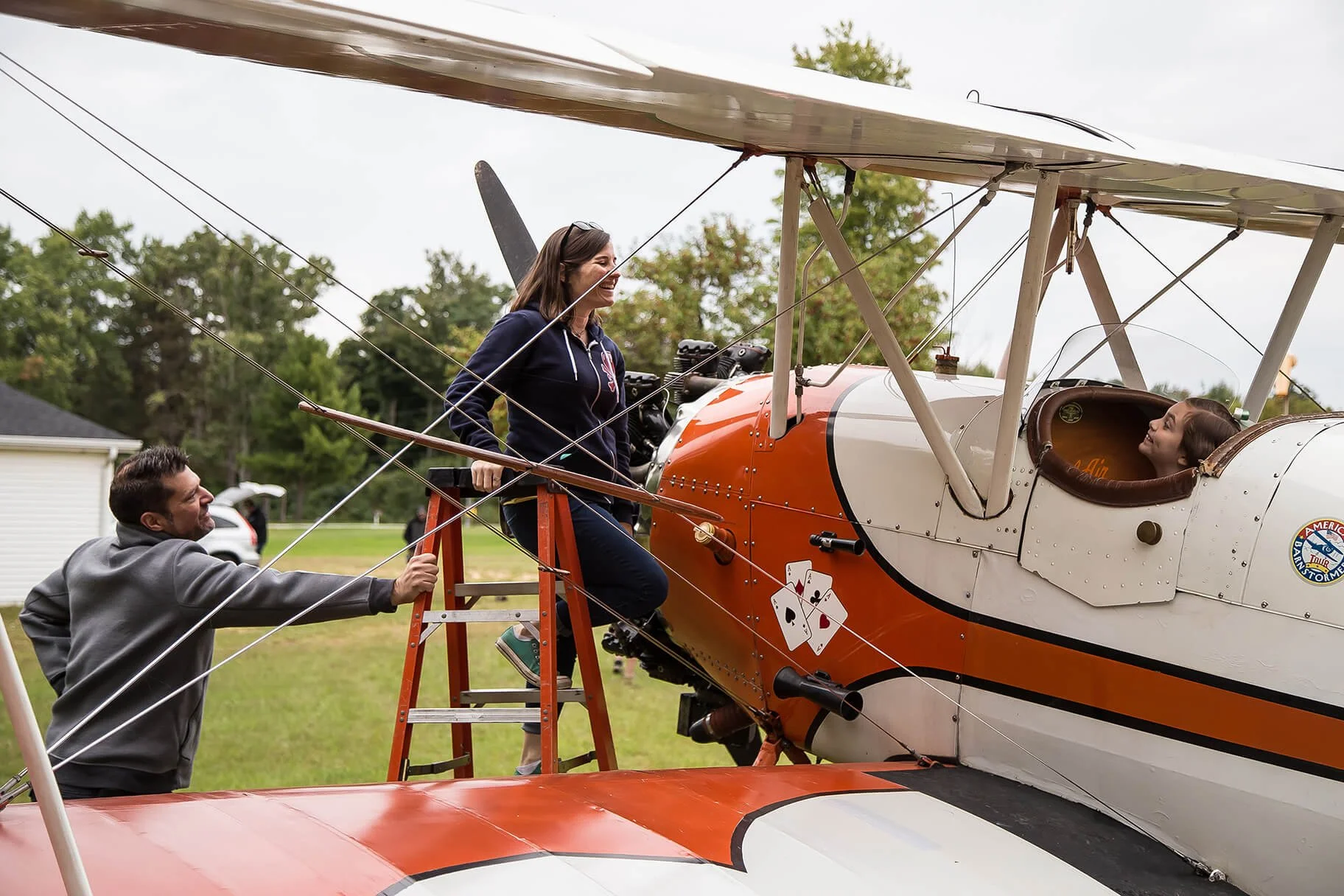
So the restorers is essentially the story of it’s a story of everyday people who choose to restore antique aircraft and by telling their story through that we can tell the stories of the people who used to fly those back during whatever time period. And when we did the initial restorers it was the right glider all the way up through the Korean War of different aircraft that we had been able to do. So it was a Trojan horse history lesson that we were able to put together like that.
TMac 41:11
Yes it was and then sort of the P51 comes along in a couple of different places so talk about then it’s almost like you start getting more specific as you the bigger story leads to some of the other more specific stories and one of my favorites is being able to tell the story of the Red Tales and the Tuskegee Airmen using the air yeah and again it’s when I was doing the restorers I was meeting people that would eventually be in my next film and in doing that there’s a group up in Minnesota that were rebuilding a P-51 Mustang that had a wild lineage to it and they had decided that they were going to paint in the colors of the Tuskegee Airmen so then I was able to tell their story by telling the story of this airplane.
Adam 42:06
And at that time there were still a good amount this was in 06 when the film came out and I was able to interview a fair amount of Tuskegee airmen leading into that film what was the what was the second part? So part two was the story of the plane and the and the tragedy right yeah and then yeah and then the reborn well yeah when I made the film I remember when I was pitching the restorers to a reality show producer and he’s like it’s great but in my head the prototypical thing is every week somebody gets a plane they restore it and then they kick it out the hangar door at the end of the episode and that can’t happen. These airplanes take sometimes decades to be finished so everything’s kind of a retroactive storytelling that you pick something that’s about to be finished and start talking about where did it come from and with Red Tail Reborn I was telling the story of this plane and PBS agreed to air it but the plane through the course of the story had crashed and they were rebuilding it Red Tail Reborn and it wasn’t going to be done. The plane wasn’t going to be done. So we sort of I sort of manufactured an ending of it but then two years later they actually finished the airplane and I shook I shot a coda like a six to seven minute coda that I was able to introduce and then we I released the film again. And that’s the one that’s available out there.
TMac 43:46
The full one is out yeah out still yeah so and then when so the docs were early and you’ve been working along On all of that, when did the idea of narrative filmmaking I and I know the first part of the answer, which is everybody wants to make narrative. But how did that what was the whole essence of that transition? You’re right.
Adam 44:22
It’s always been there, and it’s just the opportunity of is this a project that we can introduce those elements into it and not and do it justice, not like you know, we’re just going to have you know three guys standing around a trash can in leather outfits and say that you know, okay, they’re a bomber crew, but how can we can we do this in a responsible way? And the first time we were really able to do that is when we did a movie called Rise Above Wasp, that was about the women pilots from World War II. And it was designed. First, we did a rise above movie about Tuskegee Airmen, and that didn’t have any reenactments in it. And it was very popular. The commemorative Air Force drives around the country with that giant screen theater and shows that to people. And they said immediately when we finished that, they said we have to do one about the wasp. And Kara and I early on said, you know, this has to have reenactments. We have to what I call the Apollo 13 effect. If it’s just a street documentary, it’s kind of forgettable. But if you have a narrative scene exposing the emotion of it, it resonates more. And then if you kind of pair it with a doc element, a little bit like how Banner Brothers did, but ours is much more 50-50. Now you can have that emotion, and then you also have the shortcut of doing a documentary where narration can cover some of what you can’t accomplish budgetarily, so that’s kind of how we started it.
TMac 45:53
So you were doing not so much a full narrative, but correct reenactments within a hybrid. But you are still using all of the narrative techniques, location work, scout location, actors, absolutely and was that a good way to transition to something full stop written for the screen?
Adam 46:24
It’s always been there. The Kara and I are also freelancers in the film industry. So and when we’re not doing hemlock film stuff, we are Kara’s doing set deck and I’m in the camera department. So when we’re doing working on narrative things, it’s we’ve been working on narrative things for I’ve been doing it for 30 years. Like what are we doing in here? Okay, it’s a two-shot there, and that’s just it the fact that we were doing it was not that hard of a transition.
TMac 46:57
Right. Well, your all of your work now is financing, yeah.
Adam 47:04
Every day.
TMac 47:07
All day. I think I think so the company was formed and now you’re able then to shoot your own projects, which we’ve walked through. Let me ask some speci more some kind of nerdy questions, but I don’t care. It’s my podcast. Yeah, what’s your what’s your what’s your kit? Because I asked photographers and multiple bodies and multiple lenses, and I’ve essentially have wide, medium, long for any job, two bodies, blah.
Adam 47:49
In your world in filmmaking, what is your hemlock kit if you’re not using somebody else’s rental care or somebody most of the time it’s it’s been a red for 10 years, and then right in a couple of different bodies. Right now it’s sure 8k red helium with PL mount, and then I was shooting with Canon still lenses on it for the longest time when I was doing dock work. Cinema lenses, yeah, for with the zoom lenses, which is great for the dock. And then I just went and got two years ago, I went and got two Sigma zoom lenses as my primary dock lenses. I still have a set of Zeiss standard speed primes, but for the dock stuff, it’s on I almost exclusively have the Sigmas on.
TMac 48:46
What are the focal lengths?
Adam 48:48
It’s 18 to 30 and 50 to 100.
TMac 48:56
So you got wide and you got something that you could, and again, I because I know you and I know you know that 100 is very versatile. Oh, yeah. You can get you can get your back end and without having to swap a lens, yeah, get your get your close-up work as done as well.
Adam 49:15
Yeah, it’s if I got the room, I love having the tight on there. The fifty the 50 for interviews is great if I have enough room to back up.
TMac 49:26
Right, right. You’re not shooting in a phone booth. What do you have your own audio package?
Adam 49:34
Do you I do if I’m in trouble, I have a boom mic. I’m much more of a boom guy than a live guy. But I almost oh well I always love having an audio person, so I don’t have to think about that. But if I’m in trouble, maybe couldn’t bring somebody, then I yeah, I just have a synizer that goes either right into the camera or into a zoom.
TMac 50:00
Well, speaking of people, that was going to be my next question. And feel free to give your peeps some love, but who is your sort of have to have crew? Give me their job and throw out the person’s name anyway, just to give them some love. But when you’re doing Why I Fly, which is a series, web series that you do, I assume it’s Kara and yourself.
Adam 50:27
Yeah, that’s it. I would love to have two people. When we were doing the Restorers television series, most of the time we had we swelled up to a whopping four. It would be Kara and I, and then Kevin Hines doing audio, and Amy Faust is the second camera. Particularly when we’re doing events, when in because and a lot of the things we did for that for that series were events. Somebody’s flying the right glider at Kitty Hawk, so we need multiple cameras covering that, and we don’t have too much control over it.
TMac 51:05
So got it. Anyone else?
Adam 51:08
Well, when we did the episode number five of that series, which we shot first, it was the story of the Doolittle Raiders, and they were having a reunion, and to celebrate them, they were launching 17 B-25s to fly over the Air Force Museum in formation. So at Urban at Urbana, Ohio, Kara, or I’m sorry, was she there? I’m starting to my memory’s starting to fade. At Urbana, Ohio, there was multiple cameras, one on a crane. One Jared Green with a crane, Alex Esborough was another camera. I was on board one of the B7 B-25s, and then Kara was at the Air Force Museum with David Litz with another camera to film us landing. So that was that was the biggest we’ve ever had in doing straight documentaries.
TMac 52:11
So when you did your because you called it the hybrid film, those recreation scenes are film shoes. They’re yeah, there’s so you and we’re doing half of it was in Sweetwater, Texas, which has it’s three and a half hours from Dallas.
Adam 52:32
So we had to bring every man, woman, and child and scrap of equipment. If we were gonna need it, we had to transport it in there because nothing looks like sweetwater except sweetwater.
TMac 52:44
So and that was because it was remote enough to recreate the time.
Adam 52:53
Yeah, to it is sweetwater, Texas is we were shooting on the actual field that the wasp were trained in 1943, and it looks pretty much exactly like it did back then.
Adam 53:04
Awesome.
Adam 53:05
Yeah, it was you could feel the ghosts around when you’re shooting something like that.
TMac 53:10
All right, man. Last question. If you were going to advise the 22, 23-year-old Adam White about the about all that we’ve discussed. What’s the one thing that you would tell them that you didn’t know at the time that is it been your kind of guiding light or star about the work and being the artist that you are?
Adam 53:45
Two things. One, start an IRA because Einstein said the greatest power in the universe is compound interest. Two that two I always suggest, and everybody’s you know part of their own situation, but I always advise that you should go out and sling around in the world. Don’t take a job, don’t take a production job where you’re gonna be an in-house too early in your career. Get out there and meet some heroes, meet some monsters. Every one of them is gonna be able to teach you something. And it just makes you that much better. My fear always somebody gets a consistent job at a production company is that I know every day presents learning, but now you’re you have to kind of find it yourself as opposed to being you know, with you know, Jack Green’s hip pocket and seeing how he lights in a friggin’ doorway. You know, you’re your learning is exponential when you’re out in the wild like that.
Adam 54:56
Complacency. Yeah. You know, you get you get safe.
Adam 55:02
Yeah, and when pe everyone’s learning from me, it’s like, oh shit, does that mean I’m not learning? I don’t have anybody that I’m being able to look at. But which of course, every you know, if I had to shoot in here, I would learn something tonight. Everything you do is a learning experience, but it’s cool if you can borrow some factoids from somebody else, too.
TMac 55:25
Right. Well, Adam White, I can’t thank you enough for taking part in my Zoom with our feet project. I really appreciate your help.
Adam 55:35
It’s my pleasure.
TMac 55:37
Thanks again to director of photography Adam White. You can check out his amazing work at hemlockfilms.com and all his social media channels. The Zoom With Our Feet Podcast is a production of TV Commando Media. The Zoom pod’s funky grooves are provided by Cloud10. Be sure to take a peek at the blog and other episodes of the Zoom pod at zoomwithourfeet.com. Until next time, photographers and videographers, if you’re not shooting, you’re not learning.
More From Adam