Ric Kruszynski — Pro Sports Photography, Trading Cards & How to Learn Photography From the Ground Up
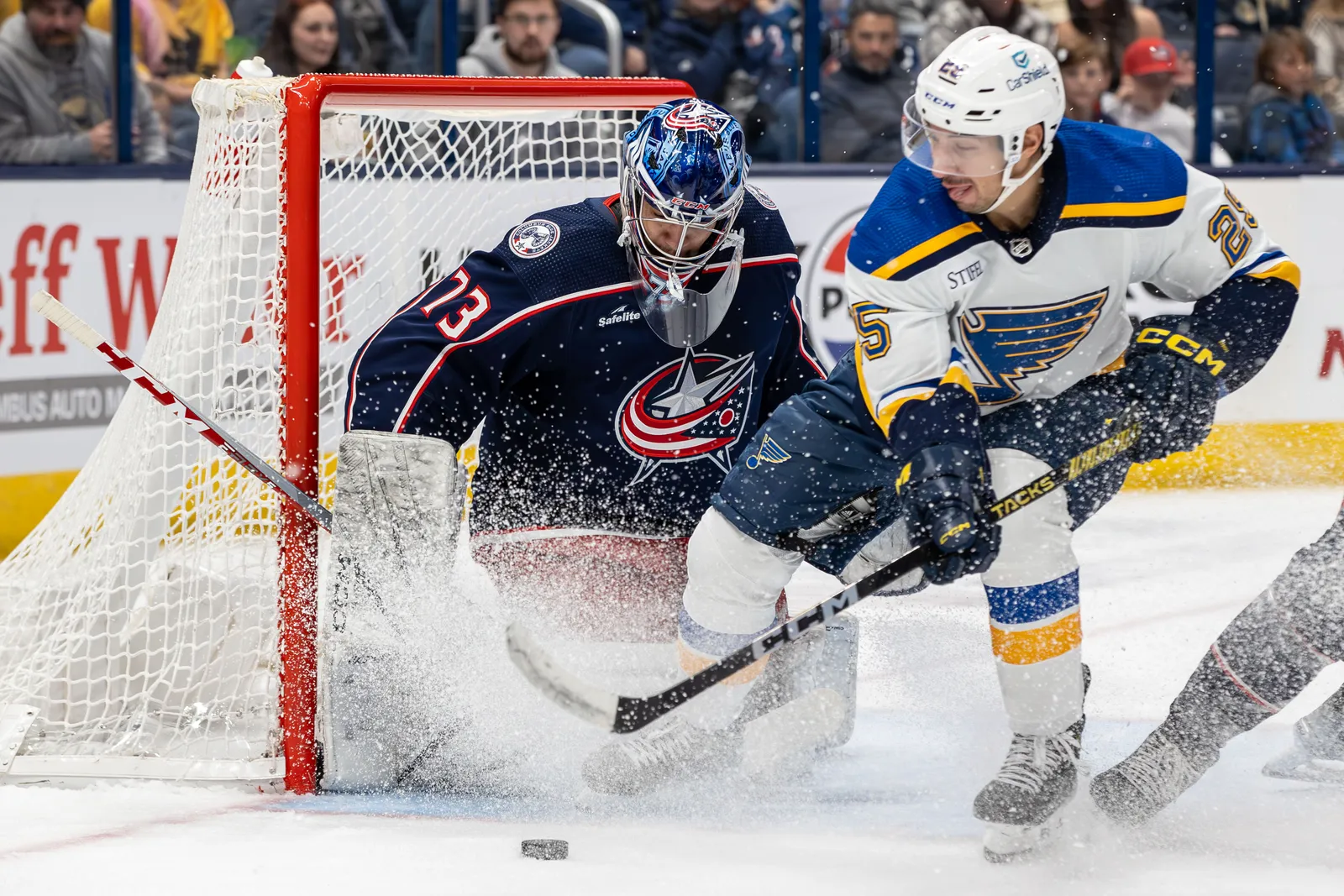
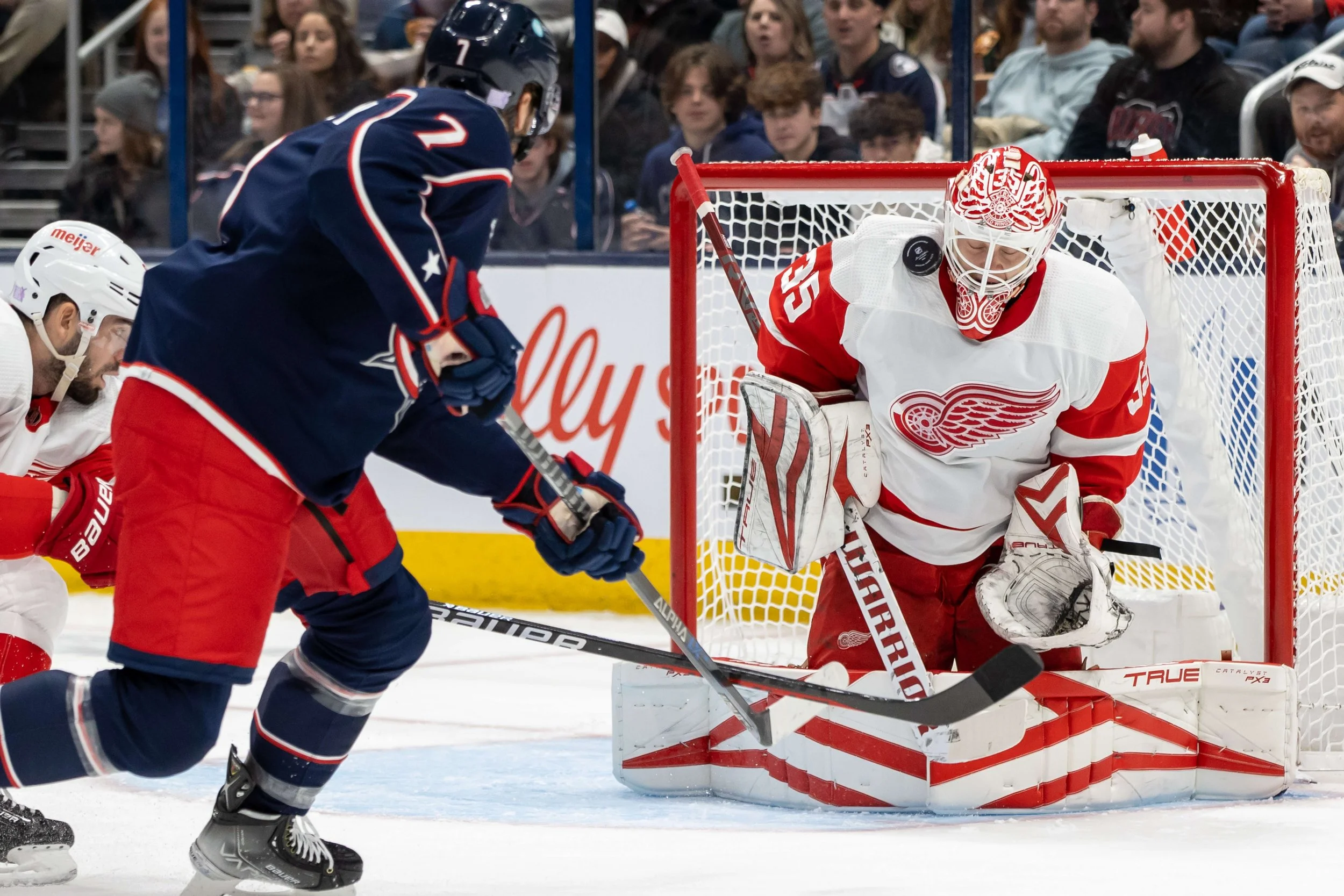
The crease. The chaos. The shot. Ric Kruszynski, Columbus Blue Jackets. Photo Credit: Ric Kruszynski Photography. Used with permission.
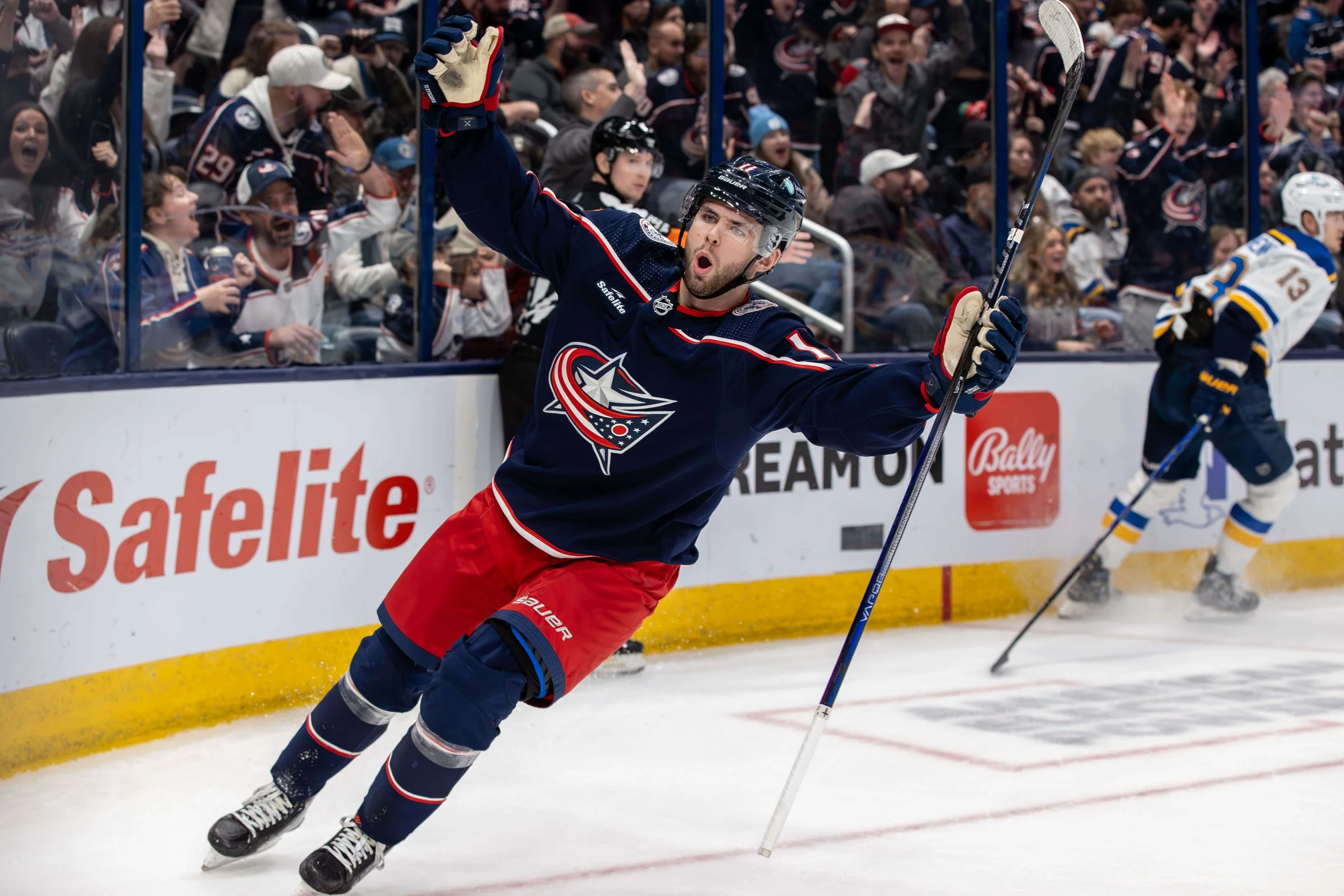
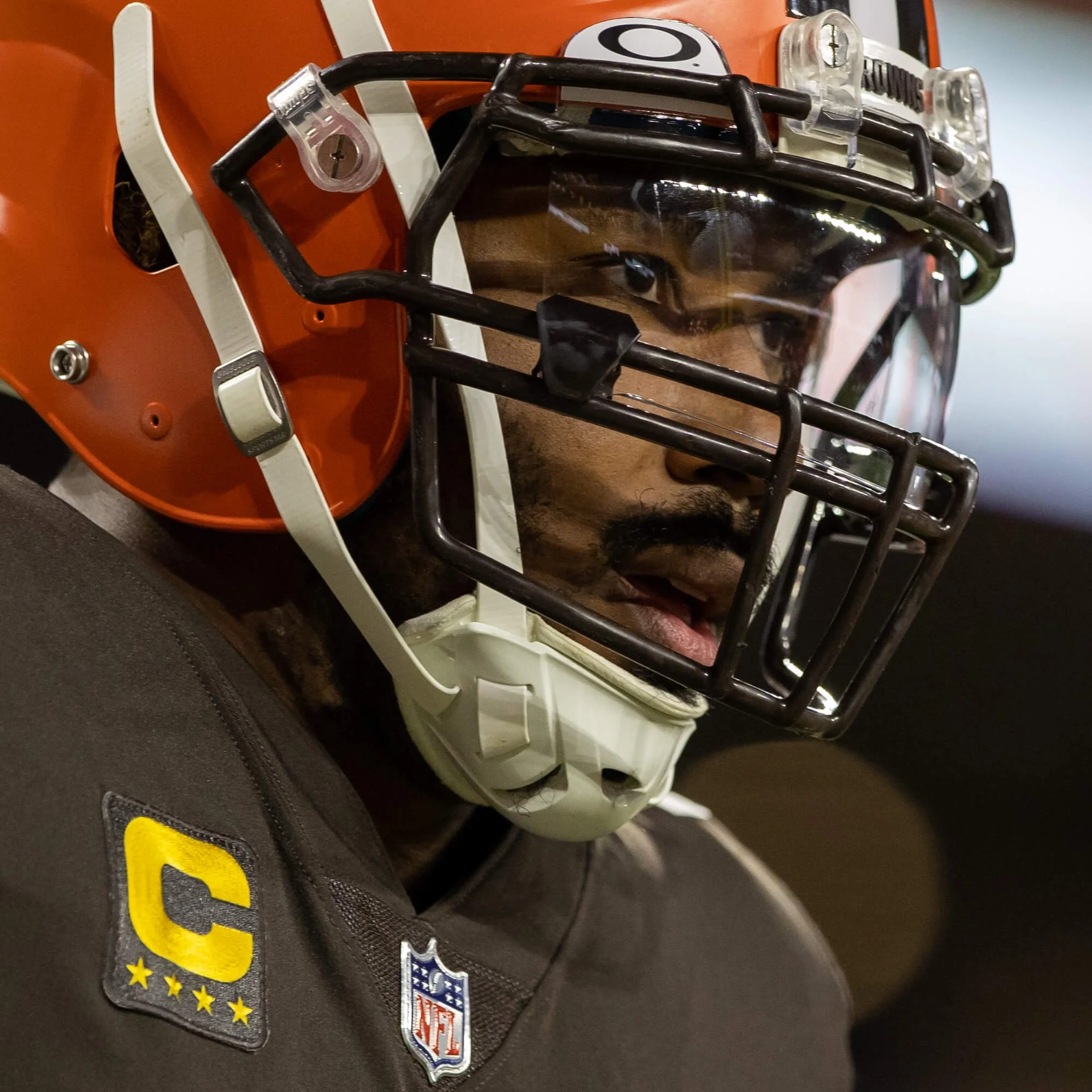
Ric Kruszynski’s photography career started with a shoebox of baseball cards at age five, a borrowed camera at his son’s travel baseball games, and the nerve to ask a stranger if he could try it. Today he shoots for the Cleveland Browns, Columbus Blue Jackets, and Upper Deck hockey cards, with roughly 3,000 photos he’s taken now circulating in trading card packs worldwide.
In this episode Ric breaks down the path from Little League sideline to professional credentials, and shares the philosophy that’s guided every step: you earn opportunities, you don’t ask for them.
Why It Matters
Ric’s advice disappoints most people who ask for it, because there’s no shortcut in it. Start at the most basic level. Shoot your nephew’s Little League game. Earn your way from high school to college to professional work, one level at a time. For anyone hoping to skip straight to the credential, Ric’s path is the honest answer: the path is the path, and it’s different for everyone, but it still has to be earned.
About This Guest
Ric Kruszynski is a Cleveland-based sports photographer shooting for the Cleveland Browns, Columbus Blue Jackets, and Upper Deck hockey cards, with roughly 3,000 photos now appearing in trading card packs. A lifelong card collector since age five, his photography career began by borrowing a friend’s camera at his son’s youth baseball games and creating custom trading cards for the team. He’s built a career on consistency, professionalism, and a willingness to put himself forward, reaching out directly to people who could give him an opportunity rather than waiting to be discovered.
Ric’s Bonafides
“
You’ve got to be really good. It helps if you’re consistent, friendly, and reasonable to work with. There’s one common thread throughout most of the high-profile gigs I’ve gotten: a point where I reached over a line to connect with somebody and asserted myself to take a chance.
”— RIC KRUSZYNSKI, SPORTS PHOTOGRAPHER, CLEVELAND BROWNS AND COLUMBUS BLUE JACKETSHear This Episode
Watch Here
Episode Timestamps
Your ZoomPod — Exit Ticket
After this episode, you'll know:
- Why earning your way up from Little League to high school to college builds the skill that professional credentials require
- How asserting yourself and reaching out directly is the common thread behind nearly every high-profile opportunity
- What mudita means and why finding joy in someone else’s success is the real fuel behind a long sports photography career
- Why there is no single right path into sports photography, only the path you’re willing to put in the work for
Gear & Affiliate Links
Trick out your kit, and your wardrobe. Both Adorama and SmallRig are having sales right now. Or wear your photography mood, grab a ZWOF set-wear tee shirt. If you use a ZWOF link, we may earn a small commission that doesn’t increase the price of your item.
Explore More
Check out our other great podcast episodes. Link and follow for more great learn-photography content: IG @zoomwithourfeet | FB @ZoomWithOurFeet.
Ric started with a borrowed camera and the nerve to ask. Same first step applies to anyone picking up a camera for the first time.
Stop Shooting From the Stands →Ric 00:07
When you get a younger photographer, what’s the formula of photography? You know what? One, you got to be really good. It helps if you’re consistent. It helps if you’re friendly and accessible and reasonable to work with. It helps if you’re confident and you’re able to assert yourself, to reach out to people. There’s one common thread throughout most of the really high-profile kinds of gigs that I’ve gotten. There’s a point in there which I reached over a line to connect with somebody and asserted myself to take a chance. Hey, took these pictures, you might be interested in them, thought I’d show them to you. And they went, hey, you’re on to something there.
TMac 00:55
Hello and welcome to another edition of the Zoom with our feet podcast, the pod about learning photography. With me, your host, TMac. I am a professional photographer, videographer, and teacher. On this episode of the Zoom Pod, Cleveland-based Rick Krasinski joins me to talk about his journey from shooting his kids with a stranger’s borrowed camera to his lifelong love of trading cards and shooting sports at the highest professional levels. Our guest speaker is in the photo lab. Let’s talk to a pro. Rick Krasinski, welcome to the Zoom with our feet podcast. How are you?
Ric 01:53
I am great. Thanks for having me.
TMac 01:56
All right, so I always throw this softball as the first question. What was the first camera you remember using?
Ric 02:05
Oh my goodness. I know our family had a film camera when I was young. But it was, I don’t know, the equivalent of what we might think of as a point and shoot now. I couldn’t tell you anything about the model or anything like that. I got a Canon PowerShot point and shoot. In the early 2000s when digital first hit. I joke with people that most phones have twice the megapixels that thing had at the time. But monkey around with that, mostly just for pictures of events and things like that, standard family stuff. Didn’t try to do any real photography with it. But I’m gonna go with the Canon Power Shot from modern age.
TMac 02:52
Tell me, so then that leads to what I call the photo journey. Where did that where did where did it get serious? And how did that and where did that journey take you?
Ric 03:09
So I’m gonna offer a really old bit of context that informs the journey and then speed it up a little bit. I was about five years old. My mom took me to a garage sale and bought me a shoebox of baseball cards that I was absolutely enamored with, and thus began what is now a 52-year card collecting habit, whatever you want to call it, hobby. And have been wrapped up in photo images of sports really since I was a little kid. And used to get like the old sports illustrated magazines, hockey digests, things like that, cut out pictures and save them when I was, you know, eight, nine years old, what have you. Was very, very into sports photography as a little dude. And flash forward a number of years, and kids of my own at this point, my 10-year-old son starts playing travel baseball. And I was one of those parents at high risk to be a difficult little league parent. You know the type that are too emotionally invested in the outcome of 10-year-old sporting events. So I was that guy, but there was another gentleman whose son played on the team who every week he would bring a camera, DSLR to the game and never take it out of the camera bag, but he always had it there with him. And finally, I got up the nerve after a number of weeks and said, Hey, are you gonna take any pictures? Would you mind if I tried it? And he showed me a way around the camera a little bit and said, No, go ahead. I bring it thinking I’m gonna do something with it, and I just decide when I get here I’m not gonna, but I figured I’d have it just in case. So he let me start monkeying around with it, and the rest of that season, every game, I would come up to him and go, Are you gonna shoot today? No, can I take pictures with your camera? Sure. So I borrowed his camera on a game-by-game basis, taking pictures of 10-year-old travel baseball players. Towards the end of that season, I had asked some of the players if I could do posed photo shoots with them, having them pose in the old 1950s style baseball card you know, images, right? Just a real corny, cheesy sort of poses. And they did a great job for me. But the team itself was not particularly good. And so when there was this discussion at the end of the year about, well, some of the parents were like, are they gonna get trophies? Like, no, you don’t get trophies for a team that isn’t any good. Why don’t we make them? We want some something to remember the season by. Why don’t we make them a set of baseball cards? So at the time, Topps baseball cards had a website where you could use the current Topps card design, upload your pictures. I had the coaches write up a little blurb for the back of the cards for each kid, put some statistics on them that they had kept, and then used in-game photos to create baseball cards and sort of playing out my own little baseball card thing, but also getting you know, the opportunity to do something kind of cool for the kids that would commemorate that season, right? So that summer really gave me the bug, although I didn’t own a camera still, and would just borrow my friend’s camera. And would then I’m like, you know, I started looking at the prices of cameras. I’m like, I can’t afford to get a nice camera. So I had to ask him if I could borrow it for other stuff, and hey, could I rent it for a weekend from you, you know, whatever, and start showing up at other little league events and other high school games and things like that, just to go out and do it. Cause it was just a I really enjoyed just taking pictures and getting some decent shots out of it. But you know that phase that we all go through where you’re in auto and you don’t know what the hell you’re doing, and but every now and again you nail a shot that you think is great and makes you want to keep doing it. So that’s kind of where it started, and then it got you know continually weirder from there.
TMac 07:40
Baseball cards for a kid’s team. Well played.
Ric 07:46
I was very fortunate that the coaches were supportive of the idea because it was totally a desire on my part to be able to say I took pictures on a that are on a baseball card. Years later, I had the opportunity to meet the gentleman who was the photographer for Topps baseball cards in the 80s and 90s, and he and I struck up a friendship and it was just kind of cool that he had taken thousands of card photos of cards that I owned, and I got to meet the guy and talk to him about it. It was really cool.
TMac 08:18
That’s that’s crazy. I and the fact that in addition to creating a set of cards, you got the photography bug.
Ric 08:31
Sure did. Was absolutely caught up at that point, and I don’t know, within a year and a half of that, I went out and bought a 7D, Canon 7D, to get started. Kit lens, the whole deal. Figured out, I don’t know, a year into the 7D. Well, the 7D Mark II would really be a good thing. And that’s when you know you really got the bug when you start having to do the gear upgrades. So you know, you get off and running with it.
TMac 09:06
Well, the next question is as you got into it, bought your first camera, now you’re starting to pay attention to other work. Who influenced you?
Ric 09:20
Oh my. I’d go back to what I had said before. I so much of the images of sports cards and sports magazines were the source of things that were, you know, just I was obsessed with them really as a kid, and had them constantly in front of me. I tell folks all the time, I’m like, imagine sorting baseball cards a couple days a week, every week, for 20 years. And you’re just you’re looking at sports images. And so I didn’t know till years later who was taking them. So to be able to name an influence necessarily wasn’t there, but it was where they were coming from. And you know well that the photographers that whose work makes it into a sports illustrated or something like that are you know their next level. And it really is like, wow, that’s you could get that photo, you could do that. That’s really you know, I’m I’d I’d love to be able to shoot like that one day. So you got it bad. You start trying, right? You’re like, okay, exactly. Well, I may only be able to get into a high school football game, but I’m gonna try to get that sports illustrated quality shot.
TMac 10:40
So those soccer game the soccer game period with borrowed camera, you were teaching yourself the exposure triangle, yes.
Ric 10:55
I learned that. I it was both soccer, baseball, a little bit of football at the time, all high school sports mostly. High school little league. Didn’t even know there was an exposure triangle until somebody who had seen me getting started and talking about getting started said, you know, there are some really cool YouTube tutorials out there that you could learn a lot from, might be worth checking out. So I just did the casual surf through YouTube and you know, learning how to use my 7D, whatever. And a couple of the that rabbit hole led to some, hey, there is a thing called the exposure triangle, and when you learn it, you’ll be better. And lo and behold, I tell people to this day, you know, the first thing you gotta do is get out of auto because I couldn’t believe how much better my photos got when I stopped shooting auto, right? That moment of clarity we all have. But it’s just funny every time you run into somebody who’s new and they’re they’re pretty latched onto auto. I was that guy, so I get it. But YouTube tutorials mostly, internet blogs where people would write about this stuff. Spent a lot of time reading, driven a lot by not wanting to do poorly at anything I do. So I get really wrapped up in it and like if I’m if I’m gonna bother, I want to be good at it.
TMac 12:24
You are all manual all the time? Mm-hmm.
Ric 12:32
Yeah, for I don’t know, 10 plus years.
TMac 12:36
Yeah, man. Full disclosure on some of the soccer games. If I got sun rolling in and out, I might sneak it into auto ISO.
Ric 12:47
But other than that, I’m I don’t consider auto ISO cheating, really, you know, especially for that. I mean, you get all kinds that the light dynamic that you’re describing, changing light, whatever, you might have to do that. But once you get a game that’s under the lights or whatever, I’ll I’ll lock in for sure. Auto ISO is your sundown go-to while you’ve got the field changing light tones multiple times.
TMac 13:18
7D, what’s in your kit now?
Ric 13:27
My kit now is a 1DX, Canon 1DX Mark III, and a Canon 1DX, the first edition is my backup. And three lenses are my go-to for everything. I’ve got a 300 2.8, a 7200 2.8, a 2470 2.8, and damn near everything I need to get, I can get with those three lenses.
TMac 13:56
Agreed.
Ric 13:57
Are there days I wish I had a 400? Sure. Are there days I wish I had something a little wider than a 2470? Sure, but not enough to justify going out and buying the new lens. I get about 90% of what I need to with those three.
TMac 14:12
I have the exact same set plus the wider 16 to 35. That’s that’s the only addition to the same stable.
Ric 14:24
I keep a 1.4 extender in there. Don’t use it all that often, but it’s not, you know, if you need it for something, I shoot a lot of big wide field stuff, rugby, soccer, football, etc. So now and again, if I can’t be particularly mobile and I’m not able to zoom with my feet, got some pretty arthritic knees. Yeah, I know.
TMac 14:50
I may pop on the extender to limit my having to run up and down the sidelines some, but I would rather sit on my little photo expandable and shoot away.
Ric 15:09
Right.
TMac 15:11
So you’ve got the extender 300. Oh my gosh, I have the Mark II version, and it’s just it’s like a classic car.
Ric 15:24
That’s the same one I’m using. The Mark II. It’s it’s rock solid. If I’m taking bad pictures with it, it’s about me. It’s not about the lens, that’s for sure.
TMac 15:34
Do you have a favorite sport to shoot?
Ric 15:37
I have a 1A and a 1B. I love rugby, which I got introduced to through my son when he was in junior high. He tried out rugby, fell in love with it, told me I’m not playing any other sport the rest of my life. All I want to do is rugby, and wound up playing on two state championship teams. And now is an assistant coach at the high school he played at, and he introduced me to the rugby community, and I love to shoot rugby. You get it’s a very vicious game, and a highly skilled game, and you get all that together, but no helmets obstructing faces, no equipment blocking anything. You get people, and you get people in very visceral emotional states, and so I find rugby photos in particular to just be the best kind of sports photography because it’s just so the game itself is in your face, and it allows the photos to be very in your face, and so I love rugby photography. My favorite sport is hockey, and so I love to shoot hockey for a bunch of other reasons, but those are my top two. If I were only shooting one or two things, it would be rugby and hockey, and I’d be good.
TMac 17:07
The really quality rugby photos for me is you’re right, they’re not wearing equipment, so the emotion on their face and their eyes during play is second to none to me.
Ric 17:29
The emotion and very often, I mean, the higher up ranks you go, I’ve had the opportunity to shoot New Zealand and the All Blacks against the United States national team. And to see the game played by the folks at the absolute highest level and to see a combination of the emotion and the absolute physical specimens that these folks are. It’s it’s incredible, really, their commitment to what they do and putting their bodies on the line that way. And it’s not to say that people aren’t putting their bodies on the line in other sports, but man, doing it with no pads, doing it with it’s just it’s a different, it’s a different gig, and the people who play it are wired different.
TMac 18:19
So tick off some of the sports that you shoot.
Ric 18:26
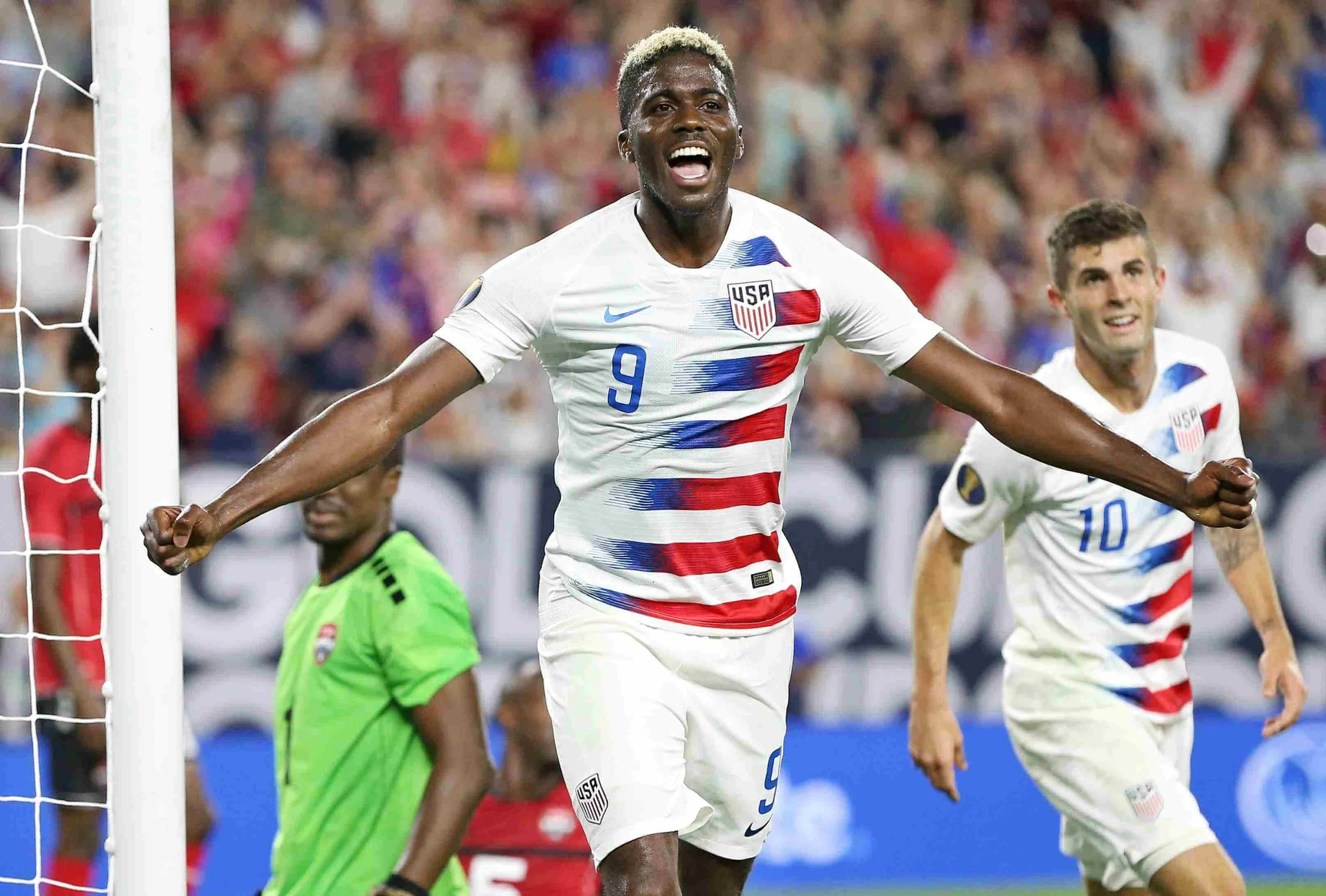
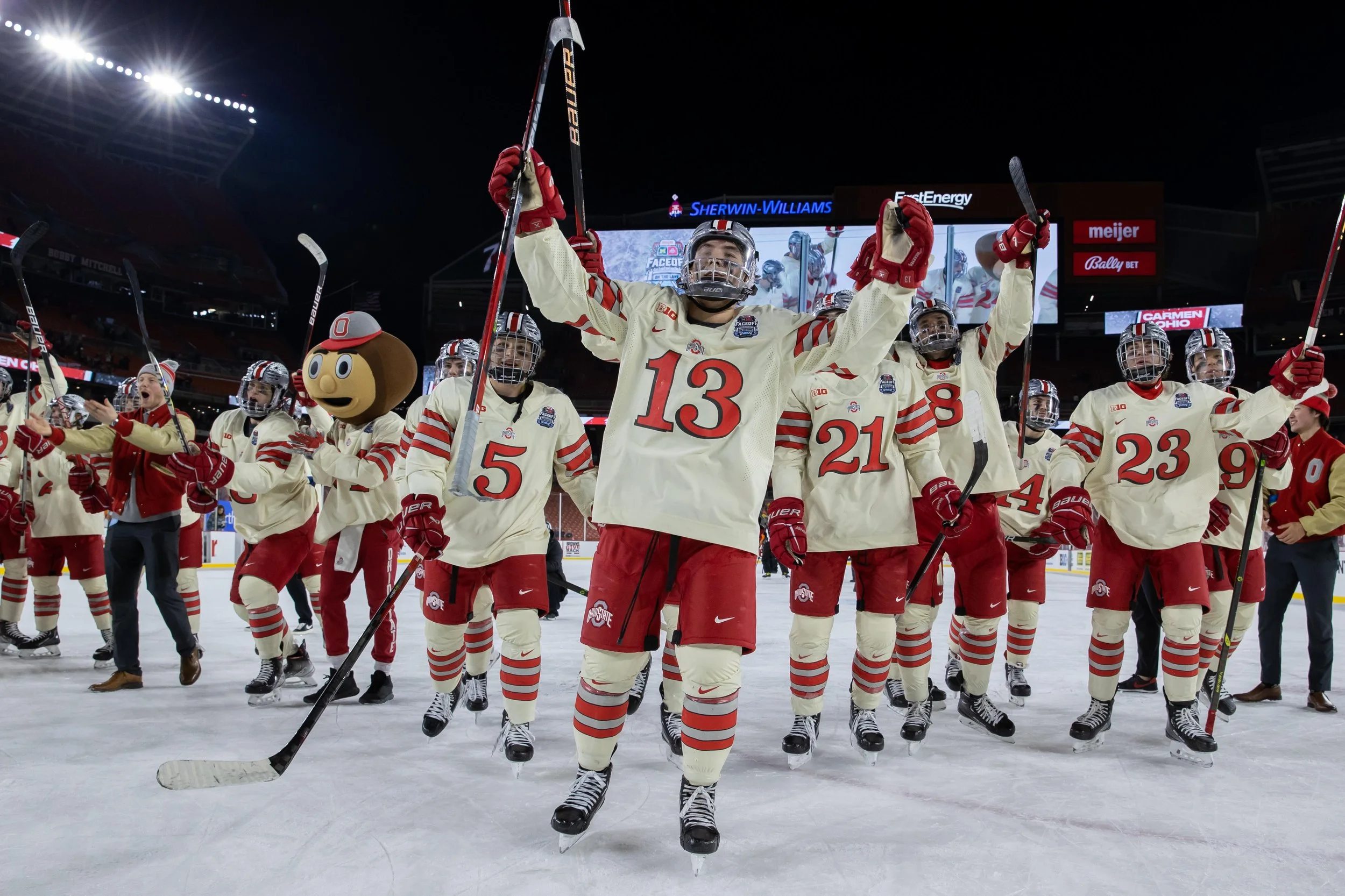
I would say the vast majority of what I shoot these days, I’ve been on the Browns, the Cleveland Browns game day photo team now for I think six years. So I a bit of a cutback schedule this year, asked to do a few less games for the wear and tear and whatnot. But so I did football that way and still do some when I get the chance. I do a fair amount of soccer, both college and pro, as we have a common colleague, and I shoot for him and his publication with International Soccer Network. I’ll go ahead and plug it because I’m a big fan of that. So we’ll do professional college, whatever, high school, because I’ve built a relationship with some high school teams that allow me to come out and shoot with them, and so that’s in there too. I do a ton of hockey in the winter, just an absolute ton. I was basically the team photographer for Ohio State’s hockey team for six years, and then was also shooting for Columbus Wired and covering the Columbus Blue Jackets NHL club. That gave way to reaching out to Upper Deck trading cards and offering to shoot for them, and a very fun backstory there if you ever want to hear about it. But nonetheless, I struck up a few conversations with folks at Upper Deck, got myself a tryout shooting for them, and I’ve now shot, I don’t know, 30 or 40 games for them, and they keep me busy all winter long taking hockey trading card pictures. So hockey probably gets more of my time than the other sports, but rugby, football, soccer, hockey would probably be the majority of what I might do.
TMac 20:33
How was this Browns season for you?
Ric 20:37
Well, I’m an old Browns fan from the time I was young, and anytime we’re better than not, I consider it a great season. I enjoyed the chemistry on this team, I enjoyed the personalities on this team. I think anytime you can advance to the playoffs, doing it with four quarterbacks and with all those injuries, it’s a testimony to the people on that club. So it was an enjoyable year. Sucks the way it ended, but you know what? I can’t say I was really disappointed because they exceeded expectations. At least for me anyway, I’m sure they have higher expectations, but enjoyable to shoot for sure.
TMac 21:18
Walk me through. I’m I’m interested. I’ve been in both stadiums for several dozen games on the TV side. I did that for many years. And so I’ve never had a chance to ask one of the photographers about their day and their work. For what time do the photographers get to the stadium?
Ric 21:48
We are there. Well, it depends. There are a number of folks, our game day team. There are six or seven of us who are there on game day. The actual team photographer is there at the crack of dawn. And then each of us. Trickles in based on what our assignments are for that day. So, for example, if there’s somebody who’s assigned to shoot the player arrivals, they’re there particularly early. Sometimes they’ll want to get a sunrise over the stadium shot, so you gotta be there when the sun comes up. It really kind of depends on the nature of what your assignments for that game are. None of us are there any later than 10 a.m., usually 9-ish or so. Players come out, take the field for warmups at 11. Got to get some candid pregame kinds of stuff to submit. Come back out in uniform for warmups at noon. Gotta get all that stuff. And then about 20 minutes before showtime, then you’re positioning for all the rest of introductions and national anthems and all the rest of the hoopla, right?
TMac 22:55
So when they come back out in uniform, I’ve always been curious, and now I get to ask someone, is that your chance as a photographer to get some of the tight images of them, you know, quarterback throwing but tight image that you just may not get an opportunity during a game. Is that the time that you can work some of those type of images in?
Ric 23:37
Yeah, absolutely. You know, there’s there’s restrictions about where you can be during the game relative to where the players are on the bench. So it’s much, much harder to get close shots like that with you know, in-game that way. I was doing on Instagram for a while each year, three or four times a year, I do a little set, a little mini gallery called Faces of the Game, where I would only post super tight up close shots of player eyes, player faces, to just sort of showcase the closeness that there is there. And to make it extreme, and you’ll appreciate this, we talked about that 300 before. Imagine shooting close-ups from behind the end zone with a player in the end zone with a 300. And you know, you can’t even get their whole head in the in the thing. It’s it’s that close. But boy, if you want to zero in on somebody’s eyes, especially if you pick up the intensity of their preparation and these kinds of things, you can get some really cool moments that way.
TMac 24:48
You mentioned in-game is this a team for the team of photographers for the team?
Ric 24:58
Yeah, so the Browns have Matt Starkey is their team photographer, amazing photographer. And he handles all of the duties for the team. You know, daily practice, travels with them, the whole deal. He’s their main guy. He has a squad of us who are available to him to cover, you know, if he needs an extra body or two on the road. Game days at home usually require six or so people because of the variety of activations and events that have to be covered. We need this advertisement, we need this promotional thing, we need this celebrity, we need, you know, whatever. A lot of non-football that the team helps cover. So we all get a pretty equal distribution list of assignments and whatnot in game. And you know, you find out a couple days before you get a shot sheet that lays out, you know, here’s what your tasks are in-game. And second quarter you can shoot football, we don’t have anything else. But halftime need you to do this. Yeah, exactly. You just you go through your checklist and make sure you’re getting everything that’s that’s given to you. And I think a lot of people would be interested to know that the you know, the game day photo team, while all of us get some really cool football photos, it’s not really the primary reason we’re there. The primary reason we’re there is to capture all of the marketing and promotional stuff for the team, and the football stuff is an extension of that. It’s you know, Matt’s job is the primary you know, game action photographer.
TMac 26:35
So from that shot list, usually by the second quarter, you’re free to move about the sidelines?
Ric 26:46
Oh, it changes every game. There may be so-and-so’s marching band is performing at halftime. Can you get them? There’s a corgi race at halftime, and we need you to get pictures of the corgis in action. The weather kid is gonna come out and do such and such in the third quarter. I don’t know if you’ve been down to the stadium this year, but in the third quarter, going into the fourth quarter, they have a young man that plays guitar solo from the dog pound, and so that’s just all these little events and little moments that are game day ambiance. So, you know, one game you might be free in the second quarter, another game you might be free in the fourth quarter. We’re all covering different parts of the field, different events in those things, military flyovers, you know. I mean, you name it. Everything that happens on game day, he’s gotta there’s gotta be a record of it.
TMac 27:45
When you are covering action, does he divide that? So your targets of opportunity, or are you covering a running back? Is it Nijoku? Is it is it a player assignment or cover whatever?
Ric 28:09
We’ve done it a couple of different ways, and it sort of varies between what Matt thinks is going to be the best way to cover the game. There have been times where he has said, you know, there are a couple of you guys that I want shooting from the back of the end zone and stay generally grounded there. There are a couple of you I need floating up and down this sideline or that sideline. And so when the play comes into your part of the field, whatever it is, whoever it is, that you get your target. There have been other times where each of us were assigned a position group. Some of my favorite stuff was when he was giving me like the O the O-line and the D-line, and get in there and get the wide bodies and getting after it. And I’m, you know, it’s not something that maybe your photo instincts tell you to do. You’re starting to point at the ball most of the time. But focusing in on O-line, D-line is you know, it’s cool. And we’ve had that as assignments, you know, pick a position group that you know it’s out there and he’ll tell us to cover it.
TMac 29:12
Non-Browns games, football. How do you cover a game? Do you have a set flow of how you cover a game? I cover this first, this second, this third.
Ric 29:29
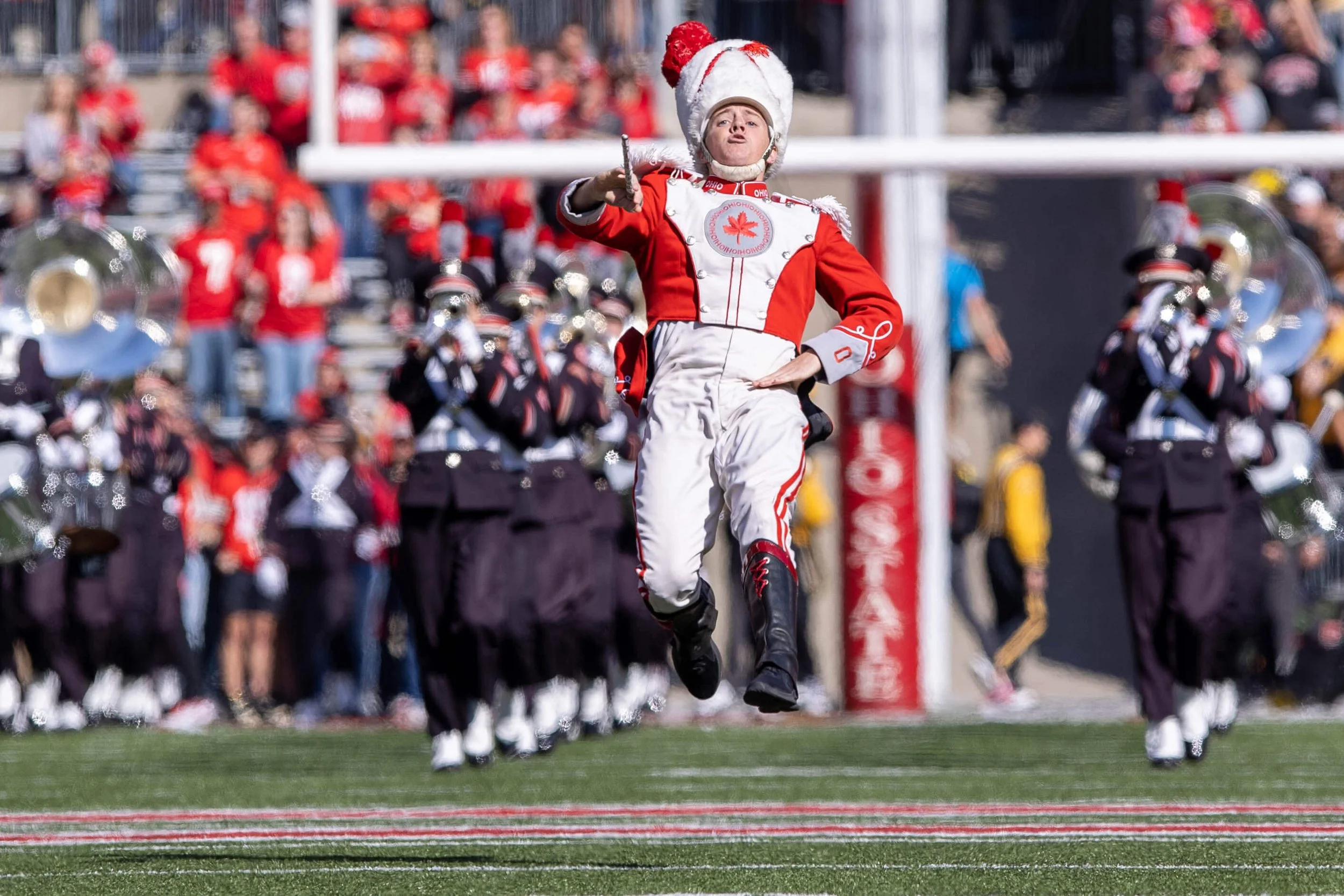
You mostly have a sense of, and it depends, I think, too, what who you’re shooting for, who you’re there for. Like if I’m shooting an Ohio State game, I’m there for Columbus Wired. And they’re gonna want all of the game day ambiance that says this is a Buckeye event. So you’re gonna get Brutus, you’re gonna get Script Ohio, you’re gonna get you know, pictures of the marching band as much as anything else, and fan shots, and player arrivals, and the coaching staff. So you almost kind of know what you have to get because it’s it’s it’s part of that the flavor of the event that way, right? Basically, you’re left more to your own devices. Do I want to get the merching band? Am I gonna get cheerleaders? Am I gonna get fans? Am I gonna get the bench? What you know, it’s just sort of what you’re more struck by.
TMac 30:28
So in the in the Brown situation, what is your post-game edit workflow? Or are you editing? Are you delivering cards or are you also responsible to edit after the game?
Ric 30:49
All six or seven of us come back to the media room and unload our cards onto a shared drive. So Matt ends up with 20,000 photos or something from the game from among us. We’re all clock synced so that the photos are flowing you know by timestamp and whatnot. He can select them by photographer, an assignment, he can select them by what have you. So what we are tasked with doing immediately after the game is organizing and culling the photos into folders that are your assignments. Very often I get the color guard, the national anthem singer, the player intros, whatever. So I’ve got a folder set up for each one of those events. Put the photos from those different assignments into labeled file folders, and then upload the file folders into the master drive where everybody’s putting their stuff. So it’s usually, I don’t know, an hour and a half or so after the game of work. But in terms of actual editing, for standardizing purposes, our team has somebody who does all the editing for all of us. And they’re stationed in the media room, editing both real-time in-game from the from the photographers who are transmitting directly back to the media room in-game. And I had a chance to do that for a couple seasons to those of us who aren’t turning in photos till after the game, but they’re all being edited by a single person so that they maintain a consistency in the editing that way. What you find is if you ask six different photographers you know, they all see the image a little differently, or they do a little color intonation a little differently, or what have you. And that’s fine when you’re shooting for you. When you’re shooting for a three billion dollar company that’s using those photos to market its product, you better be consistent. So consistency in editing is usually one person’s job.
TMac 33:07
Wow, one person. I would have never I mean I get the re I get the reason, but you know, twenty thousand images later, that person’s definitely got some got some tricks in their workflow.
Ric 33:25
There are some sharp cookies in that group, some really talented folks, and you do over time develop a streamlined process. It becomes easier to sort the all right, this might be garbage, this might be something.
TMac 33:39
What do for Rick’s pictures? What do you use? What is your go-to?
Ric 33:51
Oh, I edit in camera raw and Photoshop. And I don’t use most of the features in Photoshop. I think it, you know, the iceberg analogy that you only see 7% of it, right? I probably use 7% of the tools that are in the photo editing capability that’s otherwise available to me. It’s a boring old adage. I try to get it as right as I can in camera and then try to really limit. When I one of the things I noticed from the really, really good photographers who I admired is that they often spoke of editors that really discouraged heavy editing. They really, you know, don’t be saturating things, don’t be sharpening everything, don’t be, you know, whatever, just keep it pretty low-key. And so a minimalist sort of approach to editing has been one that I’ve adopted. It helps a little bit with workflow, but I just feel like it keeps it a little bit more genuine, too.
TMac 34:57
Yeah, agreed. And also we’re both old enough to understand the notion of getting it right in the camera.
Ric 35:08
Yeah, which, you know, is sometimes easier said than done. And it I like having the ability to go back and correct it when maybe the image was great, but I misread the lighting or you know, the camera setting changed on me and I didn’t plan on it, right? Every once in a while you have that. You’re like, wait a minute, how did I end up in that? So if you can go in and correct some things, that’s great. I like having the ability to do it. I just don’t want to depend on it.
TMac 35:35
Understood. If you had to define your style, what would it be?
Ric 35:44
Oh, it’s I’m taking pictures for trading cards. And I’ve had people joke with me about like, all your pictures look like you’re taking trading cards. I’m like, yeah, because I have like three-quarters of a million trading cards that I’ve acquired since I was five years old, and that’s the kind of photography I like. And every once in a while I have to do get out of my comfort zone and take something that is different that way. But I’m not an artsy photographer, I’m not trying to be really creative. I’m looking to get a cool action shot that would look nice on the front of a magazine, or that would be a cool poster in your bedroom, or that would be neat to look at on a trading card. You know, it’s it probably sounds cheesy, but it’s it’s really a simple thing for me. It’s usually my criteria is this a picture I would frame and hang in my house? And if it fits for me, like I that’s the kind of photo I like to look at, those are the photos I tend to take.
TMac 36:51
What and you’ve worked with some just amazing photographers, I’m sure.
Ric 36:60
Truly.
TMac 37:01
What have you taken from their work?
Ric 37:05
That’s a really cool question. I would say a couple things. One of them, and one of them flat out said to me at one point, is like, you know, at some point, we’re all pretty close to equal, you know, and whatnot. But what can set you apart is your professionalism. How you conduct yourself for the people you’re shooting for, how you conduct yourself on the sidelines with other photographers, whether or not you’re dependable and reliable, and these kinds of things, right? That are you wouldn’t think that they’re the photography driving traits, but at the end of the day, if a customer has an opportunity to hire one of two photographers who are equally good, but one of them is difficult to work with, and the other one is a joy to work with, what sets you apart is not your photography. It’s it’s whether or not you’re a reasonable person and whether or not you’re enjoyable to work with, and if your work is consistent. I and I think the other thing that I’ve taken away from the real super high-level photographers is how important it is to be decent to new people. And I had a couple of folks who I just consider completely next level out of this world photographers, who have always been gracious with their time, have always taken time to answer my questions, explain things to me, sometimes caution me about things. Helpful hints: hey, I saw you doing this, you may want to make sure you do it this way differently, or else you’re gonna regret that. The little extra that it takes to help somebody who they could identify as still on the upswing of their learning curve, to try and be that for other people, and you know, not be a jerk. There are some folks in the business and the industry are pretty full of themselves and have personality styles that make them challenging to work with, and to just not be that, you know, to be welcoming and to be kind and gracious. I you know it’s funny we’re you think we’re talking about photography, we’re talking about just being a decent human being, really. So that I that’s that’s a big takeaway for me. It’s been less about the photography and more about the personhood side of it all.
TMac 39:45
Professionalism.
Ric 39:46
Yeah, that big time. Big time. I had two different editors had say to me when I was going in, you know, how you conduct yourself as a professional will have more to do with your longevity around this and whether or not you get other opportunities than almost anything else. And they’re right.
TMac 40:04
Dovetailing on that, what is what is the reward for you that keeps you shooting?
Ric 40:14
It’s it’s evolved and it and it continues to evolve to this very day. There’s the joy I get out of capturing somebody’s success. There’s a concept that I’m very fond of. In Sanskrit, the word is mudita. Means to take joy in the success of others. And being able to capture moments of performers, athletes, competitors succeeding in what they do. Feels like a I really enjoy that. I get great satisfaction out of being able to. And the cool thing about it is that it applies to any athlete, any competitor at any level. It’s not, I’m not just talking about, oh, this person scored a touchdown in the NFL. It’s a freshman in high school who made his freshman team and got to play five minutes in a game, but he had three touches on the ball and he looked good doing it, and I got it. I got that moment. I get as much joy out of that as I do out of, you know, 60,000 seat stadium and being able to catch moments that document the success of people and the hard work that they put into what they’re doing is where I draw most of my joy from.
TMac 41:40
That’s you sound like a teacher.
Ric 41:43
It has some of that in there. The selfish side of it is that about two years ago I started shooting for upper deck hockey cards, and I now have about 3,000 hockey cards with photos that I took on them. That remains the single most surreal thing is to open up a pack of trading cards and see a card that I took the photo of. I started collecting hockey cards when I was about eight or nine years old. So to have that experience, that’s a reward that I don’t have words for really. And I don’t think it’ll ever feel normal. I really don’t. Two years in, 3,000 cards later, and I still, every time I see a new one, I’m like, oh my god. Like a little kid. So it activates the eight-year-old in me, and I’m I’m perfectly fine with that.
TMac 42:45
Last question. As I’m sure you have, I get many people that ask me, because I shoot a lot of high schools, high school sports. I have a lot of people asking me, I want to shoot sports. How do I do it? What do I do? If someone asks that to you, what do you tell them?
Ric 43:11
Mostly they don’t like my answer, which is you start at the most basic level, like anything else. You go shoot pictures of your nephew’s Little League game, go shoot your sister’s dance recital, go shoot things that you could just be at that don’t require credentials, that don’t require anything special. Go up to the high school gym, go up to the football field or the lacrosse field or whatever. Ask a coach Hey, can I work on my photography here? I’ll share the photos with you if there’s anything good. But I’m a I’m a very big believer in you earn opportunities, and if your if your work is good enough, somebody will eventually want you to. Do more. But if you know, you sort of have to crush it at the level that you’re at, whatever that is. Taking 10-year-old travel baseball pictures, take really good ones, and see where it leads. So for me, it’s usually about telling somebody do the stuff that’s obvious, the low-hanging fruit. I up until maybe just a couple years ago, I lived not far from Brunswick High School, where my kids went to school. I would wander up there three nights a week, regardless of what was going on. Girl soccer, boys’ soccer, football, whatever, baseball. Just to go take pictures and do that every week to keep my chops up, and then you start sharing photos with people, and one thing leads to another, you know the drill. So but I’m a big fan of work your way up, and that means doing getting really good at high school before you’re doing college stuff, and getting really good at college before you get pro opportunities, and you know, it I will say this there are, as you know, dozens and dozens and dozens of ways to get from point A to point B with one’s photography, and there is no one right way, there is no perfect way, there’s none of that. So because I happen to think about it the way I do, there are certainly people who, you know, I’ve met people who the very first thing that they’ve shot sports-wise was a professional event. And I roll my eyes at first, and it maybe it was because they knew somebody or whatever. But okay, there they are, and if you want to stay there, you’re gonna have to deliver quality. So you know, the path is the path.
TMac 45:56
And everybody’s is different.
Ric 45:58
Everybody’s is different. Truly, it truly is. It’s hard to when you get a younger photographer, what’s the what’s the formula for telling me? You know what? One, you gotta be really good. It helps if you’re consistent, it helps if you’re friendly and accessible and reasonable to work with, it helps if you’re confident and you’re able to assert yourself, to reach out to people. You know, if there’s one common thread throughout most of the really high-profile kinds of gigs that I’ve gotten, there’s a point in there which I reached over a line to connect with somebody and asserted myself to take a chance. Hey, took these pictures, you might be interested in them, thought I’d show them to you. And they went, hey, you’re on to something there. But I might, you know, if you’re if you’re shy and reserved and whatever about it, maybe that’s not happening. So all of those things can contribute, right?
TMac 46:56
Indeed. Indeed. Well, Rick Krasinski, I can’t thank you enough for taking part, being a part of the project. Your work is outstanding. I’m a sucker for good soccer photos, and that is my favorite because I played and my kid plays. So our mutual friend did well getting us together. Indeed. Thank you very much. Thanks again to the extremely talented Rick Krasinski. You can check out all of his work on Instagram. The Zoom With Our Feed podcast is a production of TV Commando Media. The Zoom Pod theme is by Novembers and their funky groove Cloud 10. Until next time, photographers, if you’re not shooting, you’re not learning.
More From Ric