Meghan Ellsworth — Hollywood Film Editing, Movie Trailers & Learning Your Craft From the Ground Up
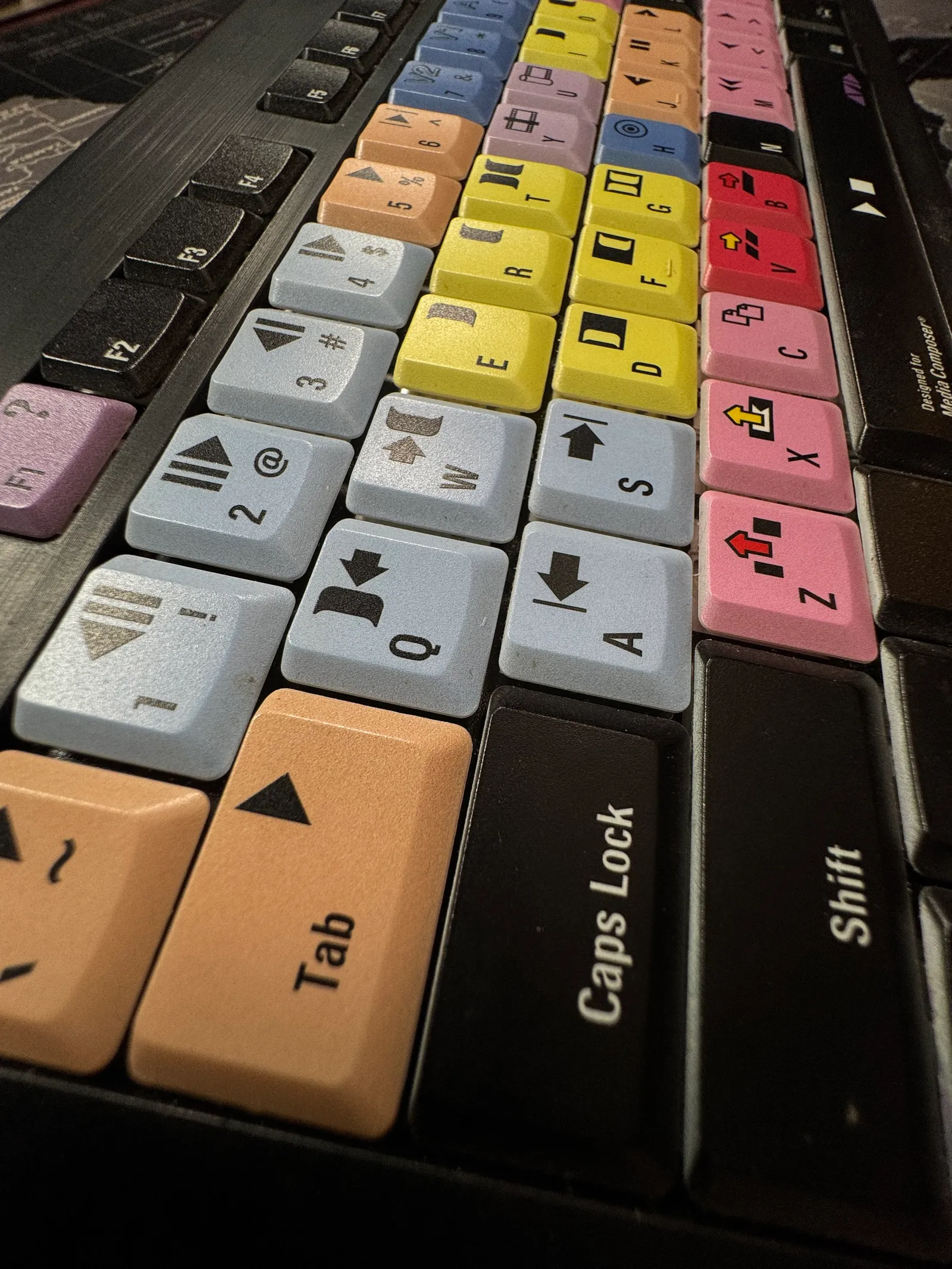
An Avid Media Composer keyboard, the weapon of choice in Hollywood editing rooms. Photo: TMac. Used with permission.
Meghan Ellsworth ran one of the best Camera 2 tight-follow shots on a basketball court that TMac had ever seen, and she still couldn’t tell you who won the game. Today she’s a film editor in Los Angeles, cutting trailers, scripted television, and blockbuster films including entries in the Fast and Furious franchise.
In this episode Meghan traces her path from Hoover High School video production to Ashland University to grad school at Chapman, and breaks down what editing actually is: the final draft of the script, written entirely in the room with the footage you’re given.
Why It Matters
Meghan almost didn’t go to grad school. It took a lunch conversation and someone telling her flatly, “you have to do this,” to push her past the fence she was sitting on. Sometimes the difference between a stalled career and a real one is a mentor willing to say the obvious thing out loud. For anyone on the fence about taking the next step, that’s the lesson worth sitting with.
About This Guest
Meghan Ellsworth is a Los Angeles-based film editor working across movie trailers, scripted television, and feature films, including entries in the Fast and Furious franchise. She started in TMac’s video production program at Hoover High School, studied broadcast communications at Ashland University, briefly attended Loyola Marymount before financial realities brought her back to Ohio, and earned her MFA in film production with an emphasis in editing at Chapman University. She credits attitude, curiosity, and a willingness to ask questions she didn’t know the answers to as the things that carried her furthest in the industry.
Meghan’s Bonafides
“
You have to be personable, you have to communicate, you have to have a positive attitude. That really does go a long way in this industry. When I started out, I had no idea what I was doing. I was constantly asking questions. But what’s gotten me the farthest is being kind, knowing when I don’t know something, and asking.
”— MEGHAN ELLSWORTH, FILM EDITOR, LOS ANGELES, CAHear This Episode
Watch Here
Episode Timestamps
Your ZoomPod — Exit Ticket
After this episode, you'll know:
- Why attitude and willingness to ask questions matter more than already knowing the answer
- How editing functions as the true final draft of a film's script
- What the assistant editor role actually involves, and why it's the foundation every editor builds from
- Why having a mentor willing to push you past your own hesitation can change the entire trajectory of a career
Gear & Affiliate Links
Trick out your kit, and your wardrobe. Both Adorama and SmallRig are having sales right now. Or wear your photography mood, grab a ZWOF set-wear tee shirt. If you use a ZWOF link, we may earn a small commission that doesn’t increase the price of your item.
Explore More
Check out our other great podcast episodes. Link and follow for more great learn-photography content: IG @zoomwithourfeet | FB @ZoomWithOurFeet.
Meghan said yes to grad school because someone pushed her past her own hesitation. Same instinct applies behind any camera you’re afraid to pick up.
Stop Shooting From the Stands →Meghan 00:11
Like you have to be personable, you have to be able to communicate, you have to have a positive attitude. That really does. Your attitude goes a long way in this industry. And you know, like when I started out, I didn’t know what I was doing. I had no idea. I was constantly asking questions, I was constantly in people’s rooms saying, how do you do this? What’s going on? But you know, I think what has gotten me the farthest is having a positive attitude, being kind, you know, knowing when I don’t know something and asking, or being able to take criticism well. You have to have a thick skin, but you also have to be have to be a bit of a fake it till you make it, you know?
TMac 01:03
Hello and welcome to another edition of the Zoom with our feet podcast, the pod about learning photography, with me, your host, TMac, a professional photographer, videographer, and teacher. On this episode of the Zoom Pod, Los Angeles-based assistant film editor Meghan Ellsworth takes us inside the cutting rooms and explains how everything from movie trailers to episodic TV to blockbuster films like The Fast and Furious come to life during editing. Our guest speaker is in the photo lab. Let’s talk to a pro. Meghan Ellsworth, welcome to the Zoom with our feet podcast. How are you?
Meghan 02:07
I’m good. How are you? Thanks for having me.
TMac 02:09
I’m great. I’m gonna start with you.
Meghan 02:13
Yeah.
TMac 02:13
With my Meghan Ellsworth story that I tell all of us to tell all of my video production students and all of my Kent State students, because I’ve done some work up there, about you’re gonna start laughing. Sports camera work. So once upon a time, there was a girl who didn’t know anything about sports, nor did she care, but she was one of the best sports camera operators I have ever seen in my life. And I’ve seen a lot of them. And I tell people that story all the time. You could run a mean camera too in basketball, sister.
Meghan 02:57
Well, you know, just follow the ball.
TMac 03:01
And then at the end of the game, I’d go, Ellsworth, who won the game? And you’d go, I don’t know, green team. That was awesome.
Meghan 03:12
That sounds right.
TMac 03:16
They go, Really? And I’m like, oh, you should have seen like camera two and basketball. You could have made a career out of that. Millions, I’m telling you, millions.
Meghan 03:27
I went the wrong way. I went the wrong way.
TMac 03:31
Well, let’s talk about your choice. I think that’s not true.
Meghan 03:34
Okay.
TMac 03:36
So after you after you left high school video productions, then what? How did that journey begin?
Meghan 03:45
Well, high school video productions definitely sparked the interest enough in video that I knew I wanted to do that as a career, and I wasn’t quite sure what my options were, but in Ohio, at least in general, a lot of the programs are broadcast-based, sports-based, news-based stuff. So that’s what I started with. I went to Ashland University for my first year of college and did a lot of broadcast stuff, did a lot of news stuff. And then my second year, I decided to transfer to do more of a film-based program. So I transferred out to Lorola Marymount University on the West Coast. I did my first little dip the toe into the film scene, and for a myriad of reasons, had to come home, mostly, mostly money, you know, because the West Coast is a little expensive. And I finished off my career at Ashley University. With ended up with a broadcast communications degree. So that’s really where I discovered editing over all of the other options in terms of what you could do in film or media in general. And I found that I really liked the editing process way more than shooting or being in the with the lights and the being on camera and doing all that stuff. I was much more of a behind-the-scenes person, and editing was where I really found my footing. So that led me to a graduate degree with an emphasis in editing. So I went to Chapman University for grad school and I left with an MFA in film production with an emphasis in editing. So it’s about as far as it goes.
TMac 05:32
When you left school, I remember you could write a mean script. What happened to the writing part?
Meghan 05:41
I you know, it just sort of fell off, to be honest. I sort of found the editing as a form of writing. And that’s editing as a form of writing in many aspects of things. I mean, documentary editing is really writing the movie. And we actually did a lot of that at Ashton University, as you know, a lot of documentary style. So that was sort of my form of writing in those days. And I just found that gave gives you a little more freedom than sitting down at a page and writing something that’s in your head, you’re looking at the footage. I’m a much more visual person. Someone else has done this other work for me, and I’m putting the puzzle together. And I think that’s where it really clicked in my brain, where instead of me having to come up with ideas or throw stuff at the wall and get stuff on the board and see what works and what doesn’t, this stuff was already in front of me, and it was more like putting together a puzzle than having to create the puzzle myself.
TMac 06:42
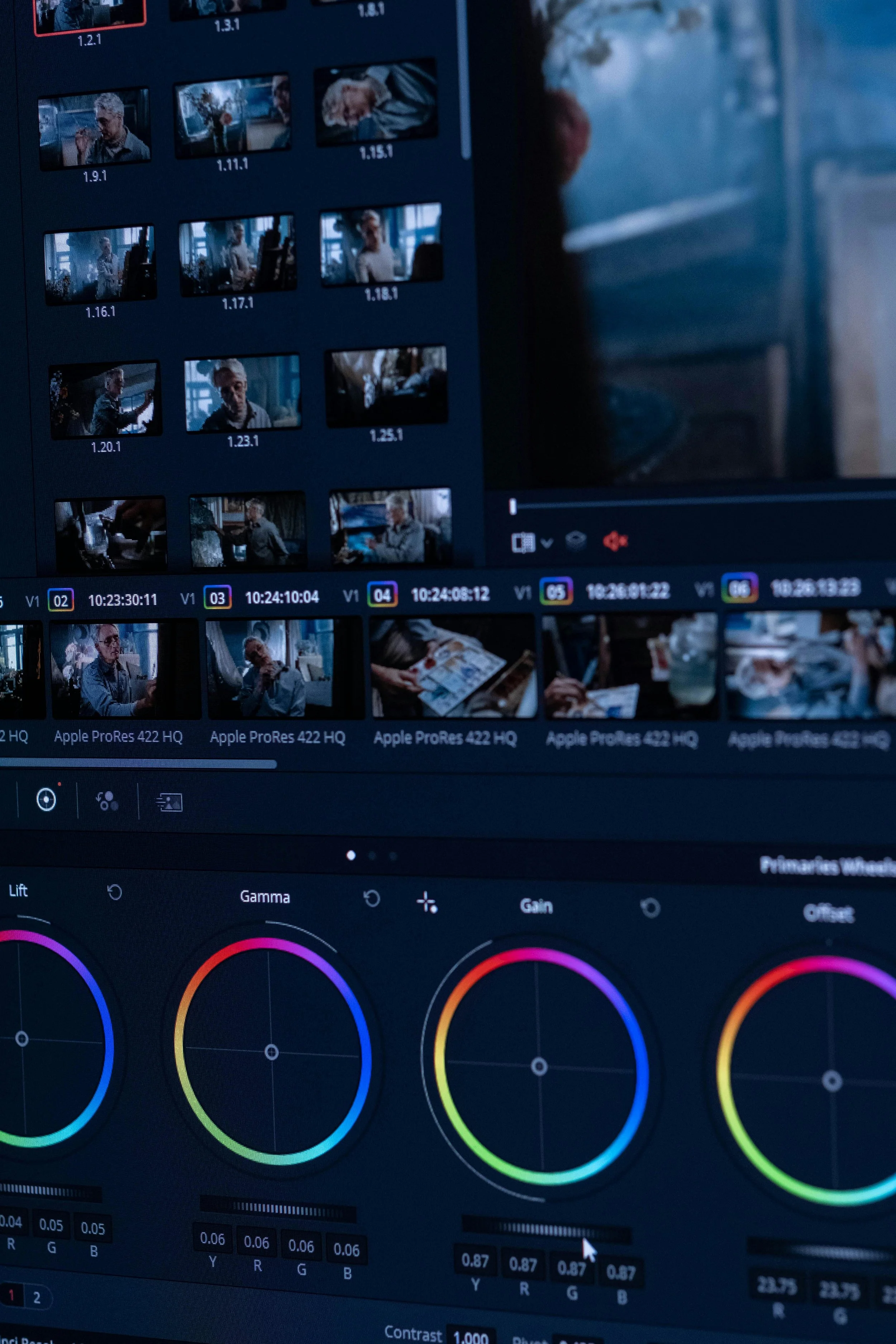
There are those that say that the edit is the final draft of the script.
Meghan 06:47
Yeah, yeah. And that I mean, that is definitely true. You can change a story just by swapping lines, you know. You can cut a line, you can float a line, you can do all sorts of things, that you can change the tone of an entire movie in the edit. And that’s where I think it is really interesting and where the fun part of it comes in, because if something’s not working, footage is already shot. You have to fix it in some way. So either you’re gonna, you know, have to cut around something or add another line in or do all this stuff. And that’s also where ADR comes in, which is automated dialogue replacement. Editors and directors write those lines in the in the room for the most part. They’re not calling off the writer to say, hey, how do we fix this? How do we fit this line in? It’s an editor and a director sitting together saying, Where can we put this? How do we get this in here? What’s the best way to do it? So, I mean, it really is the final, the final draft of the movie that you’re gonna see.
TMac 07:39
Coming out of chapman, you’re you’ve now done the school thing and you’ve got a transition to the professional world. Who influenced you?
Meghan 07:55
Well, I’d always, always wanted to work in movies. That was like, I mean, I loved movies as a kid. That was like the absolute dream I wanted to work in movies. So I’ve obviously been influenced by a lot of female editors, you know, people that I’ve worked with and people that I’ve admired for many, many years. And editing is a has always been sort of a the most female driven of the filmmaking options. Early in the in the early days, it was they needed, you know, a lady with small and nimble fingers to work in this room. And so that’s that’s a lot of them were employed in there. Obviously, there’s a lot more men these days, but there’s still a lot of ladies. So that was my always my ultimate goal, my ultimate influences where I always wanted to work in film. But the reality of the situation is I just had to take whatever job came to me. Whoever was offering me a job, I took the job, right? So I actually started in movie trailers. I worked as an assistant editor at a movie trailer company for a year or so. I interned there and then I worked there, and so that’s really where I cut my teeth as assisting and learned what these projects look like and how these films are made, and how this stuff is put together, and the vast amounts of organization, and the vast amounts of footage. And that was a really cool job to have early on because you were seeing these movies in all sorts of different states. You’d get an early cut of the latest Marvel movie, and you’d watch it, and you’d have to organize it, and you’d have to pull all the dialogue out of it and do all your work, then you’d get the next cut, and you’d have to watch it and do the same thing. And so you’re seeing the iterations of the films. So that was a really cool first job to have to actually get an idea of how the process works on these on the other side. And after that, I got really lucky. Somebody I work went to school with needed an assistant on this super low budget show, and they got me the gig on that. So I jumped into scripted TV next, working nights, singing audio. So it’s really just it was really just luck of the draw to move forward, which is they say the Hollywood’s about who you know, and it truly is. It really, really is. And that’s you know, for better or worse, in the early days, you don’t know anybody. And so you need somebody to take a chance on you. And luckily, I you know, people took chances on me and it’s worked out, and I’ve met a lot more people, and my network has grown, but I finally made it to movies after six years, six or seven years doing other stuff, finally made it to movies. So very exciting.
TMac 10:43
So, in so let’s let’s divide define the roles. Yeah, because I don’t think a lot of people understand that typically in your world there’s an editor and an assistant editor or to you know up the food chain. So define for me the role of editor and the role of assistant editor.
Meghan 11:14
Right. So the editor is the person who’s making the creative decisions, they’re getting the footage, they’re cutting it all together, they’re creating scenes, they’re doing their work as a creative, they’re working hand in hand with the director when the time comes for that. They’re the lead, they’re the head of the cutting room, they’re everything that they require and need is the job of the assistant. So an assistant editor is there to literally assist the editor in whatever they need. So our job, I’m an assistant editor, and depending on how big of a project it is, there might be multiple assistant editors. There’s a there might be a first assistant and a second assistant, and those are slightly different roles that I could talk about as well. But on the base level, we’re in charge of making sure the footage is organized in the way that the editor wants, that they’re able to find everything, that whatever they need is dealt with in a quick manner, even if that’s you know, hey, restart my computer while I go get a coffee. You know, like this is all our purview is just to make sure that the editor has everything they need to do their job efficiently. And the big part of assistant editing job is organization. That’s organization of in the project, it’s organization on the finer level, it’s organization in the office itself. Just gotta be organized because there’s so much stuff going on. So just to define those a little bit more, a first assistant editor and a second assistant editor are slightly different in that the first assistant editor is gonna deal with the editor sort of more one-on-one, and then they’ll disseminate information down to the second. So the first assistant editor will do maybe more of the creative tasks asked of them. So, say the editor cuts a scene and they need someone to go through and smooth out dialogue or add some sound effects or some backgrounds. That will probably be given to the first assistant editor, and then the second assistant editor will do things like, hey, we need you to find this line, go search for this, or I need you to do this turnover to get this out to the vendor, or I need you to make the ADR list for someone. So there’s just sort of a level of work that’s gonna run downhill.
TMac 13:35
A workflow.
Meghan 13:37
A workflow, as it turns out.
TMac 13:41
The software tool of choice is what?
Meghan 13:45
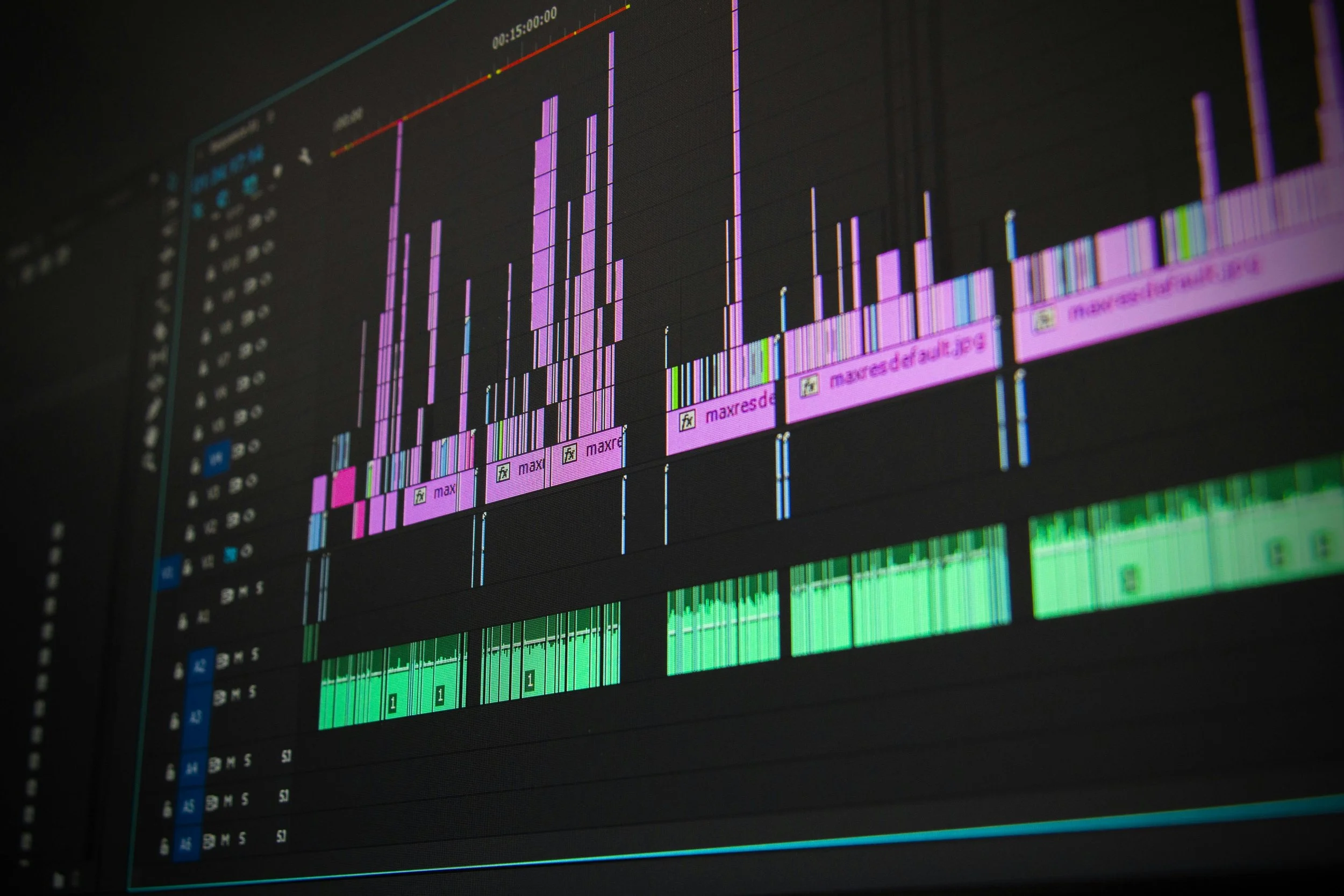
I’ve worked exclusively on ABID Media Composer since starting.
TMac 13:50
You are literally setting up the project, creating the folders, adding media. Correct?
Meghan 14:00
Yeah.
TMac 14:01
Does I don’t want to get too far in the weeds, but that can involve some very granular things about how clips are named.
Meghan 14:12
Yeah.
TMac 14:13
Do different editors like different I don’t want to call them things, but like different things a certain way in project setup.
Meghan 14:28
Yeah. Yeah, and the stuff as granular as like maybe a clip name or something. There’s usually a pretty good standard for that because other vendors care about that stuff. When you’re sending off deliverables, when you’re sending off final cuts of stuff, they want things named a certain way and it’s easier for them. But as far as editors go, everybody likes different things. You know, some people like certain colors on clips, some people like a certain organization within the bins. Usually you’re in a frame view, so you can see what each little clip represents, but what order they want that in the bin, up to them completely. Different editors like different denotations for circle takes, which are takes that the director likes the most. Some people want a star, some people want an underscore, some people want a pound sign, some people want a period. Like every editor I’ve worked with has wanted something slightly different. And usually it’s variations of the same, but sometimes you get somebody who wants, like, I want text view, and I want this and I want that, and then just like, yeah, you’re like, it’s out of the blue. You’re like, I don’t even know how to deal with this. But yeah, every single editor is different, and that’s that’s my job as an assistant to say, sure, whatever you want, I’ll do it.
TMac 15:48
And so the editor wants the avid version of taking all the green MMs out of the bag. What how what’s the what’s the time frame of a project setup? How long do you get to have it ready to go?
Meghan 16:12
So I would say for the most part, post-production will start about a week ahead of production. You maybe will have one assistant coming in to make sure the offices are in place, every all the software is in place, everybody has their desk and their speakers and their chair exactly where they want them. And so they can set up the project a little bit ahead of time. But that’s you know, there’s nothing in it yet. You know, you’re just you’re putting in sound effects, you’re putting in music, a library that the editor likes to work with. But you really get into the nitty-gritty when production starts because you’re receiving footage every day. And so that’s when you’re talking through like, hey, is this bin okay? Is this exactly how you would want this organized? Like, do you need me to break this down even more? And it’s constantly changing. I mean, you know, if you get a scene that has, like, for example, when I worked on the Fast and the Furious movie, we had action sequences that were hundreds of clips, right? So you have to break that into multiple bins, or the bins won’t open. I mean, we had bins that would crash the entire system because they were so big. So you’re like, you have to break those down in a certain way so that they’re number one, accessible and you can actually open the bins, but number two, they make sense. And that can be really that can get really dicey because you’re just like, oh, it’s just so much stuff. But that’s why being super, super organized and on that granular level is really important.
TMac 17:42
Because and I can remember telling students this if you’re not organized, you’re wasting time looking for stuff.
Meghan 17:52
Yeah, yeah.
TMac 17:54
And if and if you’ve got a feature’s worth of clip, if you’re crashing one bin because you have too many clips in it, you’re talking a big project, yes?
Meghan 18:05
Yeah, yeah. I mean, that was that’s that was an ongoing problem.
TMac 18:13
Avid is sort of built for that networking environment, right? You’re not on his machine, but you’re connected to his machine, correct?
Meghan 18:24
That’s correct, yeah. So I mean, Avid is a workhorse in terms of media management, that’s why it’s been the industry standard for so long. I mean, the other no one can really compare to what you’re able to do with the media management avid, and it can be a pain on the front end because you have to create all these new files, but on the back end it makes it so much easier. But to your point, we’re generally on what is called a Nexus, which is like a shared media system. So there are partitions on this shared media system, and you mount them on each computer, so you’re sharing one big system that’s in some closet locked away, and you’re all connected to it. So that helps to keep drives to be a little smaller. So, you know, you have a drive that is just for music, you have a drive that is just for sound effects, you’ll have a media one, a media two, a media three, depending on how big your project is. So that’ll keep stuff a little more manageable and a little less crashy if you were. But yeah, so we’re all that’s the great thing about Avid2 is that you can all be working in the same project and doing all the same stuff, but you’re not really hurting each other. And you can see when someone else is in the bin, you know, you can see that oh, my editor is working in real one right now, which means I can’t mess with it. I have to wait till they’re done. Or oh, my editor is in this scene bin right now. That means that’s must be what they’re working on. So that’s yeah, I can’t mess with it, you know, it’s locked, like I can’t screw up what they’re doing. So that’s that’s how it’s been on every show. We work on a shared storage system.
TMac 20:07
Where in the production process or in the shooting phase does editing begin? Does it start when shooting starts or shortly thereafter? And then shooting is here and editing is here, and you’re both kind of moving along. You’re not waiting until the end of shooting before you start editing.
Meghan 20:29
Yeah, and I mean it’s exactly what you said. That’s why, you know, post-production is a bit of a misnomer because we aren’t waiting. We start when production starts. The second that stuff is being shot, we’re waiting for it. And we’re getting that footage dumped every single day. Why it’s called dailies. It’s coming to us every day, and we’re prepping it every single day. So, you know, say you start shooting on a Monday, we’ll get that footage on Tuesday, and an editor will be editing it Tuesday night, Wednesday, Thursday, and we’re trying to keep up with production. That’s the ultimate goal. In TV, that’s the ultimate goal because you’re really you’re under a deadline, you’re on the crunch. So you want to keep up with production, which means you want your editor to be able to cut the scene as soon as possible. So we have to prep it as soon as possible, and you want them to be able to move on as production moves on. That’s not always possible, especially with digital nowadays. You know, you get a hundred hours of footage for something, and you’re like, because then no one ever wants to cut the camera because they don’t have to. It’s just, you know, it’s just media space. But yeah, that’s the ultimate goal is to be as close to production as you can be. Because the ultimate timeline is that when production ends, you have about a week, maybe a little more, to put out an editor’s cut, which is the first full cut of the film. So you want to be you want to be moving, moving quick.
TMac 21:56
Do some editors again another. Thing you probably need to know about the person, like morning sessions or day sessions, or you know, they’re night owls, and that certainly would affect your world.
Meghan 22:14
Yeah, yeah. I would say for the most part, editors, editors that I’ve worked with, just because of the way the beginning of production works, they’re more afternoon evening people because we’re there in the morning prepping stuff, so there may not be something ready for them until noon, you know, until lunchtime. And they’ll go into the night cutting. And I find that directors are a little more night people too, because they’re usually shooting, they’re usually doing stuff all day. You know, they’re with the producers, they’re out and about, they’re trying to, you know, corral an actor or something like that. So they’re more in the evening. I can’t say I’ve ever met an early morning editor. So this is not really an early morning industry. It’s like rolling around 10 with my latte and we’ll get started, you know.
TMac 23:03
You gotta sleep sometime.
Meghan 23:05
Right? For real though.
TMac 23:08
That is crazy. So when does your days can vary then? You could have a 12-hour, you could have multiple 12-hour days.
Unknown 23:25
Yeah.
TMac 23:26
And I mean, try to give me a sense of how a week goes once they drop the flag and start shooting.
Meghan 23:37
Yeah, so that all sort of starts with the contract you signed. Which, yeah, which with the editors guild, there are certain levels of productions, and you know, a big level production is going to be in this tier, and a small level production is going to be in this tier, and there’s a bunch of stuff with money and all sorts of things, but you can sign on for a 40-hour week, 45-hour week, 50, 55, 60. That starts in the contract. I’d say generally you’re at a 50 or a 55. So last thing I did was on a 55, that’s an 11-hour day. And depending on how much overtime they’re willing to pay, you’re either on an 11-hour day and you’re gone, or you can work as late as you need to. In order to get around that, we would stagger people coming in. So some people would come in a little later in the morning, some people come in a little earlier. But yeah, for the most part, I mean, it’s usually a 50 to 60 hour week. It there are periods of time where it can be less, where it’s a little easier, where things smooth out a little bit. Like, for example, dailies are very busy. You have tons of stuff to do every day, you’re organizing stuff every day. That’s you know, you’re organizing dailies, but you’re also editors are finishing scenes. So they’re passing them back to the assistants and saying, do a dialogue pass on this, do a sound effects pass on this, hey, maybe cut some music into this. That’s additional work that you have to deal with. And you’re dealing with people on the production side of things who are requesting stuff, need, you know, you’re trying to find things, you’re emailing people. That’s a very busy time. It’s kind of chaotic. And then in the middle of the whole of the whole process, production is done, the director’s coming in. Hopefully, you have a director who’s gonna come in and say, Yeah, we’ll we’ll leave at a regular time. We they don’t want to work late nights. If you get a director like that, you’re probably pretty smooth sailing in the middle. You have easier weeks, easier days. And then the end of the movie, when you’re finishing it, when you’re sending it off to all the different vendors, when the deadline, the premiere date is looming, it gets really crazy again. The last the last six weeks of the movie I did, I didn’t have a single day on. I worked like 21 or 22 days straight.
TMac 26:02
And no sleep.
Meghan 26:04
No sleep.
TMac 26:08
I have a suspicion that hopefully you will confirm that Hollywood is way more a company town than people realize. And that there are serious unions involved in all of the crafts, and editing’s no different, correct?
Meghan 26:32
Yeah, that’s correct. I mean, you make a joke about no sleep, and that is very true, but there’s a union in place that has rules about how long I get from when I leave the office to when I have to come back into the office. And that was eight hours before we negotiated the last time, and now we’re up to 10 hours, which still feels like almost no time in the reality of the situation. But that’s also a good indicator as to why you need some important because this those situations can become life or death very quickly. I mean, editorial is not a dangerous place, you know, you’re sitting at a desk, you’re in an office, but on sets where there’s heavy equipment and lights and electricity, and you’re in a, you know, you’re in a location that is maybe an unsafe area or you’re in the middle of nowhere. That’s why unions are really important. And I mean, it’s a union town. I all the big stuff is union stuff, all the big shows are union shows, and that’s to not only protect the studio who’s making it, because there are these rules and they’re less liable for anything that happens, but it’s also to protect the people, and that’s why the strikes have been so important. That’s why any upcoming strikes will be so important, is because things are ever changing and ever evolving, and yeah, maybe we have a good turnaround time, but there’s always more to fight for. There’s always you can always do better.
TMac 27:58
How does one assist an editor get into the union? What is that process like?
Meghan 28:07
So I personally got very lucky in that my very first job at a trailer company was a unionized trailer company, and that’s not common. So that got me in almost right away. But for most people, you have to work a hundred hours as an assistant editor on something to be able to apply to be in the union. So that means you’re working a non-union show for oh, it might be a hundred days. I think it’s a hundred hours.
TMac 28:42
A lot.
Meghan 28:43
It’s a lot. It’s been a long time since I’ve had to look that up. You have to work a certain amount of hours on a non-union show as an assistant editor in order to be qualified to join the union. And then you have to do an application process and you have to go through a roster that verifies that you’re actually worked this job. You have to fill out some, you have to do some it’s a lot of paperwork.
Unknown 29:11
Yeah. Yeah.
Meghan 29:12
It’s a lot of paperwork, a lot of jumping through hoops. And then when you get on a union show, you’re eligible to be hired on a union show once you jump through all those hoops, and then you can pay your dues.
TMac 29:26
For the right to pay your dues.
Meghan 29:28
Yeah, for the right to pay your dues, and you can pay your dues. The other way you can do it is to get hired on a show that’s non-union and it and you unionize it. You flip the show, and then you get in the union.
TMac 29:41
Nice.
Meghan 29:42
Those are again, those are few and far between, though. Pretty much everything’s a union show. So getting into the union is it’s a huge deal for assistant editors. It’s it’s really important to push, get in that early, and push as hard as you can to do that. And that’s just like sort of taking whatever gig you can get, just so you can get your hours.
TMac 30:03
Because it will help you in the long run.
Meghan 30:06
Oh, yeah. I mean, you’re your pay is gonna go up exponentially, you know. And those low budget gigs are still low budget, you’re not gonna make a ton of money, but you’re gonna make a lot more money on a union gig than you are a non-union gig. You’re gonna have a lot more protections.
TMac 30:21
The card, the card means a lot.
Meghan 30:24
Yeah.
TMac 30:25
I am I am gonna pull the thread a little bit more on a on a work day. How much are you belly up to the timeline? And how much are you running around? I picture them like I said, having like you said, having to email and chase things down. Now that may be chasing them down in folders, but are you at a workstation for the majority of that day? How does that you describe that process, but how does your part of it go in a day? And days vary, I get all that, but how does that work?
Meghan 31:18
Yeah, I mean, if we’re if we’re talking on like a typical dailies day when they’re shooting and footage is coming in, as I’ve as the second assistant, I’m probably the first one there. I’m copying media from one partition to another. I’m downloading it from the from the company that has prepped the dailies. They’ve sent it our way. I’m gonna download it, I’m gonna copy that over. That could take half an hour, that could take an hour, that could, you know, something could go wrong, could take a long time. Then I’m bringing it into the avid. And then once it’s in the avid, it’s all hands on deck, and I’m pretty much at my system all day long, aside from you know, maybe running to an editor’s room or doing this or just having to stand up for my sanity, right? I mean, you’re really you’re really in front of the computer for a long time. And I will say that dailies is also a big paperwork thing. So you’re sort of you’re you’re down here with the paper, you’re up here with the computer, down here, here with the computer. So you really are in front of the system all day long for dailies because it’s just so much organization, it’s so much work. And then if we’re talking about the end of the process, sort of same idea. I’m sitting on a computer watching progress bars because I’m doing turnovers. I’m sending files to vendors, I’m sending reels to three or four different people, I’m doing turnovers all day long. So it’s not a glamorous gig per se. But I mean you’re you’re really at the computer all day. Which the nice thing is they usually give you a standing desk so you can go up and down.
TMac 33:03
Well, that was gonna be actually that was gonna be my Vanessa question about so if you’re spending that much time at your workstation, what is the one accoutrement that you personally have that besides coffee that you can’t do this gig without?
Meghan 33:23
A heater, a heater. Every office I’ve ever worked in has been like 60 degrees. I usually have a little heater next to me and like a little blanket. I have an office blanket, it comes with me to every office. I’m usually huddled up in it over my computer. I ask anybody I work with, I’m usually like that, doing my stuff. But standing desk, amazing. Blue light blockers will help your eyes. They really will. One of those squishy mats to stand on. If you end up standing, I every you start out with a great idea on every show, and then part way through you’re like, I’m not standing today. I’m sitting in this chair. And peanut butter cups. Peanut butter cups are my vice of choice. Peanut butter cups in the freezer. Put a little put a little treat in after lunch and come back at three o’clock.
TMac 34:26
Everybody, everybody has them.
Meghan 34:28
Yeah.
TMac 34:29
When I when I ran camera for golf, I actually liked working in flip-flops. I hated having shoes on. But I, you know, you’re not supposed to be wearing flip-flops around on a on a golf course. But when I got up on that tower in my office, I took my shoes off and worked in flip-flops just because it was the most comfortable for me.
Meghan 34:56
Yeah, you know, everybody’s everybody has different things.
TMac 34:59
I get the I get the blanket thing. Because I’m sure with the server farm and all that other stuff, it’s a cool 62 degrees in that place.
Meghan 35:09
Yeah.
TMac 35:10
All day long.
Meghan 35:11
All day long, yeah. They really they really keep you keep you chilled, which some people love it and I hate it.
TMac 35:22
How long and I know there’s no standard, but what are we talking time-wise? Five weeks, a month, five months. I mean, and I guess that has to do with the size of the project, but give me a range, I guess, then.
Meghan 35:45
Yeah, I mean, I’ve if you’re if you’re working on a pilot, which is one episode of television, it’s probably about a month, maybe six weeks. Otherwise, I worked on 10 episode series, hour-long episodes. That was about six months, which was a very fast timeline. I mean, we were we were up against it the whole time, going, going, going. On a movie like Fast and the Furious, a huge studio thing, I was on it for almost a year. And for animated films, multiple years. You can work. So, you know, it’s really runs the gamut. The big stuff is gonna be a lot longer. Obviously, you have a lot more work to do, you have a lot more, they have a lot more money. So they can keep you on a lot longer, but the you know, the little stuff you could be on it for just a couple weeks. Yeah, I think the goal and the goal for me is always to get on a long one, you know, and just sale.
TMac 36:46
Shoot a hole in this too. I think that makes it difficult to once it’s set though, is it is it set, and then you know that at the end of this month I gotta have something you know there’s an art and a science as a freelancer to booking the next job, and you don’t obviously they can’t overlap, but how often have you booked something and something runs over? Is there a standard for that, or are you on your own, or how does that work?
Meghan 37:26
So usually it’s only happened to me once or twice. Usually I’ve worked on a lot of shows that go longer than they say they’re going to. I think that’s sort of you get the you get the schedule, and it’s sort of an universal understanding that like don’t plan something right after this, right? Like give yourself a week or two, let you know, let the dust settle a little bit, make sure you have a buffer. But you know, I’ve worked on things that were pushed for months, you know, they’ve gone even more months than you ever would have thought they would. And sort of the standard that I’ve noticed in Hollywood is like if you had something else that you got hired onto with the understanding that this was the end date, it’s sort of no harm, no foul. Like you’ll just be replaced, you know, you’ll bring someone else in to fill the gap. Because you’ve already, we told you this thing and you planned on this. But it is a constant battle of all right, what’s next? What do you got going on? What do you got going on? Like, do you jump into something else? Like, do you need a second? Do you need a first? Do you it’s and early on in my career, that was the hardest thing because I didn’t know anybody. You know, I’d get on a show and I’d be like, oh, here’s a here’s another person, okay. Like, keep me in mind. You know, you’re emailing, you’re networking, you’re trying to ingratiate yourself with these people to say, hey, if you hear something, let me know. But you know, you could go a couple months between gigs at that point, not really knowing where the next one was gonna come from. So the network is very important.
TMac 39:08
You know you have arrived as a freelancer and you sort of have the gig down when the time between jobs gets smaller. Yeah, you know, if it’s if it’s a couple of weeks, you’re cruising. Yeah, you know, if it’s two months, you’re like, what am I doing wrong here? Yeah, and it you’re exactly right. It’s your network. Freelance begets more freelance because you’re talking to people and you’re finding out from someone. And the best scenario is when they come to you and say, Hey, I just heard so-and-so needs a second for such and such. And you can arrange based on your network, that’s another sign that you have arrived in the freelance world.
Meghan 39:57
Yeah, that’s a good feeling. When you’re like, I know I’m booked, I can take these two weeks off, I can just enjoy myself, and I got another thing on the horizon. That’s a good feeling.
Meghan 40:09
I haven’t had that feeling in a while.
TMac 40:13
Yeah, right. I got nothing.
Meghan 40:16
Yeah, nothing.
TMac 40:19
Describe for me, or just tell me about all the different projects types that you’ve worked on because you’ve mentioned episodic and you mentioned film. What else?
Meghan 40:32
Well, I started in trailers, so that’s a lot of short form. That was, you know, movie trailers, 30-second spots, 15-second spots. This was like kind of pre the advent of like Instagram spots too, so we weren’t even doing that kind of stuff, but it’s also like DVD extra type things, like little featurettes, stuff like that. So I started in that world, which was very vastly different from episodic TV. I’ve worked in, in terms of episodic, I’ve worked on 25 to 30 minute episodes, which are usually more comedy style stuff, like sitcommy style stuff. And I’ve worked on 45-minute to an hour episodes, which are a little more a little more like film in a way. There’s usually a bigger budget, there’s usually a little more cinematography, a little more action, maybe. And then I’ve worked in features as well. So I’ve worked in like a lower budget, lower budget indie world, and then I’ve worked on gigantic budget features as well, with a little foray into documentary in there in the middle too, which is a again a whole different world.
TMac 41:48
Have you been a first yet?
Meghan 41:50
So that’s an interesting question because in television and in the television that I’ve worked in, there usually isn’t the distinction between a first and a second. Sometimes there is, sometimes if there’s a big enough budget, they’ll have an extra person. But usually in TV, there’s say three editors and there’s three assistants, and you’re all working on three different episodes. So, in that sense, in TV, I sort of was the first and only assistant for episode one and three and seven, you know. But in film, you usually have more of a team. So I haven’t haven’t been a first on a film yet, yet.
TMac 42:37
In episodics, they’re leapfrogging. So they’re shooting one and editing one and shooting one, and they want to know that’s how they get through how many episodes in a standard Yeah.
Meghan 42:51
Oh I mean, in streaming it’s usually like 10, but on you know, on the networks they can be up to 20, 23. Yeah, and that’s just constant shooting, constant editing, constant deadlines, which is why you have multiple editors, you know. My editor’s gonna take episode one, this editor’s gonna take episode two, this editor’s gonna take episode three, and that gives you like a small break. Okay, so episode one is done shooting, done shooting, it’s never really, you know, there’s always pickups and whatnot, but that gives you like maybe a week and a half where you don’t have to think about any new dailies coming in. Then episode four is up, you’re on episode four, too, that stuff starts coming in, you’re still trying to finish episode one and deal with episode four dailies and cut episode four dailies, and whoof! It gets it gets wild.
TMac 43:48
So, one of my reasons for the whole project was to try to dispel some of the myths about all the different jobs, all the pieces part about pieces and parts of production. So talking to an editor, you, what is the biggest myth you think there is about editing? And let’s let’s stop it right here.
Meghan 44:15
I think the biggest myth about editing is that it’s all you have to know is how to use the software. And that’s that’s an important part of it, right? I mean you have to know how to use the software in order to do the job and make the creative choices, but I think another enormous part of editing is understanding story and being able to articulate that and being able to understand how what you’re doing is part of the language of the story, and obviously you’re using your software to get there, but that’s not the important part. You know, I’ve I’ve worked with editors who started cutting on film, they barely know how to use the avid, and they’re still doing a hundred times better than I would, you know, in terms of cutting the scene and putting it together because they understand, they understand what the script is trying to say, they understand what the director is trying to put on film, and they put their own spin on it and they create a scene out of it that addresses everything, that addresses the tone of the film, the idea of the story, and the best performances and all that stuff. And so I think that’s that’s really where you need to start is understanding the basics of the language of film and the basics of storytelling and the basics of how all of that works, and then you can play around on the computer, right? And I also think there’s a huge myth that editors just sit in dark rooms and they don’t want to talk to people and they don’t want to be part of any of it. And while that can be true some days, it’s I mean you are constantly communicating with other people, it’s interpersonal communication. You’re in an office with these people for 10, 12, 15 hours a day. Like you have to be personable, you have to be able to communicate, you have to have a positive attitude, you have to and when you move up, when you’re an editor, you’re FaceTime with the director constantly. You know, there’s a director sitting in your room, there’s producers sitting in your room, they’re watching you work, they’re they’re understanding your personality, and you’re constantly sort of dealing with all of these people. Maybe they’re difficult personalities, maybe you’re dealing with notes you hate, maybe you’re you know, maybe you’re having a bad day, you don’t want to be there, but you just sort of have to put on that face, and that goes a long way. That really does. Your attitude goes a long way in this industry, and you know, like when I started out, I didn’t know what I was doing, I had no idea. I was constantly asking questions, I was constantly in people’s rooms saying, How do you do this? What’s going on? But you know, I think what has gotten me the farthest is having a positive attitude, being kind, you know, knowing when I don’t know something and asking, or being able to take criticism well, you have to have a thick skin, but you also have to be have to be a bit of a fake it till you make it, you know.
TMac 47:18
I was just gonna say that’s that’s it’s as real as it gets.
Unknown 47:23
Yeah.
TMac 47:25
But it what’s interesting is you know, I’ve had several guests say a variation on the same thing for camera, producing, photography, right? Yeah, you get way more if you’re humble and you want to learn, and you want to learn how someone else does something and it just it you just said it so well, it goes so far for you to be humble about it, and I’m sure you were overwhelmed at the time, but you wanted to learn.
Meghan 48:09
Yeah, and I mean honestly, I’ve eight, eight, nine years into this, I still ask questions. I mean, and I’ve never ever gotten the response like you don’t know how to do that. It’s always, oh yeah, hey, maybe I do it like this, other people do it like this, or I don’t know, let’s go ask this person, or let’s just Google search it, or you know, these software is constantly evolving, you know, the workflows are constantly evolving. Just because you haven’t done something doesn’t mean that you’re an idiot, you know, or doesn’t mean that you’re bad at your job or you don’t deserve to be here. I mean, just asking the question is better than doing it wrong a hundred percent of the time. Better than doing it wrong because time is money. And if you do it wrong, that’s gonna cause a lot more problems than just saying, hey, I don’t know how to do this.
TMac 49:01
Way more efficient to ask questions.
Meghan 49:04
Yeah, right, much more.
TMac 49:08
So I’m gonna, this is the company town question too. How was life before and during and after the strike?
Meghan 49:23
Yeah, life before was good, a lot of work. That’s what you know the media is calling it was peak TV, right? There was so much streaming, there were more jobs than people. You know, when I got into the industry, I was got in at a really lucky time because there were tons of jobs. There were so many streaming shows, there were so many streaming movies, everybody wanted new stuff, more stuff, more, more, more. And obviously the pandemic sort of started that downhill slide because money, money is tight now, you know, people’s revenues going down, and that changed the way the industry worked wholeheartedly. And then on top of that, we’ve come into the strike season, and now there’s just there’s just not much work out there, and that’s for almost everyone, you know. Obviously, the writers, the writers struck early in the summer, then the sag struck later in the summer, and there’s just really hasn’t been anything since. And I think that’s the studio is playing it a little safe as they don’t want to lose any more money. They don’t want to they want to see how this goes. But it’s also, I think, just a recalibration of the industry, you know, they can’t they can’t keep putting out a hundred shows every quarter, right? They have to focus on quality over quantity at this point, and so that’s gonna that’s put a lot of us out of work. That’s gonna continue to put a lot of us out of work, and I don’t know that it’s for the worst because I would I want more quality, I want to see that, but it’s also scary to be a part of it.
TMac 51:08
How is your summer gonna go?
Meghan 51:12
I hope it’s gonna go with a job. Hang on. I ideally my summer goes, I have a job when I’m when I’m working, but if I if I don’t, then hey, maybe we’ll go on vacation or something.
TMac 51:35
I you’re you’re you’re way younger and more resilient than I. So but yeah, I just not knowing how the business model is gonna hold up to all of the new things. I mean, what was revealed from my perspective, who am I, some dude sitting in Ohio, but the sustainability that you talk about, but also the digital world advancing and AI and you know there was there’s all kinds of press now about AI created images and it’s only a matter of time before it’s AI created moving images.
Meghan 52:39
Yeah.
TMac 52:40
Photography’s just the canary in the coal mine.
Meghan 52:44
Yeah, and that’s that’s sort of what’s the impetus for a lot of these strikes, and that artists, people who work in this creative field, they want protection against computer-generated imagery. I mean, can AI edit? Yes, it can, it can. And you know, whether it’s good or bad, that is subjective and remains to be seen. But it’s it’s still a computer, you know, and it’s these are jobs that people want to be paid for and should be paid for, and these are jobs that require a human brain. And unfortunately, we’ve seen that studios like money, and if they can pay for AI to do something in half the time a human takes to do it with a salary and you know, union protections, and they have to pay into all this stuff, that’s what they’re gonna want to do. And I can’t imagine that the quality will be great. I mean, so much of the job of editing is problem solving, and I can’t imagine a computer being able to do enough creative problem solving to make something really, really good. But you know, I can see AI being able to do my job. I can see AI being able to do a turnover, to script sync footage, to listen and put a marker on, to prep a prep dailies. I can see AI being able to do that, and that puts me out of a job. So it’s a scary time.
TMac 54:30
Yeah, I agree. Definitely I agree. I love the human I love the human brain point because you know I think what would be interesting for me is you know, have AI cut a scene and then have Meghan Ellsworth cut a scene. And can you can you tell where the emotion and the of it and if it was captured right the AI tools now? I use one on this very workstation to do rough cuts of the podcast. But it’s but all it’s looking for is the start of your audio and mine.
Meghan 55:21
Yeah, yeah.
TMac 55:23
And then I’m just going over going, I don’t need to be there, and you know, covering it up with the two shot or the single of the guest.
Meghan 55:33
Right.
TMac 55:33
But that’s just level one.
Meghan 55:35
Yeah, yeah. That’s just level one, which is crazy where they’re already.
TMac 55:42
Well, I want to tell you, I’m really proud of how far you’ve come and how you went out there and made it your own.
Meghan 55:55
Thank you. I will say you pushed me. I will never forget we went to lunch after I got into grad school and I was still so on the fence, and you said, what are we talking about? You have to do this, you have to do this, and you were right, so I appreciate that forever.
TMac 56:16
Thanks I you are the source of my best story, so I’m gonna keep telling it, Ellsworth. Best cameraman.
Meghan 56:26
For the record, I still don’t care about sports, nor do I know much about them, so I think the green team won.
TMac 56:37
It was classic. Meghan Ellsworth, I can’t thank you enough for being a part of the project. I wish you more work. Thank you. Have a good summer.
Meghan 56:52
Thank you. Thank you for having me. This was really fun.
TMac 56:59
Thanks again to the extremely talented Meghan Ellsworth. You can check out all of her film credits on her IMDB page at imdb.com. The Zoom with our feet podcast is a production of TV Commando Media. The Zoom pod theme is by November and their funky group Cloud 10. Until next time, filmmakers, if you’re not shooting and editing, you’re not learning.
More From Meghan