Jeannene Mathis-Bertosa — Teaching Photography, CTE & Learning Through Observation
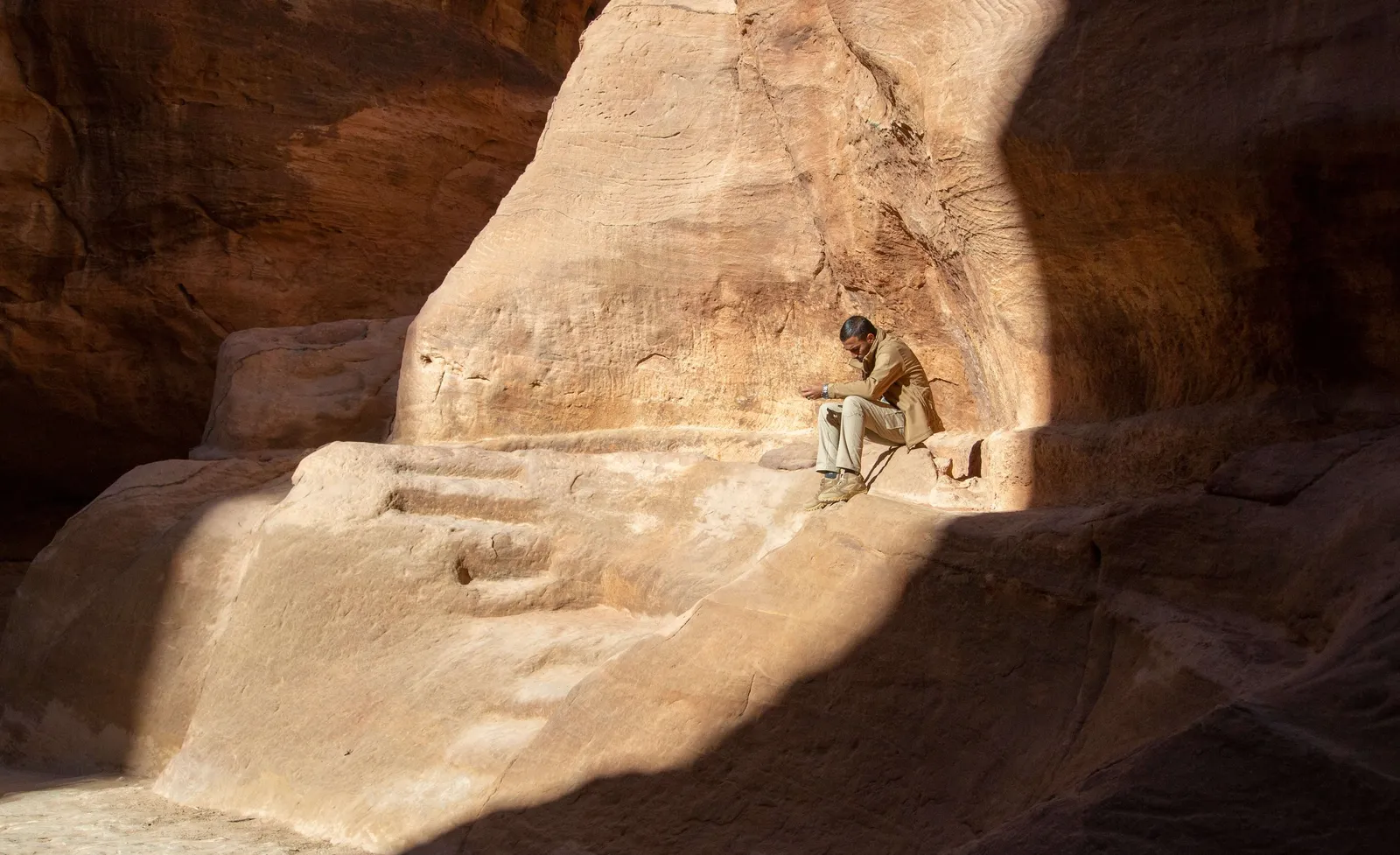
Light, shadow, and patience — the kind of moment Jeannene teaches her students to wait for. Photo Credit: Mathis-Bertosa Photography. Used with permission.
Jeannene Mathis-Bertosa grew up holding aperture cards for her dad’s flash tests, a human card stand who didn’t pick up a camera herself until college. Today she teaches the commercial photography program at GlenOak High School.
In this episode two career tech teachers compare notes. Jeannene breaks down the exposure triangle, why she still uses Photo Mechanic over Lightroom, and the lesson she repeats to every student who’s just bombed their first attempt at something new: nobody is great the first time, you have to keep at it to become great.
Why It Matters
Jeannene’s driving lesson story says it all. Her first time behind the wheel, she drove up a curb. Her dad yelled stop. She kept driving anyway, and now she’s a professional driver. That’s the lesson underneath everything she teaches: the first attempt at anything is supposed to be bad, and Instagram’s highlight reel lies to beginners about that. For anyone discouraged by their early work, this episode is the permission slip to keep going.
About This Guest
Jeannene Mathis-Bertosa teaches the commercial photography program at GlenOak High School in Stark County, Ohio, as part of Ohio’s Career Tech Education system. She grew up around camera gear thanks to her photography-enthusiast father, but didn’t pursue photography seriously until college, where her introductory design professor, photographer Masumi Hayashi, changed her entire academic path. Jeannene shoots professionally across travel, portrait, and commercial work, often working in aperture priority for depth-of-field control, and brings real-world tools like Photo Mechanic into her classroom so students experience the same software working photojournalists rely on.
Jeannene’s Bonafides
“
The first time you do everything, you’re not going to be great at it. Instagram tells you that you can do everything perfectly, but the first time you do something, it’s not going to be great. You have to keep at it to become great.
”— JEANNENE MATHIS-BERTOSA, COMMERCIAL PHOTOGRAPHY TEACHER, GLENOAK HIGH SCHOOLHear This Episode
Watch Here
Episode Timestamps
Your ZoomPod — Exit Ticket
After this episode, you'll know:
- Why your first attempt at anything is supposed to be bad — and why that's normal, not a sign you're not cut out for this
- How aperture priority mode gives you depth-of-field control without giving up creative input
- What professional culling software like Photo Mechanic does differently than Lightroom, and why working photojournalists rely on it
- Why observation, not technique, is the real skill behind seeing a photograph before you raise the camera
Gear & Affiliate Links
Trick out your kit, and your wardrobe. Both Adorama and SmallRig are having sales right now. Or wear your photography mood, grab a ZWOF set-wear tee shirt. If you use a ZWOF link, we may earn a small commission that doesn’t increase the price of your item.
Explore More
Check out our other great podcast episodes. Link and follow for more great learn-photography content: IG @zoomwithourfeet | FB @ZoomWithOurFeet.
Jeannene’s first time behind the wheel ended on a curb. She kept driving anyway. Same principle applies to the first photo you take.
Stop Shooting From the Stands →TMac 00:11
Hello and welcome to another edition of the Zoom with our feet podcast. The pod about learning photography. With me, your host, TMac. I am a professional photographer and videographer, who also happens to be a teacher. On this episode of the Zoom Pod, Watch Out Photographers. We have two teachers leading the lab today. Since I started the podcast, I wanted to talk to my fellow career tech teacher, Janine Mathis Bertosa, about all things photography, and more importantly, about teaching photography. JMB is in the house. She teaches an outstanding commercial photography program at Glenok High School. Grab your cameras. Our guest speaker is in the photo lab. Let’s talk to a pro. Janine Mathis Bertosa. Pleasure to have you on the Zoom with our feet podcast. How are you?
Jeannene 01:20
Well, thank you. It’s a pleasure to be here.
TMac 01:22
Tell me about your photography journey, personal journey. How’d you start?
Jeannene 01:28
Wow. Like a lot of people, I kind of grew up in a household with a parent who was just really into gadgets. And my dad was a photography enthusiast, and to the point where I have really vivid memories of holding cards with apertures on them and him testing his flash, bouncing it off of things, and so that you know he would know what his settings were. My sister and I were like holding cards. And of course, you know, like most people, you know, if your parents like it, it can’t be cool. So I didn’t necessarily pick up the bug, so to speak, until I was in college. But we, you know, I grew up around camera gear, and I think I learned a lot of it just through osmosis.
TMac 02:26
So what because this always dates everybody, that’s why I love asking photographers. What was the first camera and that you used?
Jeannene 02:37
It was my dad’s Pentax ME Super. That was my very first film camera. And I remember in college, you know, it was a big thing when I wanted to go buy my own rather than use his. And I bought like a Canon EOS. It was like right when all of those were coming out. But yeah, Pentax Emmy Super.
TMac 03:07
As you were going from a household that had camera equipment in it and were sort of a human card stand to learning about it yourself, who influenced you as you got going?
Jeannene 03:28
Well when I when I went to college, I went to school on a drawing scholarship. I was a drawing major initially. I was a vocational student. I took a commercial art class in high school. So yeah, go career tech. And when I got to college, my design introductory design teacher happened to be the college photography professor. And she was awesome, she’s just the coolest person. And her name was Masumi Hayashi. And Masumi was the one who I think really kind of sparked that the potential of what you could do and how you could tell stories. And I ended up you know changing my major, changing my whole path based on you know the inspiration and the influence and the encouragement from her.
TMac 04:32
From a teacher.
Jeannene 04:34
Yeah, from a teacher.
TMac 04:35
Right on. How did you learn the basics, the exposure triangle?
Jeannene 04:43
Most of that was through her coursework. But you know, a lot of trial and error, a lot of testing things, a lot of you know under or overexposed film and like figuring it out. But you know, again, like you had mentioned, the camera kind of dates you. Yeah, it was all film. Everything was black and white analog. So that trial and error was costly and time consuming and really disappointing. At times, but at other times just the coolest thing in the world. And even now, I’m I mean, I’ve been I always say I’ve been doing this since God was a boy. I still, when I, you know, open that canister and I like pull the film out or I help a student with it, I’m shocked it worked. I’m always like, dang, this is like magic. Wow.
TMac 05:43
That time for me was the time from the shooting to all of that process, souping, all of that process, and the final stages, and you’re looking at it sort of literally coming to life, and you’re like, it did work.
Jeannene 06:06
Yeah, it’s amazing, yeah.
TMac 06:11
When you shoot professionally, are you all manual all the time?
Jeannene 06:17
Most of the time. Most of the time. I do I do a lot in aperture priority, depending on what the subject is. Because my concern is always about, you know, what is my what’s my depth of field going to be like? Is the viewer gonna know that this is the one thing or the one person that I’m looking at? So I use aperture priority quite a bit, but manual very, very often we’ll get to we’ll get to teaching that in a second.
TMac 06:50
I want to go over your background first. What’s in your kit?
Jeannene 06:54
Oh my goodness. Wow. Okay. It depends on the gig. Because I do lots of different types of work. If I’m doing travel stuff, like if we’re you know out of the country somewhere, I travel really, really light. I tend to I tend to shoot a lot of existing light because I don’t want to draw attention to myself if I’m in some big, you know, weird place. I also am the kind of shooter that I kind I like to be up in the business. I like I like to shoot wide and I like to shoot close and I like to be in the conversation because I like to talk, obviously. I love people. So I just I want to be engaged and I don’t often you know bring a lot of like telephoto gear with me unless the job dictates it.
TMac 07:55
Yeah, go to body and lens for that then. What is that?
Jeannene 08:02
Oh, body and lens. Right now I’m shooting a Canon R6, really good in low light. Right. The whole mirrorless thing is kind of new to me. The I have a 24 to 105 f4 on it all the time, and I just love it. The my backup camera, Canon 5D Mark III, which is a tank, but I think it’s it’s one of the best cameras ever made. I mean, that thing is literally an extension of my eyeball. It does everything that I need it to. It feels it feels like you know it’s part of my hand. Yeah.
TMac 08:50
I have a I have a future guest who literally has purchased several of them, like thinks it’s the greatest camera that Canon ever made, and knows they’re gonna go away eventually. So he has like shutters, he has the bodies, he has. I’m like, dude, you’re not giving up the two, are you?
Jeannene 09:15
And he’s like, I need to meet this guy.
TMac 09:17
I’ll put you in touch with him.
Jeannene 09:19
Introduce me.
TMac 09:20
What other type of work do you do?
Jeannene 09:23
I’ve done I do weddings occasionally and events, so something like that, you know, my gear will also include a bunch of speed lights and you know, transmitters and receivers, and a telephoto. For that, you kind of have to. I am branching into still life and food work. So kind of what people refer to now as lifestyle photography. I have I have a passion for food. My husband and I are big foodies, and not just like cooking and eating, which is fantastic, but I just love the art of photographing those things. Just the delicate nature of it, the very formal aspects of it. And you know, I think this is such a great place in the country to be doing that kind of work, given the restaurants and the chefs and even the food studios that we have here.
TMac 10:35
So is I’m curious, being a lighting nerd, is that continuous or strobe lighting?
Jeannene 10:44
Strobe, yeah. Canon speed, yeah. The Canon speed lights, like the 6000, those are pretty great. When the job calls for it, set of pro photos. Those are they’re just so easy to use. Yeah, just so easy. I remember being in grad school and like plugging in those big old speedatrons like into the giant battery box and being afraid you were gonna like get shocked and thrown across the room. These pro photos are like you just slap a battery in it and just turn a dial, and you know, you have amazing light sources everywhere.
TMac 11:28
So travel and weddings, food. What else?
Jeannene 11:34
Portrait. I’ve done quite a lot of headshot work recently. You know, things for theater people and business people updating their profile. So yeah, that’s been that’s taken up a lot of time recently.
TMac 11:55
What is your must-have a piece of photography gear, not a tripod that you love and work with or find a way to work with whenever you’re shooting?
Jeannene 12:15
Oh boy. Probably a specific lens. I am just infatuated with an 85 millimeter 1.8. It’s just yeah, it’s it’s just it’s the perfect amount of compression. And granted it’s you know mostly a portrait lens. And so when you’re photographing people, it’s just it’s beautiful and dreamy and perfect.
TMac 12:45
I know some I know some sports guys sitting under the basket at basketball games using an 85.
Jeannene 12:54
Oh, really?
TMac 12:55
Oh yes.
Jeannene 12:56
Wow. I was sitting under sitting under a basket on Saturday shooting basketball, and I think I was using like a 50, and I kept thinking, oh man, that’s a little too close. I can’t imagine an 85. Wow.
TMac 13:12
Occasionally I will break out my 16 to 35 and do one of those sitting under the basket full wide. I’ll rattle off a couple just so I just so I have it. But yeah, I know some guys using nifty fifties and 85s, and even the 100, the new RF 100 is getting great rave reviews for that kind of work, even in sports, if you can imagine.
Jeannene 13:42
Wow, really cool.
TMac 13:44
How did you make the transition then as a working pro to teaching?
Jeannene 13:51
I worked for a newspaper. Matter of fact, that’s where I met my husband. He was a reporter and I was the photojournalist, and we would go on stories together. Yeah, it’s it’s kind of cute. And that’s how we got to know each other. We would you know, argue about what was supposed to be the shot that would go with you know the story and whatnot. But we when we got married, I was looking for a more like regular gig. He had moved on to a different newspaper, and he was the business editor at that point, and he had a regular, like a regular schedule. Like he was going there at nine, he was leaving the office at like five or six. And you know, I really felt like I needed that as well. Like I wanted something regular. And the teaching thing, like I always tell myself, I’d like I’ve kind of Mr. Magooed myself into every great situation that’s ever happened. So while I was working for the paper, I was also teaching at the University of Akron. I was teaching a couple of black and white darkroom classes there. So I would teach in the morning and then go to the paper and I’d work there until you know whatever time I had to work. And while I was working at Akron, a former student of one of the professors who had the job that I have currently before me, happened to say, hey, this person’s leaving. And you know, if you’re looking for like full-time teaching, this is kind of like a decent gig. And you know, I made a couple of phone calls, talked to a couple of people, went down to the school, and I thought, you know, this might this might be something I could do. Like I didn’t go to school to be a teacher, I went to school to be a photographer, but fortunately in the career tech area, they are very open to that and they want the industry professional to come in. So it just kind of worked out like this is the place I’m supposed to be. So yeah, it was yeah, I kind of Mr. Magooed myself into it.
TMac 16:12
Like and this is the Glenok job you have now?
Jeannene 16:17
It is, yeah.
TMac 16:18
Yeah, that is awesome.
Jeannene 16:20
And yeah, we you know, it was one of those things where like all kinds of weird signs, like I’m sitting in my home office, which is you know, far away from where the school district is, and I happen to look out the window above my desk, and here’s a plane, like a plain local school bus driving down this cul-de-sac, you know, an hour an hour or more away from that school. And I’m thinking maybe that’s where I’m supposed to go.
TMac 16:52
That’s pretty crazy. Just drove by your window.
Jeannene 16:55
It’s weird.
TMac 16:59
So you make that transition, which I know well, sort of industry to the classroom, which involves certification and master’s degree and all of that. What do you think? I so wanted to ask you this question, but how do you think that your photography experience informs your teaching?
Jeannene 17:26
Boy, I think I couldn’t, I don’t think I could do the job that I have without the experience that I’ve had. And a large part of that is just because of what we do, we have to learn the gear. I mean, you it you’re in this a similar situation. You’ve worked in an industry where you have to think on your feet and you have to solve problems and you have to know your stuff in and out because you’re called anything can happen at any given moment and you have to be able to handle it. So taking that into the classroom, you know, there isn’t it there aren’t too many problems that you can’t solve on the fly. And, you know, we’re kind of forced to know everybody’s equipment, not just our equipment. So if a kid brings in, you know, a Sony, I have to be able to work with that as seamlessly as my own gear. If somebody brings in a Pentax, I have to be able to work with that as and answer the questions and transfer all that knowledge. The other thing is the kids, the kids know, like if you don’t have a background in it, you have zero credibility. So if you want to walk in there and walk the walk the walk and talk the talk, you have to be you gotta back it up with something, you know.
TMac 18:55
It’s true. It’s very true. You know, I used to tell my students what I was told by a television director one time when he said, I don’t I don’t pay you to operate the camera, I pay you to think. And it and it always struck me, and I brought that over literally to my to my students. This is this is something you have to think through, problem solve, work together. You know, that’s Bill’s career tech, doesn’t it?
Jeannene 19:35
Absolutely, a hundred percent. Yeah.
TMac 19:39
So how do you teach the basics? So how does one tell or try to teach a generation of look it up on YouTube how to trial and error?
Jeannene 19:58
Yeah. Boy, it that’s it changes every year, just it morphs. You know, we talk about all the basics. You know, you mentioned the exposure triangle, and you know, we explain all the pieces, parts, and then how those carts relate. And then I try I get out a digital camera and we plug it in through tethered capture so I could show them if I set this, this, and this, this is the picture you’re gonna get. Does that look good? Why or why not? And you know, it’s just it’s a lot of demonstration. And it’s I always start students out with film first. And you know, some of them love it, some of them hate it. But I feel like when they finally get that digital camera in their hand, it they’re not just pressing a button and lucking into something that they understand the relationships and how all of those things interconnect to get the result that they want. And I always tell kids I’m you know, I’m like a blind squirrel can find a nut. You know, like just the more you press that button, you luck into it. But if you’re gonna do this as a pathway, if you think this might be your career path, you’ve got to be able to nail that shot in like three exposures. You know, you can’t just keep pressing the button and hope you get the bride walking down the aisle, you know, and she’s not gonna do it again. Like you can’t make her back up and start over because you didn’t have the focus nailed.
TMac 21:40
I too started in film. We just dated both ourselves. I know. I but I think that there’s a mindfulness when we learn that way. I mean, after film comes out all white or all black. Enough time or is blurry right we begin to say I have to get this right, like you said. And I think it almost forces you to be more mindful of your settings when you are shooting. Which for me is ironic because nowadays with the ubiquity of phone cameras, everybody shoots, looks right, and can and can pitch it. So we’re almost have circled back to not worrying about it and I’ve shot enough and I’ll I’ll get what I get mentality. What do you think? Well yeah I a little a little bit the part for me that I think brings us all like back around is shooting raw and being able to take that digital negative and you can literally manipulate it as if you were shooting it in the camera and you changed the settings that I think the real the thing that we all need to be really careful of is remembering that like you know it’s all about time that the time that you would have to spend to go back in and recover like shoot it clean just go in and you know make sure that you have everything set appropriately and shoot it clean and then you don’t have to worry about going back in and fixing things you know get it right the first time yeah I mean not to be crass but like time is money you know so that’s and that’s our curate is showing again you can’t be far from the interest the industries and not talk about money and pressure and you know deadline deadlines and that even you know people kind of say well you know you go to a sporting event and you shoot a thousand pictures you still have to produce images you still have to be prepared understand the game know how the how the players move know when image situations are about to occur you know we have something in sports called peak action are you capturing something called peak action which is you know receiver up ball near his hair right about to go into his hand that’s the one that they want yeah versus a whole string of the frames before and the frames after so to your point about preparation and getting it right getting it right the first time yeah definitely I want to pull the thread on artistic parts of the process and how you teach composition I’ve been dying to ask you how you teach composition to new photographers wow that’s you know something that is it can be challenging but the I think the best tools that we have are excellent examples so I kind of start out any of the classes that I teach where we talk about visual organization and we talk about you know formal composition in the different types and we feed our eyeballs we look at lots and lots of photographs and you know after a little while their eyes start to glaze over and then I remind them like you’re in a photo class did you not think you’re gonna be looking at pictures and you’re not you know it’s not all like selfies or you know pictures of your friends like you know we dive into you know the traditional photographs go back to the Farm Security Administration and like Dorothy Lang and you know we look at the formal photographs like Edward Weston and Minor White and Emmett Gowen and you know looking at these classic photographs and then I start pulling up some of the things that are going to be in their wheelhouse like the more contemporary photographers or people you might see on Instagram and like you know look at how this person lays it out look at how similar this is to this traditional like famous photograph this is not an accident you know great images are created and we are directing how we want the world to view that image or how we want them to view that photograph that we’re taking and what’s important and we’re showing the world what’s important by where you place things and you know we talk about the physiological response of the eye the human eye goes to the brightest part of the picture it’s a physiological response where are you putting the brightest part of that picture it’s there’s you know there are there are tips and tricks and you know all kinds of stuff but yeah I kind of I try to walk them through it and hope that they absorb it in video I used to talk about designing the frame and in and in photography too when I talk to students full disclosure when I was teaching my video students composition and I started them in still images with their phones. So I would get other students to be the actors and I would then have them say okay we know what the three essentially three are three shots are of two people talking your A, your B, and your C, and take a picture of those frames that’s your assignment. Don’t worry about lighting, don’t have to worry about audio you have to worry about designing those frames. You don’t realize this or not, but you’ve seen a million of these frames if you’ve watched as much as you’re watching right so ironically for my cycle coming back to photography after years in television was me teaching video students using photography principles at the very beginning.
Jeannene 29:36
That makes so much sense so much sense.
TMac 29:39
And it’s and it’s and that’s why I was I was like you were you were preaching when you were talking about frame design and looking at a lot of pictures and arrangement and composition and yes rule of thirds but also like you said light that’s not as much artistic as it is philosoph physiological eyes going there automatically you know so that was really cool for me to hear you say that what kind of I wouldn’t be a career tech teacher if I didn’t ask you what kind of projects former career tech teacher if I didn’t ask you the kinds of products projects that you’re having your students what do they start out doing?
Jeannene 30:31
At the very beginning we always do kind of a get to know your camera kind of assignment where I give them certain settings that they have to try out and based on experience I know if you set your aperture at this and your shutter at this and you’re using 400 speed film I know what that’s going to look like so I know what if they’re setting it at that if they’re monkeying around you know we also look at how light effects form so they have a portion of it where they have to photograph the same scene over several times during the day obviously something you have to do like on a weekend so that way you can see the changes that happen and how that form will look different. And you know it could be a house it could be a car it could be you know whatever just as long as it’s a static thing. But yeah that’s usually that’s usually the beginning the second assignment they usually start with the subject of light and I give them different scenarios I want to see dramatic examples of light because you know a photograph is nothing if it isn’t light painting with light and again how light affects a form like that’s that’s everything is highlight and shadow so explore that and get used to observing it and knowing this is going to be a great situation this might not be as interesting.
TMac 32:06
Next level sort of intermediate what’s next from that because that’s basic design that’s basic design and then what’s what’s kind of an intermediate level project we usually move from that to like themes and subjects so a portrait assignment a landscape assignment personally I’m not as gifted at landscape as I would like to be not like your previous guest gabe so I usually have the students do a sense of place so you’re looking at creating a sense of being and I want to be able to look at that photograph and understand what it feels like to stand in that space.
Jeannene 33:05
So that takes a little more finesse you know it’s not just about getting the settings right exactly yeah using the noggin.
TMac 33:15
Well then let’s go to your seniors build in portfolios more complex maybe longer term longer project time frames what do you talk to me through some of your senior work so the seniors have the benefit of access to all the studio gear all the studio lighting so that we spend quite a bit of time at the beginning like getting them acclimated to it and the first year is usually a lot about technical and this and individual images whereas the second year is about building a body of work and figuring out which genre you really want to explore and then run in with it. So for example I have students doing a lot of editorial work fashion they have a couple of different themes that they work in like I have a couple of them doing a holiday editorial right now and it’s kind of like a lifestyle type of photography where they can do like flat lays or still life or product we do an editorial portrait which you know those are kind of different considerations like the portrait you take on film is not the editorial portrait that might run in Vanity Fair or Vogue those images are going to be different and we also explore photojournalism so I have some students who are storytellers who are out documenting a subject and that’s a lot of fun I mean that’s you know that was my wheelhouse so that’s where I can really can really influence and explore and I’m super excited we’re about ready to launch into food and the food photography is always exciting you know mostly because you have snacks all day long but well if food photography is anything like culinary shows which I’ve worked on a couple as a as an operator oh cool there’s so much behind the scenes to make it so it looks like it’s not taking as long as it as it really does is that same sort of process similar in still fo still work of food a little bit you know since we’re we’re not always documenting the process of making something we might be dealing with an ingredient shot or like a final a final product yeah the end yeah it’s about making it look appetizing and beautiful and making sure that the lighting is appropriate for what you’re shooting and that it’s not flat and that it’s dimensional and that it that it looks pretty I mean for lack of a better word it’s gotta look great what so in that sort of because it’s a three year program right it’s it’s two years but we do have an option or an optional intro course and the introductory class is open to freshmen and sophomores who are kind of like I think this looks cool and then they get to play around with it and see if it in fact is cool which I can tell you it is cool it is let’s talk we’re educators let’s talk deadlines how did you design your assessments or your project deadlines for your let’s start with those first years what kind of deadline turnaround times are we talking about it you know it changes all the time because as you mentioned we have a lot of variables that are out of our control and we also have a vast difference in students abilities within a class so you know where you have your fast workers and your high achievers and then you also have people who are working hard and things just aren’t working out right for them or there may be some kind of glitch in their process.
Jeannene 38:20
So you have to it’s always kind of an ebb and a flow and there’s give and take you do your best to set a deadline that’s reasonable for everybody and you know you see how many of them can get there and if we can prop them up and push them along the way we do.
TMac 38:41
And I know too our class size varies every year so when we have a situation where we have a large number of students that limits the access to certain things right so that kind of slows the process down a little bit so you know as you know the years I have 10 students we get you know at least four more projects done when we have 25 students we may not have that we might not get you know all everything accomplished so you just kind of do your best you might have to subtract a project yeah from that particular marking period yeah we’ve all been there let’s talk post production so you got them started on film yes so clearly they’re in the dark room which I’ve seen it’s awesome so I mean that’s kind of the original once they switch over to digital what kind of post production tools are you teaching and using right now we’re using Adobe Bridge I know a lot of people love Lightroom and Lightroom is great bridge is the original we have Lightroom because we had bridge and from what I’m seeing the two of those are starting to come together where they are almost the same product pretty much but we’re processing out using Adobe Bridge and then we’ll take images into Photoshop just to get access to our digital printers and if there is further manipulation needed on an image like given what the content aware and the AI that’s part of Photoshop now I mean it’s it’s ridiculous to not use it but yeah our students have access to the full Adobe suite so they can they can pretty much use anything that they want. The other product that I’m trying really hard to work into the rotation is called capture one and capture one is what studio photographers use and you’re shooting directly with the tethering yeah directly into your hard drive like you can bypass the card completely if you choose to so everything goes directly to the computer or you can back it up on the card as well but that program also has some similarities to bridge not all but some so usually once my kids learn that then capture one isn’t as much of a mystery but I’m trying to get them to do when they’re doing studio work to do it directly into capture one I love that idea that’s that’s real world it absolutely we’ve taken our students to visit a couple of different photo studios and that’s one thing that everybody says if you can come out of school and already know that software you could digitech for anybody like they will hire you to run things and I mean what a great opportunity that would be exactly I love the bridge idea I yes I use Lightroom but I hate having to load pictures and if I’m shooting a game and I’m upwards of you know 200 350 if it’s a full day and then having to go make a pot of coffee or take a shower or just on import and the fact that bridge reads images off the card.
Jeannene 42:46
Yes yeah and I you know I know I’ve worked in Lightroom I don’t know it well but I feel like I can navigate and I just for me I can do things so much faster in Bridge and I feel like I know where my stuff is you know building a catalog and it’s not really the picture it’s just here’s the instructions for how it’s going to handle the picture I feel like I never know where my stuff is you know like I want to be able to point to the drive and this is where it is.
TMac 43:24
Right no I get it I get it and like you said for students to have those types of experiences with both alternative workflows and also professional software I turned some students on to you know culling software if you are working with lots and lots of images pros don’t use lightroom you know they may use photo mechanic photo mechanic Is like a must for many of the photojournalists.
Jeannene 44:05
I had a really great experience this past spring where I was able to take a workshop with Momenta. And Momenta is an organization that’s run by these former photojournalists. And the workshop was photographing for nonprofits, super interesting and amazing, and run by a former White House press photographer who’s done work for like National Geographic. And she introduced me to Photomechanic because that was what we had to use to be part of the this experience. And wow, that was that’s I had never seen that before. It was really interesting and super cool.
TMac 44:57
A lot of the newsies and a lot of the sports guys, again, they may take 1200 images, you know, the guys that just did those playoff games easily thousand, twelve hundred. That’s how they roll.
Jeannene 45:12
Absolutely.
TMac 45:13
And to be able to go through those efficiently, cull them down, you know, everybody was in the s in the sports nerd world from Sunday was the chunk of the helmet of Kansas City quarterback Mahomes is coming off. And that photographer capturing that she got some great praises for that for that image, but come on, man, that sequence probably had oh I mean I know that my R62 can do 20 frames a second in electronic. I don’t normally work in that mode. I don’t want to go through all those images. Right. I’m not a work a day. I don’t want 1800 images to, you know, I’m shooting birds and rocks and stuff like that, man. I don’t I don’t want all that. But you know, those software like photomechanic, that’s built for folks that are dealing with that volume and can be able to do that quickly. So I think it’s great that you’re exposing them to tools that they will encounter in the in the professional world of out in the wild, yeah. Out in the wild. All right, Janine, coming down the home stretch. What is what is the one thing not in a textbook or a state standard that you teach that you know from experience your students need to know?
Jeannene 47:10
That is a great question. I feel like something I tend to reinforce with them is that we learn more from the things that don’t work for us or don’t work out well than we do from the stuff that comes easy. And I think a huge part of what we do is perseverance and it’s just having the having the wherewithal to keep doing it because you know you’re supposed to be doing it, and have the confidence that you know you can do it well, you just have to practice that you know. I always tell them that you know the when they do something that just doesn’t work and it’s awful and it’s terrible. I tell them the story of the first time I drove a car. My dad was taking me, you know, home from school or home. I think we were coming home from a store, and he stopped in the middle of the road and he said, Okay, you’re you’re gonna drive now. Put me in the driver’s seat. And I was old enough. And I started to, okay. This is where I okay, I put my foot on the gas and I went up the curve and I went onto the tree lawn, and he’s yelling, stop, stop, stop. It’s like the first time I drove a car, I sucked at it. But did that mean that I stopped driving? No, I’m I’m pretty much a professional driver now. So I like to remind them that like the first time you do everything, you’re not gonna be great at it. Like I know Instagram tells you are you know impervious and that yes, you can do everything perfectly, but you know, the first time you do it, you’re it’s not gonna be great. You have to keep at it to become great.
TMac 49:04
That’s the classic, you know. The only difference between my sports photography and some of my students’ photography is I don’t know, two, three million frames.
Jeannene 49:17
Yeah. Exactly. What is Malcolm Gladwell, 10,000 hours. You have to put in 10,000 hours to become an expert. You know, you can’t put in 10 minutes in an intro to photo class and be an expert.
TMac 49:33
All right. Teacher to teach, what’s the what’s the most rewarding thing about teaching photography?
Jeannene 49:44
Wow. It has to be the relationships, getting to getting to know the people that are in the room and the people who love it as much as you do. I have I have many friends and people in my life who at one point were students in my class. And you know, being able to watch them grow as people and image makers and you know be a part of that is everything. It’s just everything. Yeah, I would say that’s it.
TMac 50:26
Well, you answered the second part of that about being a career tech teacher. You did it all in one. I don’t want to call it a gotcha question teach, but I was, you know, I knew what the answer would be. But I was but I was I wanted to hear your take on it.
Jeannene 50:51
Absolutely, absolutely.
TMac 50:54
This whole project is for me an extension of my teaching. You know, I don’t know how many more I got, but the issue for me is I want to keep teaching image makers like you said, and getting to know them and helping them. So what is what is the one thing you would tell someone who wants to learn photography to work on?
Jeannene 51:33
Boy, oh observation. I think it’s about observation. You know, I’m sure it’s similar in video that we spend more time waiting for that you know, to use a term the decisive moment. We spend more time doing that than we do necessarily actually producing the image. So yeah, I think that I think that’s that’s it. Yeah, being quiet within yourself, to be able to observe what’s happening around you and to see that photograph when it happens, to be able to see what is going to be an image, what’s gonna be a really beautiful creative photograph, and not just a picture.
TMac 52:31
Janine, I can’t thank you enough for being a part of the project.
Jeannene 52:36
My pleasure. Yeah, thank you. Thanks for asking me. This was super fun.
TMac 52:44
Many thanks to the multi-talented Janine Mathis Bertosa. You can check out her portfolio at Mathisbertosa.com and on all of her social media channels. The Zoom with our feet podcast is a production of TV Commando Media. The Zoom pod theme is by November’s, and they’re a funky groove Cloud 10. Until next time, photographers, if you’re not student, you’re not learning.
More From Jeannene