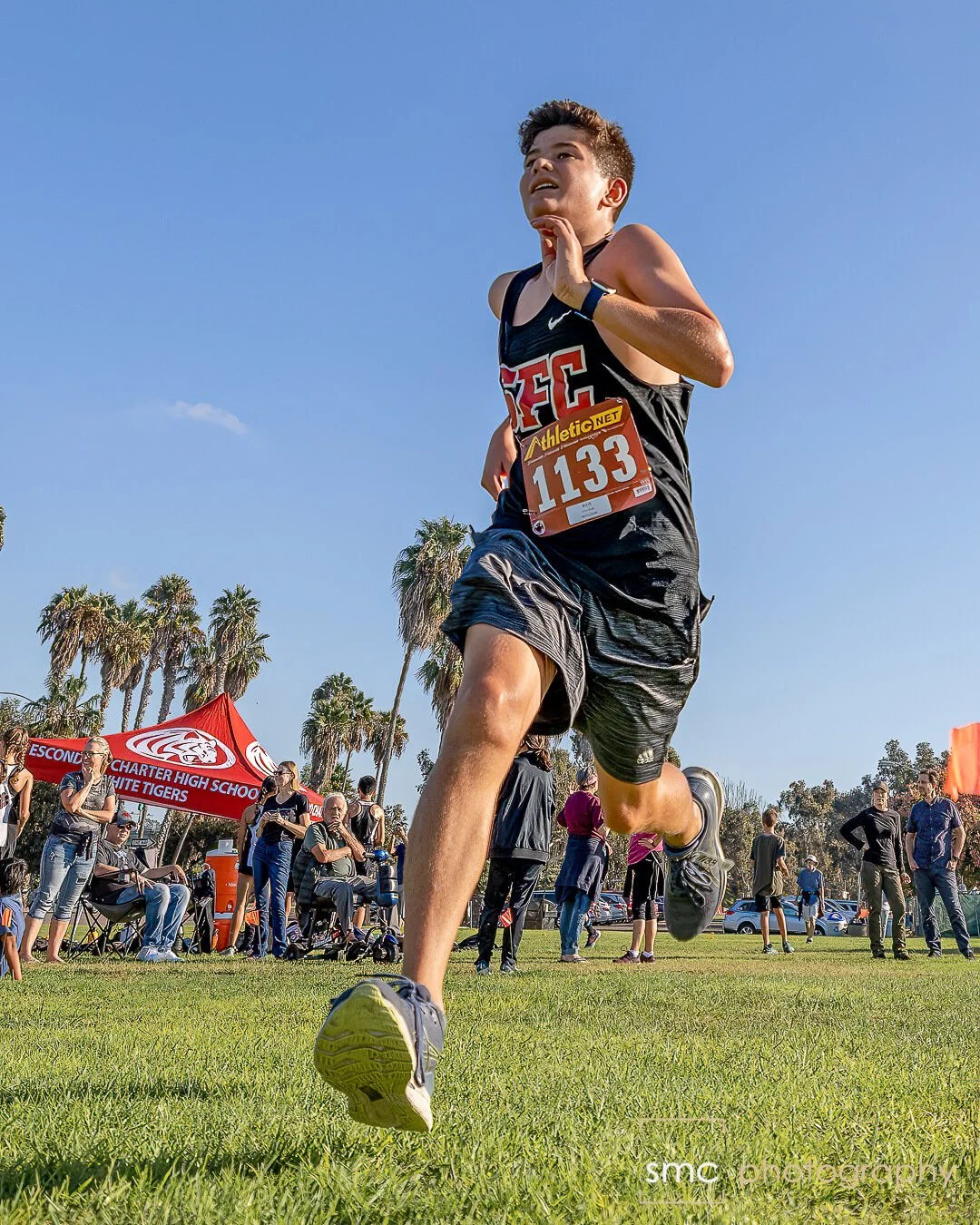
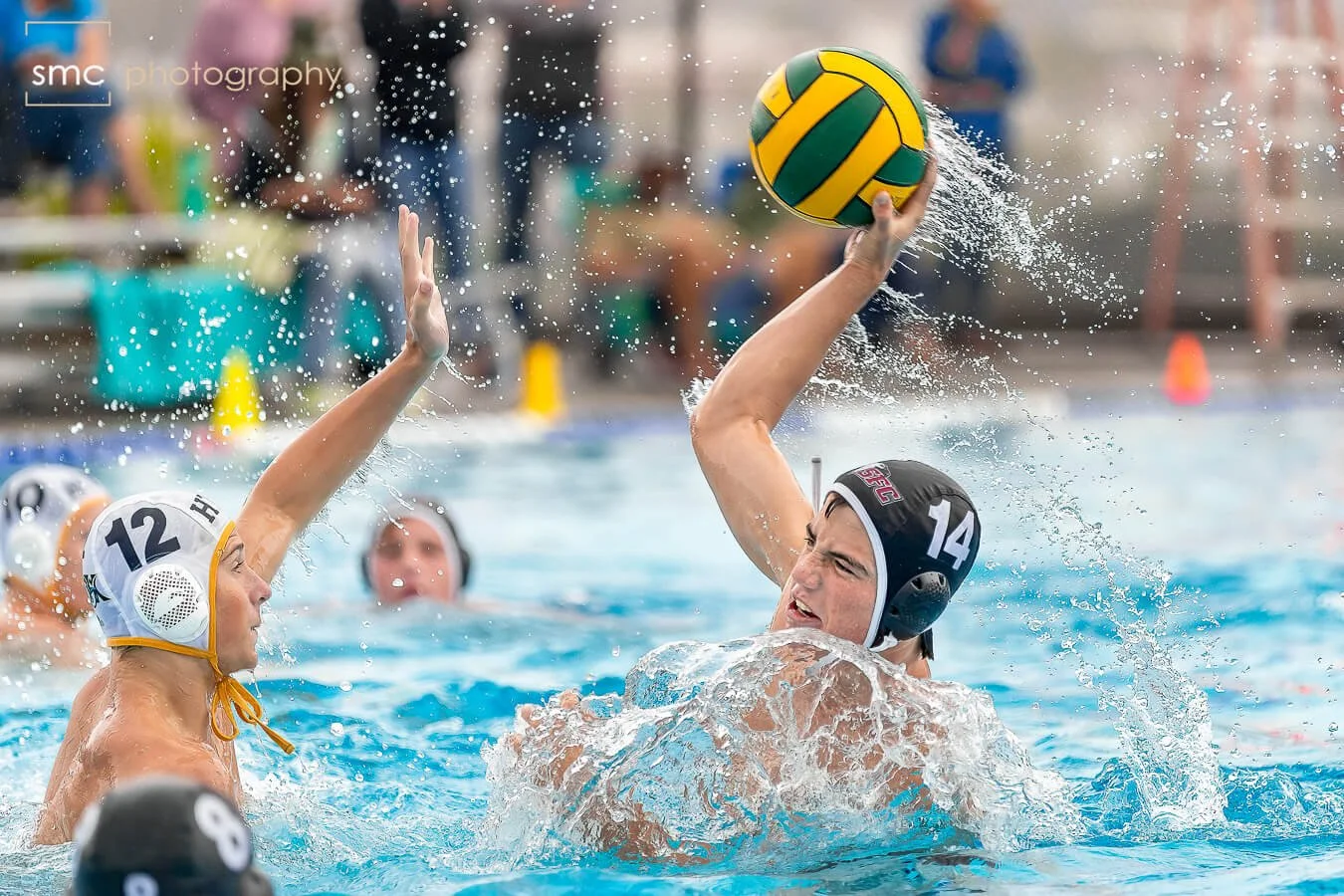
Steve Campos — Surf, Sports & Learning Photography the California Way
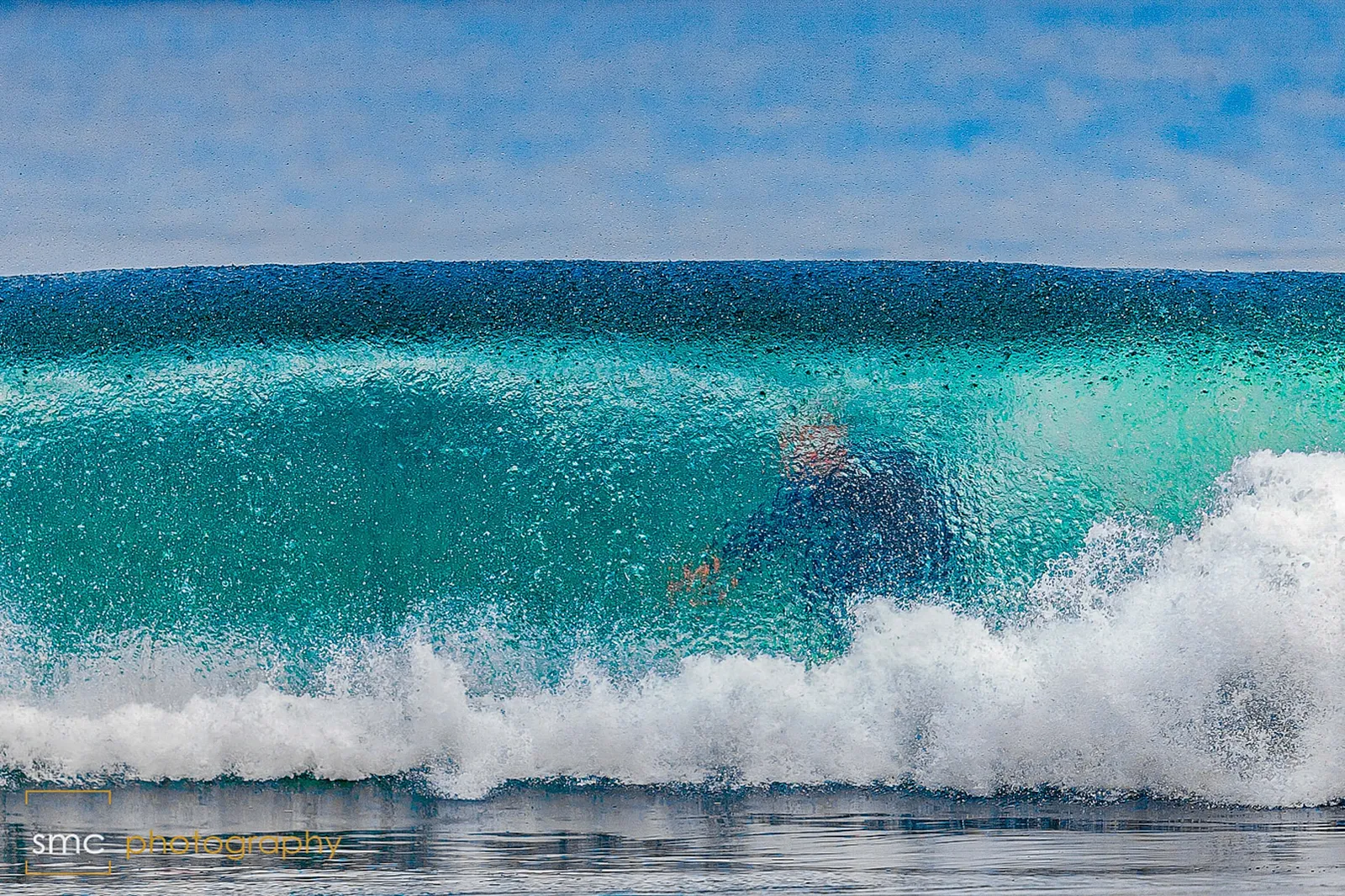
Self-Quarantine. A surfer fully enclosed inside a closing wave — shot during COVID restrictions on a moving monopod, one step at a time. Steve Campos, SMC Photography. Used with permission.
Steve Campos started in real estate photography, picking up a camera as a job requirement back in 2003. Two decades later he’s shooting surf photography along the California coast and capturing some of the most striking wave images on social media, including one that surfers and surf photographers alike told him they’d never seen anything like before.
In this episode Steve traces his path from a high school darkroom mistake that ruined his first roll of film to building a career around West Coast sunsets, surfing, and sports. He also breaks down the editing workflow that turns 1,500 frames into 40 keepers.
Why It Matters
Steve’s favorite photo almost didn’t happen. COVID restrictions wouldn’t allow photographers to stand still on the beach, forcing him to shoot from a moving monopod, one step at a time, like a dance. He titled it “Self-Quarantine.” The lesson buried in the story: the best images often come from working around a limitation, not waiting for ideal conditions to return.
About This Guest
Steve Campos is a California-based photographer specializing in surf and sports photography, with a career that began in real estate photography in 2003 before expanding into sports work around 2016. He built his visual sense partly through years of pre-digital color correction work, learning to identify accurate skin tones and sky color long before he ever owned a digital camera. His surf photography has earned recognition from professional surfers and surf photographers alike for capturing moments rarely seen from behind a lens.
Steve’s Bonafides
“
As you’re starting, you’re probably going to like a lot more than you’re going to like five years from now. Keep shooting, just shoot a lot. Pick the ones you like and learn how to edit them. Because editing is half the game.
”— STEVE CAMPOS, PHOTOGRAPHER, SMC PHOTOGRAPHYHear This Episode
Watch Here
Episode Timestamps
Your ZoomPod — Exit Ticket
After this episode, you'll know:
- Why shooting a high volume of frames and culling aggressively is the fastest way to improve your eye over time
- How real-world limitations — like not being able to stand still during COVID restrictions — can force the most creative images you’ll ever make
- What a real workflow from Lightroom culling to Photoshop sharpening actually looks like in practice
- Why studying other photographers’ settings and compositions on YouTube accelerates learning faster than guessing alone
Gear & Affiliate Links
Trick out your kit, and your wardrobe. Both Adorama and SmallRig are having sales right now. Or wear your photography mood, grab a ZWOF set-wear tee shirt. If you use a ZWOF link, we may earn a small commission that doesn’t increase the price of your item.
Explore More
Check out our other great podcast episodes. Link and follow for more great learn-photography content: IG @zoomwithourfeet | FB @ZoomWithOurFeet.
Steve’s favorite photo came from working around a limitation instead of waiting for perfect conditions. Same instinct applies behind any camera, in any constraint.
Stop Shooting From the Stands →Steve 00:06
And as you’re starting, you’re probably gonna like a lot more than you’re gonna like five years from now. Keep shooting, just shoot a lot. Pick the ones you like and learn how to edit them. Because editing is half the game.
TMac 00:24
Hello and welcome to the Zoom with our feet podcast, the pod about learning photography. With me, your host, TMac, a professional photographer and videographer, who also happens to be a teacher. Yes, I’m licensed to teach. In this edition of the Zoom Pod, California-based Steve Campos of SMC Photography joins me to talk about his passion, shooting West Coast sunsets, surfing, and sports. Let’s talk to a pro. Steve Campos, welcome to the Zoom with our feet podcast. How are you? I’m doing great. Thanks. How did your photo journey start? How’d you get started in photography?
Steve 01:20
Well, the actual well, the actual start probably would have been in high school. Took a class. In high school, my dad had a Argus 35 millimeter that was pretty nice, I guess, at in back in the day. And he showed me a few things, and I took a class, and it just, I don’t know, it was just kind of nice to be able to just stop something, take a shot of it, and then be able to look at it and go, Well, I’ll never see that again. And it’s a here in my hands. I don’t know. There was just a there was a novelty about it. A quick little thing, if I can tell you when I in that class, obviously, you know, that was back in the film days, and we had a dark room where you would have to take your completely black, you’d have to take your film out of your little out of the camera and put it into a roll so you could stick it in the developer can so it could develop. Well, you practice this, you know, by yourself in the daylight, so that you could do it blindfolded, essentially. I got frustrated and I turned on the light to get it. There goes my roll of film. Oops. Which I think probably most people have done at some point or another. But yeah, so I got started back in back in high school and just really dabbled until you know until the last 20 years or so.
TMac 02:52
When did you when did you get serious? When did you think I could I could make this I could make this a job?
Steve 03:05
I back in 2000, I’m sorry, 2003, I had actually gotten my real estate license, and one of the tasks when I would join the group was to photograph homes. Yeah. And I had an interest in photography, anyways, and you know, so that motivated me, and it helped me actually earn a living, so that was good, and you know, so I’ve been doing that ever since. But it wasn’t probably till I think 2016-ish, where had a had a good friend who was a sports photographer for school, and I know that he had an extra camera he was trying to sell as a 5D2, and I picked that up thinking you know, I need a better camera than a 10D, you know, in 2004 or so, and I had that and a 17 to 40 lens, and I was off and running for real estate photography. Yeah, so I did that for well probably from 2003 to 2000, well, to now I still use that 17 to 40, and but now I’m kind of using different bodies now because I have the one body to use.
TMac 04:38
So when you were so you had a very specific sort of genre that you started with in real estate, so indoor, outdoor work? Yes, both, both, yeah, and thus the 1740, because that’s gonna get you all that you need to get.
Steve 05:00
Yeah.
TMac 05:02
How did you teach yourself the triangle? How did you begin to understand how they all relate and how they all help you make pictures?
Steve 05:16
I had a at the time I had some another friend who I actually encouraged him in his photography career because we were doing now, we were both working on the same color house doing color scanning, and he delved more seriously into photography, and I thought his stuff was really good. I wasn’t really taking photos at that time. But I thought, you know, if you know, yeah, your stuff’s really good. You seem to have an understanding of stuff, and this is what you want to do, you should go for it, you know. So after a few years of mulling around working with me where he really didn’t want to work, he took the plunge and just started doing photography full-time, and he was able to make it even to this day. So he I asked him, I remember one time asking him, well, what’s the average settings you would use you know if you’re outside or if you’re inside? And he basically said, Well, if you’re inside, use ISO 400 and you probably want to shoot about F8, and then you know, with the shutter speed of at least like 160 or so, and just start there. So I did that and was like, that’s pretty close. So I started working from that angle, doing indoor photography, and then he then I asked outside, what about out the outside? And he was like, You probably want to be maybe F Loving, you know, and you know, maybe the same shutter speed and ISO 100 or as low as you can get away with.
TMac 06:53
So that’s so that mentor kind of got you started. And you just figured it out as you went.
Steve 07:04
Pretty much. I figured it out. I asked some other questions along the way, but I believe at that time, you know, I had I had I had a lot of experience in Photoshop since you know since the since the mid 80s. Good skill to have. So I knew how to I knew how to edit images and knew how to reproduce color because this is before digital, so you’d put this thing on a on a s on a digital color scanner, drum scanner, you’d put a transparency, and the essential job was to edit the color, was to reproduce the color digitally. So, you know, so I knew what colors made up a flesh tone, what a sky should look like if it had too much magenta, too much yellow. So that kind of training for a lot of years before I actually got into photography, only helped me in and in the editing of photos, and because most of the time things don’t look the way they should look straight out again.
TMac 08:16
That’s quite a foundation to start with even before you start taking pictures as you already knew post-production, essentially. Yeah, yeah. How did you transition to sports? When did that happen? How did that come about?
Steve 08:33
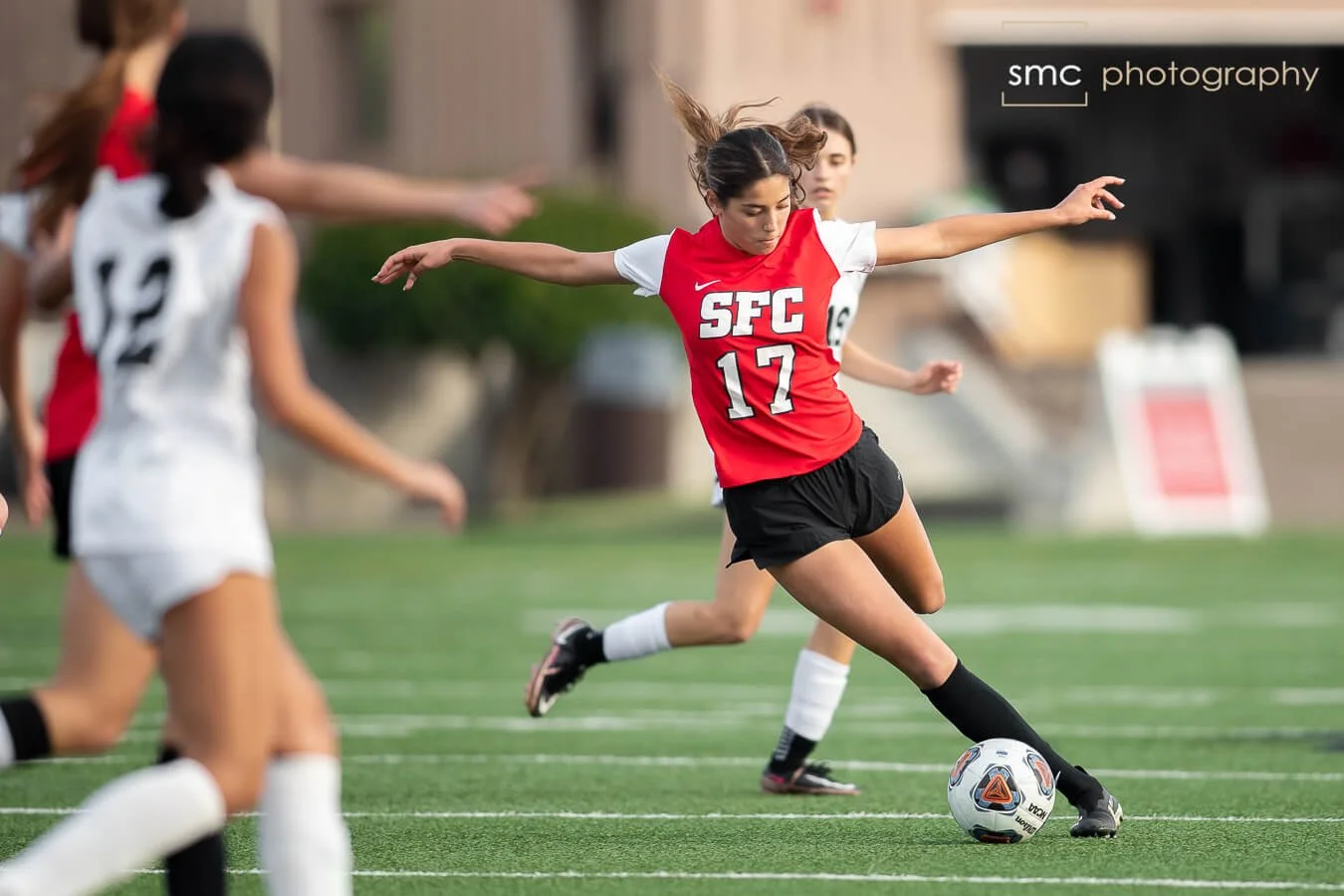
Okay, so yeah, I believe it was 2015. I had another friend who was working at a local private school. He was a graduate of that school, and he was essentially their sports photographer, doing all kinds of things for all the printed materials that they would do at that time. And he was going to be out of town this one August, this one week in August, and that was the week that he would normally shoot the football team, headshots, team shots, senior shots, and such. For the sports app that the school has. And he was going to be out of town and he asked me if I would, you know, if I could do this for him while he was gone. And I was pretty I said obviously I said yes, that I thought I could pull this off. I knew the exposure triangle, so it’s like I guess I could do it. Right, right. So I did that and it went off well. And he returned, and not too long after him and his family decided that they knew that they were gonna head out of state, and so they were gonna need someone to replace them. So I kind of inadvertently moved in on that on that role, and I’ve been doing that since about 2015, 2016.
TMac 10:21
You shoot a lot of different sports. I’m I’m really impressed with your work. I love seeing it. I know I’ve teased you about shooting high school swimming outdoors, you know. I’m from Ohio, that’s that’s not a thing. But seeing some of your work and thinking, oh my goodness, he’s shooting swimming outside in these bright sunny days, and obviously it looks beautiful, but you know, just having those different venues and having the kind of weather that you do have out there, that is such a benefit, don’t you think?
Steve 11:11
Oh, absolutely, absolutely. I actually am impressed on the other side, looking at some of these photographers that are back at back in the Midwest or back east, and they’re you know, they’re shooting in the rain, they’re shooting in the snow, and you know, I don’t have protection for my equipment because I don’t shoot in the rain. If it’s gonna rain or if I think it’s gonna rain, I’m not taking my gear in the rain. I don’t need to because in three days I could probably shoot the same event in sunny sky.
TMac 11:46
So just wait three days. I love that. The other the other aspect of your photography that I was dying to talk to you about is surfing and how that came about. I mean, I mean that’s that’s a thing where you live, but I’m I’m just blown away by some of the work that you do with surfers, how that came about, and then I wanted to kind of get inside how that is the same and yet totally different than some of the sports that are typically photographed.
Steve 12:32
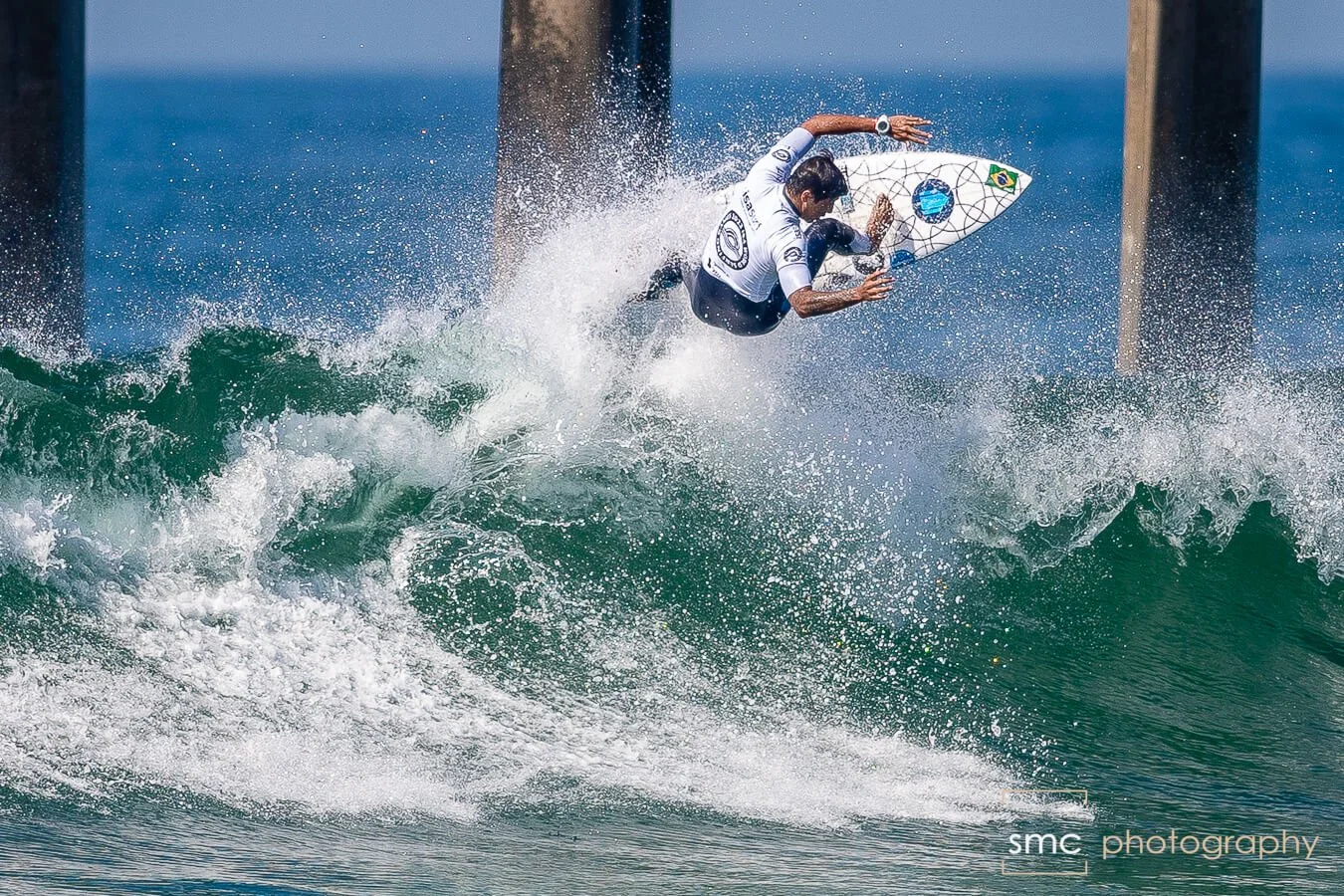
Growing up in Southern California, we lived in about an hour north of where I am now in North San Diego. We I grew up in Orange County, moved down here when I was about 16 and finished, and then I did my last year of high school down here in San Diego. Soon as we moved down, you know, the people I connected with, the kids I connected with surfed. So I took up surfing and never got really that good at it. But I’d go out, get up at 5 30, go out just before the sun was up, and go surfing a couple times a week. And I really just I’m I’ve always loved the soak the surf culture, and here in Nitsanitas it was dubbed the surf capital of the world, which it’s not, but it might be some. And so surf the surfing culture itself, I’ve just I’ve always embraced, even though I never considered really myself a part of it. And so that was already it’s already been with me since you know since high school. How I got into actually photographing serfing, if I if I look back, I had borrowed from one of my friends a 400 2.8 to do some football. I mean, I thought, I wonder how that would this would work if I man shots and surfers. So I happened to hear about a practice session for USA Surfing, which is under a team group surfers association that’s kind of a feeder group to the U.S. Olympic team. Hell wow. I heard they were gonna be here in Oceanside just 20 minutes up the road, and so I borrowed that 400 with my 5D Mark II and headed down there and had a monopod with me as well, and basically stood at the edge of the water watching these kids and practicing tracking because I’ve always used and only ever used single point focus, and so that made me that made me be steady and follow track the object, and I got home and looked at some of these images and I was like, okay, life went on. I like this. No, I love this. So since then, if there’s any contests, I’ve showed a shot a couple contests up in Huntington Beach where you might have seen a lot of a lot of my stuff is tagged for Huntington Beach because you know if you’re out there at a contest for a couple hours, you can get a lot of content. So and I tend to spread my stuff out, so I’m still posting stuff in 2018. But I just love it, and surfing is probably the favorite thing for me to shoot because where else can you do what you love on the beach? Exactly.
TMac 15:58
All right, so then you know there’s I think what intrigued me was looking at your work, there’s some uniqueness about how you work the triangle differently than say myself when I’m shooting soccer. So talk about some of the unique challenges of shooting surfing. You got white caps breaking, you may have whatever you could describe it better than I, but there’s I think just looking at your work, there’s a unique there’s a unique quality to how you have to work that triangle to make images. Talk about that.
Steve 16:51
When I’m doing surfing, it actually I know there’s how I want to say this. I’m generally shooting with the 400 2.8. I’m shooting from the beach. And trust me, I’ve thought about getting a water housing and getting in the water, but that might be for the younger folk that are that really want to get conditioned to be able to do that. And I thought I had high hopes, but I haven’t done that yet. And I may, but I haven’t done that yet. So I’m shooting it from the beach with a 400-28, and it wasn’t too long after I started that I was finally able to get a 1DX. I wanted I wanted more of a sports camera, more of a solid camera that was meant for action sports. So I got the 1DX2, and I felt like I was in heaven because here I’m 14 frames a second, I’m shooting raw, and I’m shooting at 2.8, and I’m generally, yeah, I’m generally always shooting at 2.8 at about 1600th so a second at either ISO 100 or ISO 50. Because now I tend to shoot only in the mornings when the sun’s behind me, so that the sun is illuminating the waving surfer. Nothing against shooting in the afternoon, that’s a whole different thing. You can get some really cool shots from that, but I haven’t spent a lot of time purposefully going in the afternoon or the evening. So most of my things are in the day and morning time. And I can be a creature of habit, and so I know that my triangle works for what I’m looking to do. I don’t have to shoot at 2.8, and I know that there are there are many lenses that can you know go 200 to 400 or go up to 600 at f4, f5, f6, or whatever. And I think those are actually probably even a better situation than I have, being at 2.8, to go to 600 would be pretty cool. Because you don’t need to shoot a 2.8 of what I’m doing, because the depth of field where as far as I am, where the surfer is and where the wave is, everything’s in focus, anyways. Right. But if and if I’m at f4 on a sunny day, I’m still shooting, probably, I’m still probably shooting it at 100 ISO, so there’s minimal noise, if any, right, and I’m getting a lot closer. Yeah. So but because I have the 400 and I’m not looking to get 600, it works for me.
TMac 20:03
Well, you’re I think even at 1600 shutter speed, you’re you’re frozen. You I’m I’m seeing water droplets, some of that stuff, and the and the aesthetic of the movement and catching them, you definitely have a lot of experience shooting surfing because just the you become able to anticipate, and I’m and I’m sort of referring to my work in soccer, I kind of know how they’re gonna move, and you know or can see, it appears to me, how they’re going to move and can anticipate that and how their bodies are in such a position, arms, feet, and how those hips turn and the board. It’s it’s really, really well done, sir. Thanks. It’s been a lot of fun, that’s for sure. So tell me about your kit. What do you mentioned 1DX? So that tells me Canon, and you’ve got a 280, 400. Well what else do you have in your kit?
Steve 21:30
Well, like I said, I have a 10D, which what I started with, and when that died, not too long after I acquired it, I had to change up, so I got the 5D2, which still works. How much I’ve shot a lot of up until recently. Actually, I’ve done all my real estate stuff through that portraits and landscape. Because it’s a great camera, it’s got a great chip in it, and the and then I got have the 1DX2, which I got mainly for sports. Now I’ve actually been using that for my real estate. Only oh wow only because I well I really can’t explain why I’m using that because in the end game it really doesn’t matter what body I’m using for real estate on because the results are gonna essentially come out the same. But it does seem to have a better dynamic range than the 5d2. So just out of the camera the image looks fuller and more balanced than the 5d2. And I can in raw because I shoot everything in Raw, I can move those shadows much better with the 5d2 image. I’m sorry, with the 1dx image than I can the 5d2. So it was more of a of a really no real reason. I didn’t need to. I used the 5d2 because I didn’t want to use the 1vx and use up the shutter count on my real estate stuff. So yeah, I kept shooting with the 5D2, and I’m not sure why it changed. I may go back, I don’t know. And a couple years ago I did get the R5. I got into mirrorless because of landscape indeed fine art stuff on only because of the file size. So and we can be won, we can talk later about the mirrorless thing, but that’s what’s in my kit right now. I have 70 to 200, 28 mark two lens, and I have a the R 1535 wide angle, and that’s all I have right now, I think.
TMac 24:04
Oh, that’s that’s the way to do it. You got wide, medium, and long. How have you used the R5 for surfing?
Steve 24:17
I have, I think I’ve used it once. Yeah, the R5. I’m I’m glad I have it because for the fine art side, landscape, that file size is gonna come comes actually comes in handy for outputting really large files, large prints. Right. 5D2, which most of my landscape was done with, you know, if it’s edited right, you can still do giant images. Correct. But I did want to move into the mirrorless aspect. And honestly, I don’t really like it for sports.
TMac 25:05
The mirrorless.
Steve 25:07
The mirrorless. Got it. Now I’ve heard that the R3 is a little better through the eyepiece, but with the R5, trying to track an image at the high frame rate, it kind of goes blank. So you lose your vision through the eyepiece.
TMac 25:27
The blackout.
Steve 25:28
Yeah, and I don’t like that, even though I do use it, I do use it for sports as a sucking body.
TMac 25:35
My main driver is the R62, and then I have an R7 that I use for video. So I’m I came from the 1D Mark IV. I had that machine gun for quite a number of years, and I made the jump in 2019. I don’t have an R5. I would love the bigger sensor, but the R6 works just fine. I don’t experience the same kind of blackout. So I’ve I’ve not had that I’ve not had that problem. But I’m interested in your in your landscape work because that was where I was going next. I mean, come on, you live on you live on the West Coast where there’s a million dollar sunset every evening. How often do you go out? How is that set up different than sports?
Steve 26:44
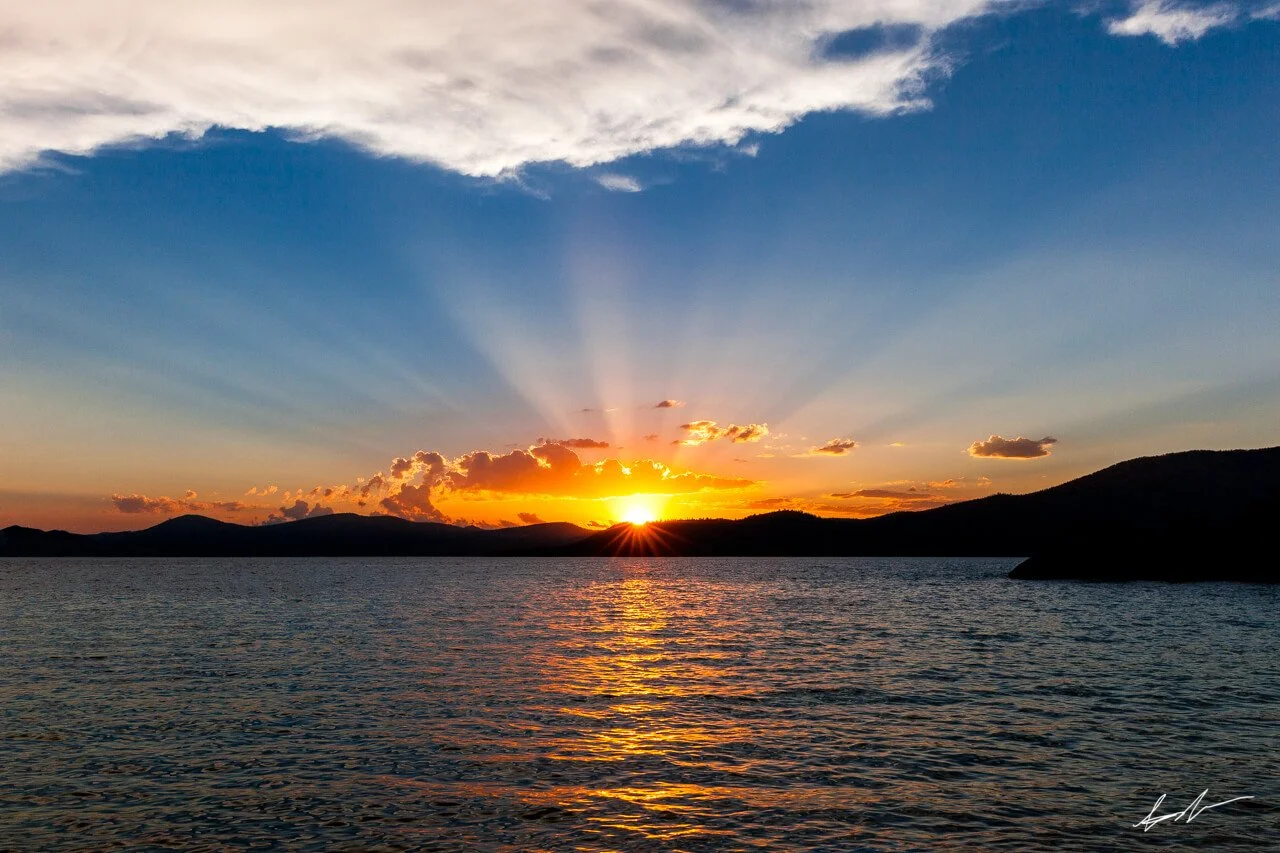
Well, because I’m so close to the coast, obviously sunsets and beach settings are the go-to because they’re easy. I will confess that I’m I’m a lazy photographer. There are so many photographers and images that I just drool over. But I’m just gonna have to look at them. I’m not gonna have to plan on taking them. Just because I it’s it’s it can be a lot. So but the setup or the thinking behind when I want to go out for a sunset is I’m looking for clouds, I’m looking for high clouds, and I’m looking for water to act as a reflector. So a lot of my a lot of my a lot of my work doesn’t have those components because there are the earlier experimentations of just getting out to the ocean and taking sunset photos. And I like a lot of them. But when I can add some dramatic sky or some cool looking reflections to only accentuate that look, then I’m all over it.
TMac 28:15
Even better. Yeah. What is your favorite genre to work in? Do you have a favorite?
Steve 28:31
I do. I would have to say right now sports is my favorite. Because when I can finally look at the images and capture even that, you know, 1% and go that’s cool of them. And so it brings me satisfaction to look to look at them, and that’s what keeps me wanting to shoot more, yeah, whether someone else likes it or not. I mean, that’s that’s what keeps me going, and that’s what that’s what’s fun for me. Originally it was the landscape work. That’s what really got me fired up to get out and hone that craft and hopefully you know sell some images, and you know, and that’s happened, but since I’ve gotten into the sports stuff, that keeps me pretty busy. So my wife and I are being purposeful because she’s kind of nudging me. Hey, we need to get back out shooting because that’s time with you, and we can I’ll go anywhere and watch and walk and whatever while you’re doing your thing. And so it’s a good thing, it’s a good thing for our marriage. And so we’re looking to do that more. I won’t tell you that I have many images from quite a while back that haven’t even processed, just because it’s that’s not high on my bucket, on my to-do list, right? But it’s they’ll get done. They should have.
TMac 30:21
All right, everybody’s got some favorites, and every I feel like every picture has sort of a story that led up to that moment. Talk me through one of your favorite pictures. It could be landscape, it could be sports, anything that you work in. So let’s talk about a situation where you it’s essentially an execution question. Because one of the questions I get a lot as a teacher is, well, how did how did you know, and a lot of times I tell them, well, I cheated a little bit and I did this, or I talked my way into better access to a picture, right? What’s a favorite of yours where all of the things that led up to it, it kind of stars aligned, and you executed one of your favorite pictures. Tell me that kind of story.
Steve 31:22
Well, it would have to be a surfing photo. I have an image of my subject completely behind the curtain of the wave, as completely closed, and you can see him through the wave. And I can tell you that I mean, you know, being doing this for as long as I have, and being on social media for as long as I have, I have never seen anything like it. And I’ve gotten a number of comments from surfers and surf photographers where they say the same thing. We’ve never seen anything like this. So that is probably one of my favorite photos, and it’s actually a photo of a friend of mine who found me on social media after like 30 years. He found me and he’s an apid surfer, and he saw that I was taking photos, and he loves to get photos of himself surfing. So our worlds collided, connected, and I’ve been surfing every time most of the time when he goes surfing now, he gives me a call and says, Hey, can you go out? And we’ll go out at the same time, by eight o’clock in the morning, and I’ll go out for an hour, and I’ll catch as many waves as we can, and we might catch no waves, we might catch five of them. And but to get more about that particular image, it was during COVID, and out here in California, anyways, there was a point in COVID where you couldn’t even walk on the beach, and if you were on the beach, you had to be moving, you couldn’t you couldn’t sit down, you couldn’t have lunch, you had to be in motion. Kind of hard for a photographer, yeah. Yeah, so we took a chance and had my monopod, so that made it kind of easy to take one step here, one step there every now and then, like a dance. And he dropped into this probably this six-foot wave or so and completely got barreled, and you know, had the sequence shot and just picked that one shot where it looked like the wave was completely closed. But he was probably he said he was in there dry as a bone, yeah. Titled that one self-quarantine.
TMac 33:51
So that’s awesome. Okay, so now it’s a last couple of questions. We’ll we’ll pay it forward. If you were going to talk to, and I’m sure that you do, we all do. We meet the kids at the games and they’re just starting out. What are some tips that you have for aspiring photographers? It doesn’t have to be technology, it could be something else, it could be both combination, but what do you tell aspiring photographers that they that they should be doing, that they need to do, that sort of thing?
Steve 34:38
A few things I tell them is one, take a lot of pictures. Take a lot of photos, and the odds that you’re gonna get one that you really like only increase. You know, we’re really fortunate now that we can shoot so many frames per second. And although I don’t tend to hold my finger down on the trigger for two or three seconds, you can you can get a lot of images, and even at an event, you might shoot 1500, even 2,000 images. And as you’re starting, you’re probably gonna like a lot more than you’re gonna like five years from now. But keep shooting, just shoot a lot, pick the ones you like and learn how to edit them. Because editing is half the game. I mean, I see a lot of really cool images where the editing it needs it needs work if they would change, if they would edit it. Just a little just the horizon, yeah, just a little bit horizon, things like that. Yeah, yeah, yeah. And obviously cropping for composition that helps too. And you know, even if I know a lot I think there’s a there’s kind of a stigma where you might at least I’ve found that sometimes I’ll post an image that is cropped in pretty good. And I like the composition, and it’s not all chowdery, it’s not all chewed up. But if you’re gonna take two fingers on your phone or on your tablet and enlarge it, which the only reason you would do that is to see all the chowder, you’re not gonna like it. But don’t be afraid to practice with your cropping and your composition. And the biggest thing would probably be get on YouTube. You have a question, get online and get the answer. And look at other people’s stuff and go, I wanna I like that shot. How are you gonna get that shot? How did where were they when they took that shot? What were their settings?
TMac 37:00
What were their settings? I can’t tell you how many times I know what well, okay, you like that photo. What were the settings? And they kind of well, my students sometimes will look at me and say, like, man, gotta know the settings. Because if you if you know, you’re like, well, wait a minute, why is he kind of thing? And you could start to have context to what people what people are doing. What is your what is your post-production tool of choice? You mentioned Photoshop earlier. Are you still using Photoshop only? Do you use Lightroom? Do you use Bridge? Something else other than Adobe? What’s your what’s your post-production workflow?
Steve 37:49
I’ve been in Lightroom the whole time that I’ve really been on my been in the sports aspect of it. So since then obviously all my work, all everything is done in Lightroom now. So Lightroom definitely would be would be the first step in importing into Lightroom. And then just going through and I go through with finding the images that I think potentially could be worth keeping. And obviously I’ve gotten a little faster at that, but I’ll still go back and forth with or look at the same image for way too long and end up not keeping it. But essentially I’m just scrolling through, tagging them number one, number one, number one as the ones I want to keep. And out of 1500, there might be 80. Right. So I’ll go in there might be 80. So I’ll go into that 80 and I’ll start untagging them. Which one’s like yeah, now, or between these three, this one’s the best, so I get rid of two of them. So my goal is to get down to 40 or less. I’m still working on getting down low. But it’s really hard to delete an image, any image, let alone something that is probably a good image, but you think you might have something better, right? So that’s the workflow of script, you know, and culling. I think that’s kind of a weird word, but I think that’s what they call it. Yeah. And then I’ll do I’ll do whatever editing I can do in Lightroom globally first. That might be initial sharpening, color balance, those kinds of things, saturation, contrasts, things I can and I might just go through a group of five and then sync those settings and just do those five people very similar because the lighting’s different that sequence you got you got flawed six.
TMac 40:04
You could do one and sync them all. Exactly. It’s a beautiful thing. It’s a beautiful thing, yeah.
Steve 40:10
And I probably do one thing that I think a lot of people might not do is Photoshop is my next I’ll I’ll I’ll edit that final image in Lightroom and I’ll bring it into Photoshop and I’ll add a step of sharpening at one pixel and a hundred percent. And you can just see it just goes and I love it. So that’s what I do. And then I’ll adjust I’ll adjust the levels and bring the bring a range in where I can, mostly in the highlights. Yeah. Because I tend to I like my I like my images bright, not brightened. No, I like them bright because even in even in a overcast day, drive the highlights a little bit. You can bring that highlight in a little more than you’re used to, even if you’re clipping a little bit, especially in surfing. Yeah, true. That wave has a lot of range from really high highlights to your quarter tones and mid-tones, and yeah. And my focus isn’t necessarily the white water, it’s the wave itself and the surfer. And if the image can look bright and some of those really hype those highlights are blown out, that’s that’s fine. I mean, as long as the whole whitewash isn’t blown out, and that’s just kind of that’s overexposed, you know. Yeah, I that’s really that’s my workflow.
TMac 41:55
I love the idea of posting the post in Photoshop. So the guy hasn’t gone very far from Photoshop, and it’s almost like that’s your finishing tool. Yeah. That’s awesome. Steve, I can’t thank you enough. Your work is tremendous. Steve and I happen to be on the same sports Facebook group. That’s how I came to know his work. And I took one look at your surf stuff and said, I gotta talk to him. So I can’t thank you enough for joining me today.
Steve 42:33
It was a pleasure, Tim. Thanks for inviting me, and I hope I hope this helps somebody.
TMac 42:44
Thanks again to professional photographer Steve Campos. Check out his amazing work at Steve Campos Photography.com and all of its social media channels. The Zoom With Our Feet Podcast is a production of TV Commando Media. Be sure to take a peek at the blog and other episodes of the Zoom Pod at ZoomwithOurfeet.com. The Zoom Pod theme is by November, and they’re funky groove Cloud 10. Until next time, photographers, if you’re not shooting, you’re not learning.
More From Steve