Nate Schick — Teaching Video Media, TV Camera Work & The Career Path From Broadcast to Classroom
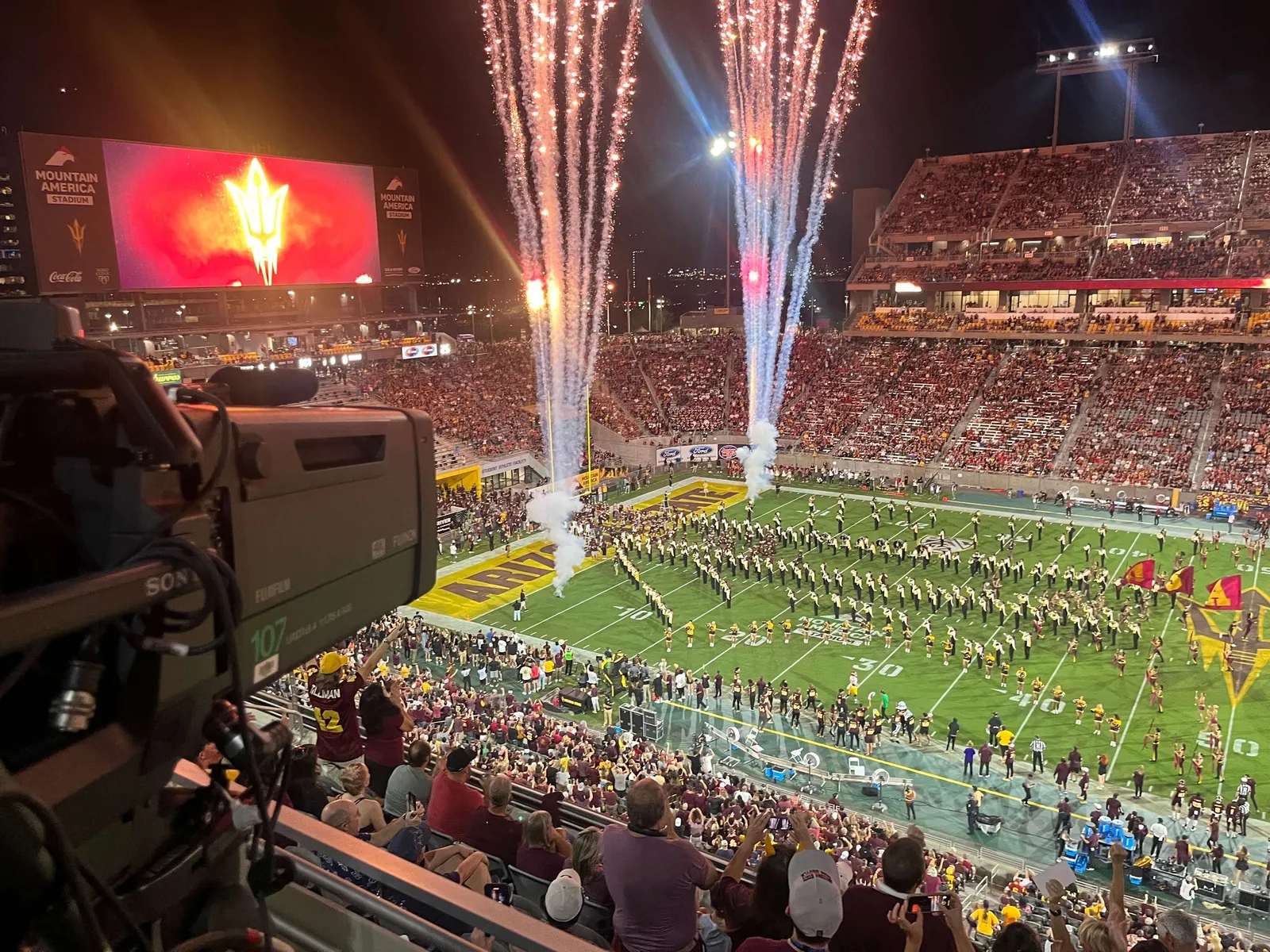
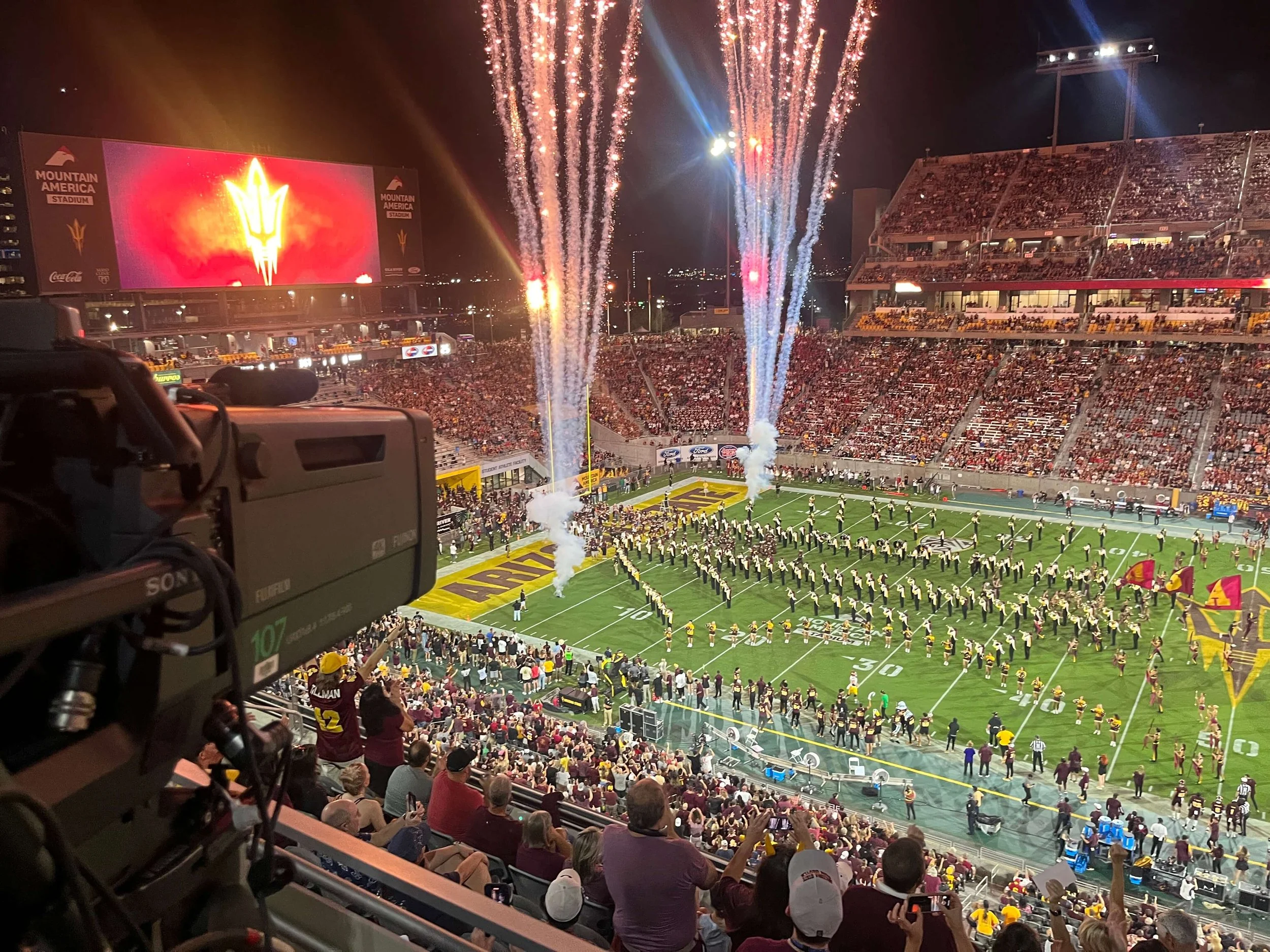
The view from the platform. Sony camera, fireworks, 50-yard line. Nate Schick’s office on game day. Photo Credit: Nate Schick. Used with permission.
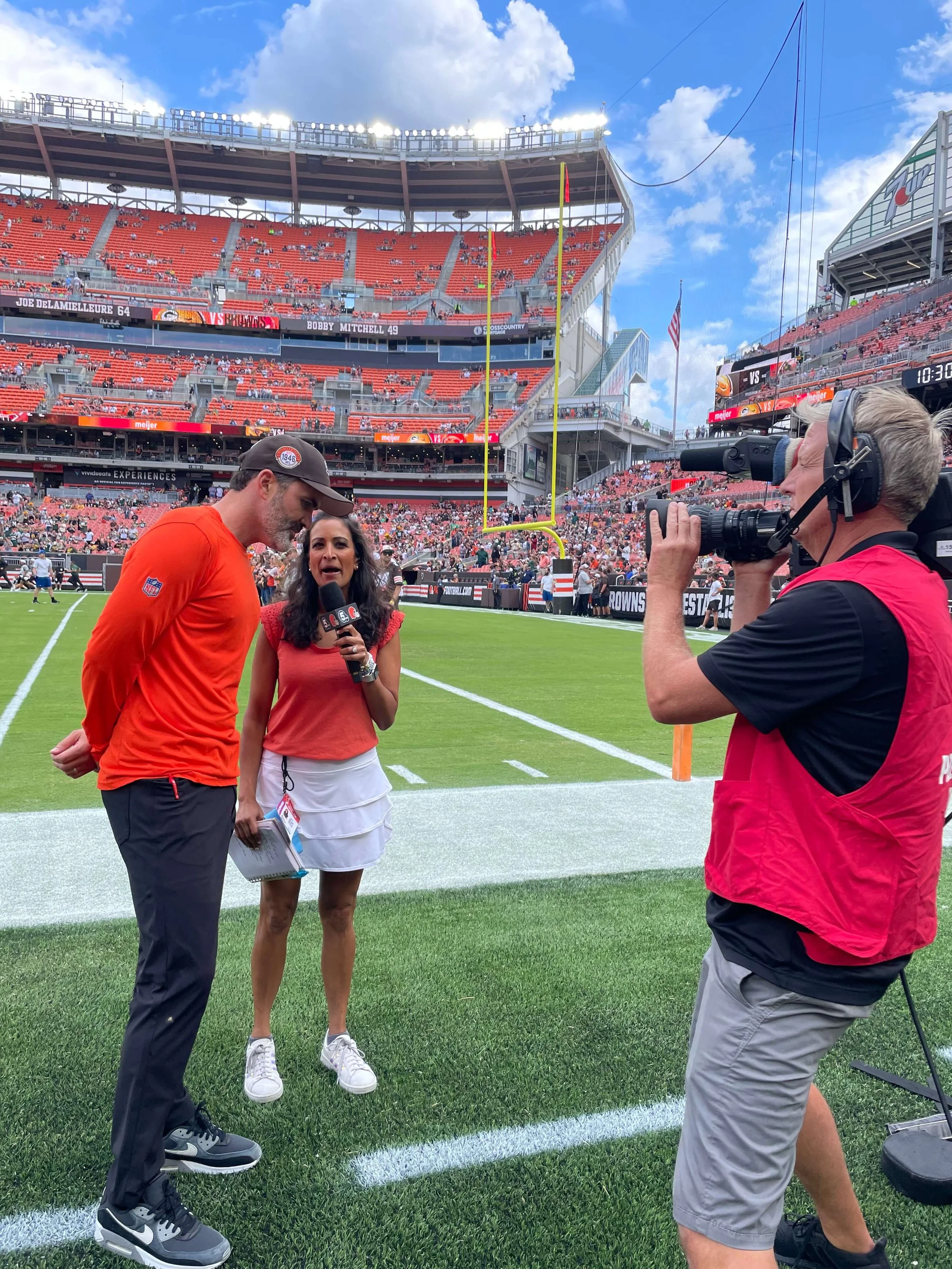
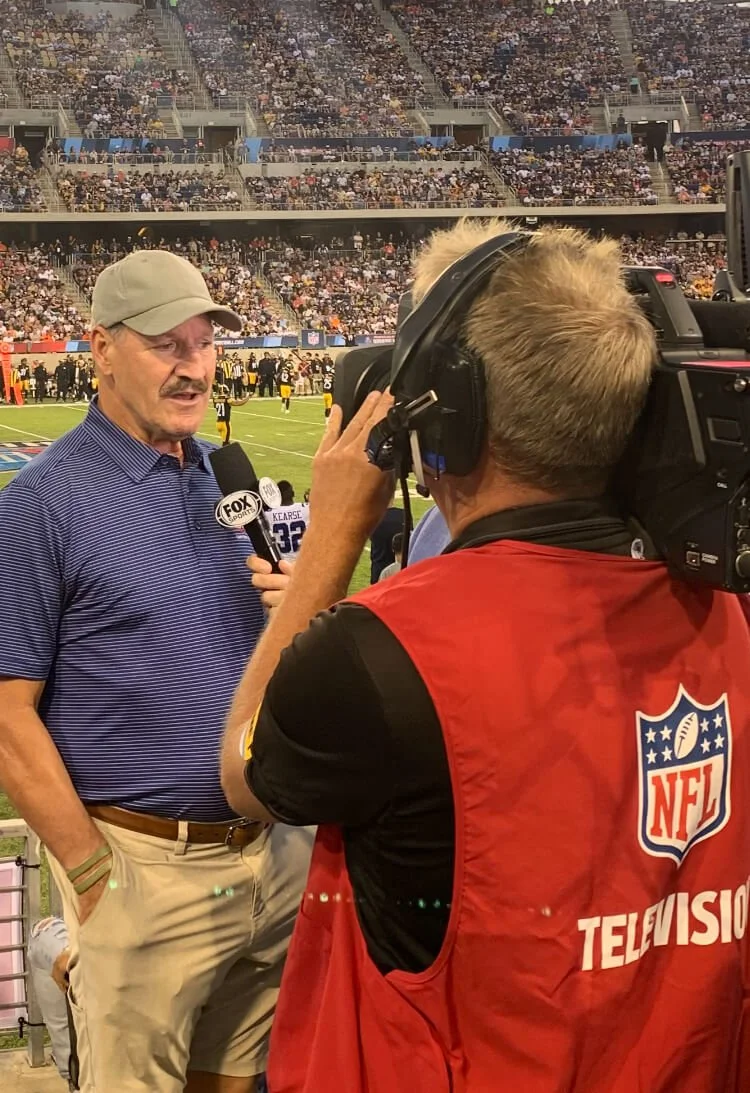
Nate Schick spent years behind the camera as a sports television cameraman before he ever stepped into a classroom. Today he teaches K-12 video production while still working game days on the side. Proof that you don’t have to choose between the industry and teaching it.
In this episode two CTE teachers compare notes from different corners of the state, and Nate breaks down why respect, not technique, is the first thing he teaches every student who walks into his lab.
Why It Matters
Most career conversations treat teaching and industry work as opposite paths. Nate’s career proves they run side by side. For any working professional who’s ever wondered if there’s room to teach without giving up the craft, this conversation is the answer. And it’s a reminder that the most important lesson in any production classroom isn’t a camera setting. It’s how you treat people.
About This Guest
Nate Schick is a K-12 Video Production teacher and a working sports television camera operator. He splits his time between running a student production lab and shooting live broadcasts, bringing real industry standards into the classroom and real classroom discipline back onto set. His teaching philosophy centers on respect as the foundation for everything else, technical skill included.
Nate’s Bonafides
“
Respect is a big thing I teach. If you can’t respect my classroom and the others in it, good luck in life. It’s a cruel world out there, and whether it’s media related or not, take the attitude adjustment you made in here and translate it out there.
”— NATE SCHICK, K-12 VIDEO PRODUCTION TEACHER AND PROFESSIONAL CAMERA OPERATORHear This Episode
Watch Here
Episode Timestamps
Your ZoomPod — Exit Ticket
After this episode, you'll know:
- Why respect is the foundation every other production skill gets built on
- How working professionals can teach without leaving the industry behind
- What real-world set standards look like when applied inside a classroom
- Why attitude and work ethic outlast any individual technical skill
Gear & Affiliate Links
Trick out your kit, and your wardrobe. Both Adorama and SmallRig are having sales right now. Or wear your photography mood, grab a ZWOF set-wear tee shirt. If you use a ZWOF link, we may earn a small commission that does not increase the price of your item.
Nate teaches his students to show up ready and treat the room with respect. Same discipline applies every time you raise a camera.
Stop Shooting From the Stands →TMac 00:09
Hello and welcome to another edition of the Zoom with our feet podcast, the part about learning media production. With me, your host, TMac, professional photographer, videographer, and teacher. If careers had doppelgangers, this veteran freelance cameraman and teacher and I are twins. On this episode of the Zoom pod, Nate Schick joins me to talk about his TV journey and the joy he now gets from his students in his video lab. Sound familiar? Our guest speaker is in the photo lab. Let’s talk to a pro. Hey Schick, welcome to the Zoom with our feet podcast. How are you?
Nate 01:19
Hello, TMac. I am great. How you doing, buddy?
TMac 01:22
I’m doing well, man. It is so great to see you.
Nate 01:26
You as well. It’s been it’s been a while. It’s been a minute since we got to chat a little bit, so it’s it’s really good to catch up.
TMac 01:32
Yeah. Browns games. Well we’ll get into that in a minute. So you and I have similar career arcs with industry to the classroom. So I want to, I, you know, I really want to get into that part. So let’s start with the broadcasting part. How did your journey in broadcasting start?
Nate 01:60
So we’ll go back to my bachelor degree, Kent State days. I went to Kent State and graduated in 2001. Kent State, right? Fellow, another fellow Kent Stater. Always good to see. And I believe, I think it was 2001 when I graduated with my bachelor’s degree. And my major at the time was called electronic media production. And basically what that meant was it’s it’s it was the archaic version of what I teach now: video editing, Photoshop, some writing, some journalism writing, a little bit mixed in. So it was kind of like a cover all to the production industry. I really liked the program because it was more technical, and which is what like I had a creative mind, I felt like, and I wanted to do behind the scenes things, not in front of the camera. So it was a very good fit. So that’s where I started. I started at Kent State in ’98 and went on from there and got my bachelor’s degree in 2001. Yeah, so like I said, it was great. But you know, at that time it felt like I remember we had it’s so much different than what it is now. And I went right from Kent State and jumped. So the luxury that we that I had, I’m gonna rewind a little bit. My summer job was I was I worked maintenance at a golf course that my uncle and all of my uncle’s sons basically worked there. My uncle was a superintendent and head of the grounds, and I got a job there, and ironically, there was an ESPN golf tournament that was there. It was called the Giant Eagle LPGA Classic. Actually, before that it was called the Farmour LPGA Classic. And so while that was there in the summers, this was, I mean, even the summers that I was in high school, I feel like I can’t remember that well back, but I can’t remember what year it started, but I remember the TV trucks pulling in back in the back of the golf course, and I was immediately intrigued. And I knew I wanted to do something in TV my whole life growing up. But early on, like every kid, I grew up watching the 1980s Cubs and Harry Carey and Steve Stone. I’d watch on WGN every day because it was the only cable channel and the only baseball game we got. So I became a Cubs fan. Wanted to be a novcer. I wanted to be Harry Carey and I wanted to be Steve Stone, like every sports you know, kid at the time, probably. And I s I realized then, you know, I realized going through high school stuff I didn’t really want to be on camera. I didn’t really want to be in front of the camera because I like the creative aspect a little bit more. So that being said, these TV trucks pulled in during the summer for this golf tournament. That and then again I have wasn’t even in college yet. And I started I remember carrying around a microphone. I went back there and I said, Hey, can I help out? I want to work, whatever, whatever, whatever. You know, I’ll do anything. And so they hired me then as a I believe I was a runner from the beginning, which is basically entry level, meaning I’m going to get coffee, I’m literally running to the store to get a tape. I’m going to get iced tea because someone needs iced tea. I’m going to get sunscreen because someone got sunburn. Okay, so that’s literally what I’m doing as a runner. Which was great. I didn’t care. I didn’t need anybody to pay me. They did, I think, but I just loved being around it. So fast forward a couple years, I did this every summer, and then I didn’t really make any contacts there, but I kind of fell in love with being at a at a remote TV, on a remote TV truck, if that makes sense, right?
TMac 05:46
Because it’s a little correct.
Nate 05:49
The idea of it really intrigued me, I guess, knowing that truck pulls in, parks everything in the guts of that truck, the millions of dollars of equipment in that truck, makes a TV show. And that was very intriguing to me. And I and I loved that. I instantly became intrigued with it. So I took that knowledge through my college years and obviously went through college and got a lot of hands, great hands-on experience while I was at Kent. I took all that knowledge. I ended up doing, I found a really good contact, and to be honest with you, it wasn’t through Kent State at all. I basically kept a contact from the ESPN TV crew that I would work with. One somebody at that contact of the crew that was there got me in contact with ESPN Regional, which was in Charlotte, North Carolina at the time. So I ended up doing my internship down there in Charlotte. I moved to Charlotte and I made a lot of really good contacts there. And in 2001, I left, I graduated and pretty much jumped right out on the ESPN Golf Tour as a utility. So I mean and there was a handful of us that basically traveled tournament to tournament, and we did the same thing that as that truck that pulled in to Avalon Lakes Golf Course in Warren, Ohio, did for those years at the Giant Igor Farm or LPGA Classic. So it’s pretty cool how that basically got me into it. You know, my summer job with my uncle, raking traps and cutting grass, that got me into TV, basically. So really small world, cool story though, how it kind of you know I it was that mini tour LPGA? It was LPGA. It was LPGA, and I remember at the time, did you have you ever worked that event? Do you remember ever working that event?
TMac 07:38
I think I did a couple times.
Nate 07:41
I think you did too, because I remember looking back, I was trying to think back. It was at it was at Avalon for a few years, and then it went over to Squaw Creek for a for a couple years too, right around the corner. So it was in our area for a little while, and it was a really, really great event. So yeah, so I basically jumped on a golf tour then and became a utility and was traveling around with that ESPN golf tour. They didn’t work, they didn’t do tournaments every weekend, but it was they did them, I don’t know, three out of the four weekends a month, probably back then. I mean, you would probably remember better than me how many there was a lot of ESPN events back then, especially LPGA during depending on what season you’re in.
TMac 08:22
So from utility, what’s nice about that is that you’re there. Now you’re starting to meet everybody. If you’re doing it right, you’re networking. So now you meet all them crazy audio guys, and you meet all the camera guys, and you meet the replay ops just by being in the in the arena, if you will.
Nate 08:57
Yeah.
TMac 08:58
What made you gravitate to camera?
Nate 09:04
Really good question. Camera was always something that I passioned. I love the post-production editing part too, but I feel like exactly. I feel like it’s because I love the creative portion of it. Like I can separate myself from other people, you know, by the decisions I make with my lens and you know, with my lens and my focus and zoom. And I and I love that part of it. And I basically I’m you know this many years later, and I still love that part of it. So then I at the time I really didn’t I knew I wanted to shoot, but I wasn’t 100% sold on the fact that’s all I wanted to do. So at the time when you know when I started on that golf tour after college, I would do anything, you know, and like basically that’s what utilities did. I would do anything anybody said, but I’d be the first person to jump out there and go with the handheld guy to help them on your interviews on the driving range. I’d be the first person to say, to say, hey, I’m gonna I’m gonna stay back from lunch and I’m gonna, you know, I’m gonna go up on this camera and I’m gonna do whole in one watch just to practice shooting, you know, backswing ball out, backswing ball out. And I would literally follow golf balls for the entire hour and a half lunch break. And eventually people notice that, and or you’re very or you people know people are eventually gonna notice. But and that’s where I thank you for because I remember the one day in camera 101, freelance shooter 101 mindset here is don’t ever just jump on somebody’s camera and start shooting. Learn that probably the hard way. But so you always ask, like, hey, because everybody has their configurations different, right? Their hand, their handles are all different, their zoom focus locations are all different.
TMac 10:48
Retention, you’re like you’re like five inches taller than me. Correct. The way I would set up a set up my camera, correct. Or the way actually, the way you would set up your camera, I’d have to stand on the lens box. Right.
Nate 11:02
That’s correct, yeah. So height’s a big difference. So and that’s why you couldn’t just jump and start making adjustments. And to be honest with you, this is kind of an interesting, ironic part of the story is it’s helped that helped me be what’s the best? I’m trying to think of the best way to explain it. That helped me not be such a picky shooter. Does that does that make sense? There’s a lot of ways I can get comfortable with the handles, right? So a lot of some equipment on trucks are is better than other equipment on other trucks, and you’ve got to be able to adapt, right? Sometimes you’ve got to use duck or gaff tape just to get anything to work as far as the handles, because sometimes the locks aren’t tight. So being able to shoot on other people’s cameras, yours is an example compared to someone who’s a little bit taller, they’re all different, right? The heights are different, the adjustments are different. So it allowed me to become a better shooter because I made adjustments every time I stepped on a camera. Because I’m not gonna change your configurations. Does that make sense? Because you’re letting me be there, you’re letting me use your camera, and I’m you know, I’m I’m rent, I’m basically renting it for the hour to practice. That’s exactly what I was doing. So but it was well worth it for me because it was the only way I could get time and practice.
TMac 12:15
Yeah, it is it is difficult sometimes to explain to people that while you go to school, there is no school for that what do I want to call a subset of a subset in TV. So there’s TV sports and all the ones that would come to mind immediately. But as soon as you get arrive at golf and balls in the air, you’re you’re talking a different skill set behind the camera.
Nate 12:51
Than anything you’ve ever done, probably.
TMac 12:53
Yeah, yeah, but you know, set plays in football or baseball or you know it’s obviously not as fast as hockey. But a ball in the air is not an easy thing to master and practices the key. It’s funny you talked about the versatility because if I go all the way around to the very end of my career, I got asked. I was really I was already teaching and I didn’t want to just do a regular camera. So my circle was I’m wily enough to be able to walk up anybody’s tower and run their camera. Yeah. So I volunteered to do relief. Yeah. So for so for the last four or five years, when I was basically just down to golf shows in the summer, yeah, a couple locals, maybe the open, whatever it might be, the networks finally got it that if you’re gonna have 30 some manned cameras, you’re gonna need relief. Yep. And so, you know, and you’ll appreciate this. I brought the teachers organizational thing to it, you know, and it’s like, no, there’s no two-hour breaks, boys. You get a half hour and I come around twice. You with me?
Nate 14:28
Yeah.
TMac 14:28
And I used to cling my ring on the bottom of the scaffolding, and they were all like Pavlov’s dog. They would look over the side. Yeah, but it was a great gig for me. I didn’t have to worry about assignments. I’d get up there and kind of go, okay, you know, handles up, I got it. Handles, you know, whatever. And you know, you specifically referenced that, and it’s true about the sort of comfort and ergonomics of it because that travel is pretty serious. I mean, at the top of the arc, I’m squatting.
Nate 15:07
Oh, you are. You’re but you’re basically your butts and your heels.
TMac 15:10
And then, depending on the topography, I may have it all the way up with the with the viewfinder pointed down. Yep. It’s a crazy travel. It I always tell people, don’t watch, watch the guy who’s covering that shot when I take people to tournaments. All right, let’s watch. I can tell what’s happening just by watching him. They haven’t hit yet, they haven’t hit yet. Lens starts, I go, balls in the air.
Nate 15:33
Yep. I’m like, yeah, what?
TMac 15:35
I’m like, yeah. So how long did you how long were you a gypsy?
Nate 15:43
So I did that for almost three years, two and two and a half years, I think. So what’s cool about what was cool about the ESPN Golf Tour when we jumped on, was when I jumped on was they had this position at the time called utility camera. And what it was for the people who had goals of certain things, like who had goals to be on camera, they would do what basically that what they would do was they would say, all right, you’re gonna be utility through the week, one of you, because there was multiple of us on the show, one of you were gonna be on camera for the weekend. Okay, so now it was most likely most of the time it was on a hard camera, which is which is great. That’s where I was starting to practicing. So one out of every three, two or three events, I was able to run camera. And what that did was it allowed me to stay interested in it, allowed me to stay, it allowed me to improve on shooting, for one. But it also it kept my roots at the utility level too, because I was still learning. Every aspect of the truck, I was still trying to learn everything. And I really liked it because it really gave it gave not just me, but it gave I gave a shot to there was a handful of other three other guys specifically that basically were utility cameras with me. Kurt Miller, who’s now a big handheld guy, does a lot of CBS golf. Dave Nardelli, who does audio, he submixes on a Fox show. Really, really good guy. Just saw him at a show two weeks ago, so it was really good to see him. And Matt Rossetti, who is he’s an A1 on the Fox B show football NFL package. So all of us were basically utility cameras at the time. I feel like Matt wasn’t, he knew right away he wanted to go into audio. Dave kind of transitioned that way, and Kurt and I, we knew we wanted to shoot the whole time. So those it really, really did help push the four of us into what we wanted to do, you know, and not just to the point where we’re stuck. I shouldn’t say stuck as utilities, because that’s kind of a I don’t want it to sound like it’s a degrading tar term or job, but it we were we wanted more than that, if that makes sense. You know, we wanted more than running cables and stuff. We wanted more wanted more money.
TMac 18:02
Freelance is a treadmill.
Nate 18:07
Yeah.
TMac 18:07
And if you don’t pay attention you will find yourself pigeonholed. And then it’s really hard to break out of that because they hire you for that, they’re comfortable with that, they know you can do that. 100% and you then are suddenly like, well, wait a minute. Maybe I want to do X or Y. So it’s great to hear of your group, your cohort. It’s a good one right around teaching in the couple of audio guys, a couple of audio guys, a couple of camera guys. So when did education enter the picture and how did you start to think about that transition?
Nate 19:02
So that’s that’s where it starts to get real fun. So toward the end, it was probably 2002 or three-ish. I met a female that I wanted to hang out with a little bit more. So I made the tough decision at that point to stay home for a little while, to take a break from the ESPN golf tour.
TMac 19:27
Always a girl.
Nate 19:28
Oh, yeah, always a girl. So it’s it was to the point where it was very you know, it was kind of one, not one or the other, but it made it hard to leave, I guess, if that made sense.
Nate 19:40
Excuse me, Mr. Schick. Was this a serious girl?
Nate 19:44
It ended up being who I married and had kids with, so yes, it was serious. So it was serious. We ended up getting married.
TMac 19:52
That’s a yes, sir.
Nate 19:54
It’s a yes, it’s a yes for sure.
TMac 19:56
Yes, ma’am.
Nate 19:57
Yes, ma’am. But we ended up getting married, and then so I got off the road and I got hired at WKBN as a news photographer. So that was kind of my transition into then. I did news photography for three, four years. I did I went from news photography to creative services where I made commercials, shot edited commercials, and wrote promotional items and everything like that. It was really great.
TMac 20:26
Promos, baby, promos.
Nate 20:28
Yeah, and that was a whole different level, honestly, and a whole different. So I went from shooting live sports to the whole news realm, which was apples to oranges when it comes to TV in the production process. And to be honest with you, I still had never I still hadn’t thought about teaching, which is so funny because at this point I’m probably I’m 25, 26 years old, and I still hadn’t thought about teaching. Something happened at the end of my news photography years, I was on overnights. Our station had gone through a couple owners, and I ended up being on overnights for about eight months-ish, where I was in this position called I think it was called multimedia journalist or MMJ or one man band or whatever you want to call it.
TMac 21:16
Cost saving measures, what that is.
Nate 21:17
Correct. It was just when they just started coming into news stations. And it was goofy for me because a lot of some of the my co-workers lost their jobs. But they said to, you know, said, you know, Nate, do you want we have this job for you if you want it? It’s you know you’re gonna be on overnights, you’re gonna go out, and you’re gonna write, you’re gonna produce, you’re gonna shoot, you’re gonna edit all your own packages, all your own stories. And I’m like, that sounds like I’m gonna be on camera. And they said, yes. I’m like, oh my gosh, I’ve never been on camera in my life. And I don’t I still don’t want to. So I basically did that. I said, okay, let’s do it. And it was not I didn’t I mean it was it was fine. I did enjoy it. I did enjoy I still was shooting and it was editing, but it wasn’t what I love to do. So one night in the middle of the winter, I was out on a on a call. I was out on a road, I had my scanner with me in my newscar, and I hear a fire come over the scanner. And I so I’m like, well, I’ll drive back toward the station, the fire is on the east side of Youngstown. I’ll drive by it real quick to see what it is, and then I have to go back to the station to edit anyway, because it was start the morning news was starting. So I pull up to this fire, and it is fully engulfed house, like biggest flames you’d ever see. And the fire department just got there, and they were all hustling in and running in. So I at the time I had no idea. And like when you pull up to a fire, you don’t know at most of the time, you don’t know if it’s vacant, if it’s occupied, what it is, if it was already burning, if it was you know a controlled burn. Most of the time you don’t know what it is. So I roll, I roll up there, and I grab the camera and I pop out and I start shooting, dead of winter, cold, snow on the ground, and I start shooting and shooting and shooting, and I remember, like I remember vividly, I had my the camera locked off on the front of the door, and I see this fireman come out, and he comes out like a silhouette and just holding this adult body. And I’m like, oh my god, my knees buckled. And it was the worst thing I’ve and I’d I’ve been on overnights, I’d seen a lot of things, but it was by far the worst thing I’d seen. And long story short, an entire family was in the house and didn’t make it out. Six people. And it was the second, I think, I think to this day, it’s the second most second most tragic fire in Youngstown history, I think. If you it was it was the Crawford family fire, it’s still on YouTube, and I because I still show my college students. I don’t show it in high school because the video is pretty graphic, but to my college students, I show it. It’s it’s real. The audio is real. Stan Boney, I remember, voiced it over. Whether I don’t know if you know Stan Boney, but Stan’s a youngstown legend. He’s a you know, as far as news goes, and he voiced it over, and it was we ended up winning AP awards with it. But my point of telling a story, as sad as I get chills telling it, is I realized I don’t want to do news. I can’t see this anymore. I got a newborn, my son was newborn at home at the time. My daughter was three, and I’m like, I can’t do this. I don’t want to do this. And that was when I went up to Creative Services. It was that probably maybe a month-ish, more a little bit more later than that. I went up to Creative Services and started working on promotions, and no one’s getting injured at commercial shoots at car dealerships or you know, doing second harvest food bank promotional items. No one, you know, it’s it’s the safe way to go. And I loved it. I really loved that portion of it too.
TMac 24:50
We have a promo background together. I did the same thing at CNN. I was on track to shoot. I got an entry-level job there. Same, same sort of thing. When was edit, was in the edit pool, tape editing. And a job for the editor of the promo department came up. And I thought, oh wow, that’s cool. And it totally changed my track. Now I’m doing 10 spots a day, having them there was a voiceover news anchor that was really good at voiceovers, he’d come over and track and do all that stuff, and it totally sort of veered my track off from shooting and editing to more production. But I submit that I use that those skills because of the time frame storytelling. Oh, I honed all of my storytelling technique as a promo writer and producer and editor because you don’t have time. No, you have to be economical in your words and in your pictures and all of that stuff. And I still use promo concepts and the things that I learned from that. And I we have that together as well. So very cool. Where does where does this transition come about to education?
Nate 26:34
We’re getting now we’re closer. Now we’re there. So basically I did this in 2012 is was my first year teaching. So somewhere around early 2012, toward the end of the school year, this I someone had reached out to me, someone who was teaching a program in a high school. I reached out and said, Hey, have you ever considered teaching? And I said, Not really. I had substituted a little bit like when I was freelancing back in the day, just because it was something to do, you know, and it was easy money and got you up out of bed in the mornings. But that was it. Like, you know, as a substitute, most of the time you’re not teaching much. You know what I mean? It’s you might have a paper to hand out and you might be able to help a little bit, but most of the time you’re not really. I’m not teaching, you know, algebra equations, I can tell you that. So in 2012, so someone had reached out to me about this position that was possibly opening up. It happened to be at Ashbula County Career Technical School, ATEC. They have a pro they had what they called satellite programs at public high schools around their county. So the program that I they had you know I was looking into was electronic media basically interactive multimedia was what it was called interactive multimedia. And there was a teacher leaving at Grand Valley High School, and they said, You are you interested in it? You should go apply, and you know what so process started rolling. I interviewed with the principal first, the principal at Grand Valley, who ultimately wasn’t in charge of hiring me, but he had to sign off on me. Because I’m housed at Grand Valley. I still am to this day. I’m housed. I’m sitting in Grand Valley right now. But I’m paid and employed technically under ATEC, which is the Astra Bula Astrabula Vocational School.
TMac 28:28
And their compact? Is that the compact in AstraBula?
Nate 28:33
It’s it is, it’s the ATEC you mean. Is that what you’re saying? Is that what you asked? Yeah, yeah, it’s I think it’s yeah, it’s Astrabula County Career and Technical School, is what the official name is. So it’s the same as all other county vocational schools where they have you know welding and carpentry and masonry and computer, all kinds of different computer programs and nursing and cosmetology. It’s it’s a really, really big vocational school. But they had something neat that they were doing where they were kind of putting these feeder programs into not feeder programs, but just different satellite programs in different schools. So the so we’re technically I’m employed by ATEC, but I’m housed at Grand Valley. And I have all the thing that’s a little bit different and neat though with my class and my program is in a in a traditional high school program, right? You got seven periods, eight periods, whatever you have, and they’re going for to English for 40 minutes, and then they go to math for 40 minutes, and then they go to social studies and art. In my program, they’re basically in here for two and a half hours a day. So which works out really good, you know. So they’re they go do their maths, their Englishes, they’re still in their home school, only they’re going to my room for two and a half hours to learn how to shoot and edit, basically. More than that, too. But that’s the more of the gist of it. It’s so it’s a really neat program. It was really it was a cool opportunity for me, I thought. And here I am still here.
TMac 30:04
My experience was similar. Hoover is a comprehensive high school, so it has its own career tech wing. Okay. We are a part of the compact that includes you know, Lake and Glenok and Jackson in Stark County. So we had kids from other high schools. But it’s interesting you talk about the schedules because we were lucky that we were multiple periods. So I had seniors in the morning for three periods, and then in the afternoon I had one period classes with so we were feeding our career course in the afternoons with the underclassmen, I guess. Yeah, year one, year two, and then our seniors were with us for three periods in the morning. Okay. So you have block scheduled, but you only have them for your class.
Nate 31:07
Correct. That’s the only thing I teach. So I literally have basically I have seven periods of interactive multimedia. That’s what I have.
TMac 31:14
So describe for people, because that’s not a traditional pedagogy that people would think of teaching your on-a-block schedule. You’re already teaching a essentially a trade. So describe what it’s like to teach strictly in a lab.
Nate 31:38
It’s a it’s really a mix of lab time and lecturing time. And to be totally honest, I don’t and it’s it’s kind of transitioned over the years and you know, between COVID and the way you know kids are different now than they were five years ago, ten years ago, especially. So teaching styles have to change. And I don’t lecture as much. And to be honest with you, a lot of it’s either playing on playing video tutorials or making a video tutorial. But a lot of times the way the class is set up is I will either instruct for a period, and then the rest of the time is lab time, which is it’s which is and it’s not lab time, which is like me just sitting here watching, it’s constantly, and you’ll know this and agree to this. It’s constantly, Mr. Schick, why won’t this work? Mr. Schick, I my mouse, my right click’s not working. Mr. Schick, why is control not working? Well, because it’s the Mac and it’s command. So there’s so many little things that you’re you’re going around station to station, your job never ends, literally. And it’s so that’s basically how it’s set up. Lecture, go over new things, go try to tackle a new task. Whether we’re doing Adobe Premiere or Adobe Photoshop, or we’re or some or our shooting or working on our rule of thirds or just framing or camera etiquette, or it could be anything. Do that for an hour and then the rest of his lab or computer time, or we have a backroom studio that we that we do stuff in. So it’s a lot of hands-on.
TMac 33:16
Tell me what do you think you bring from the industry to your classroom?
Nate 33:23
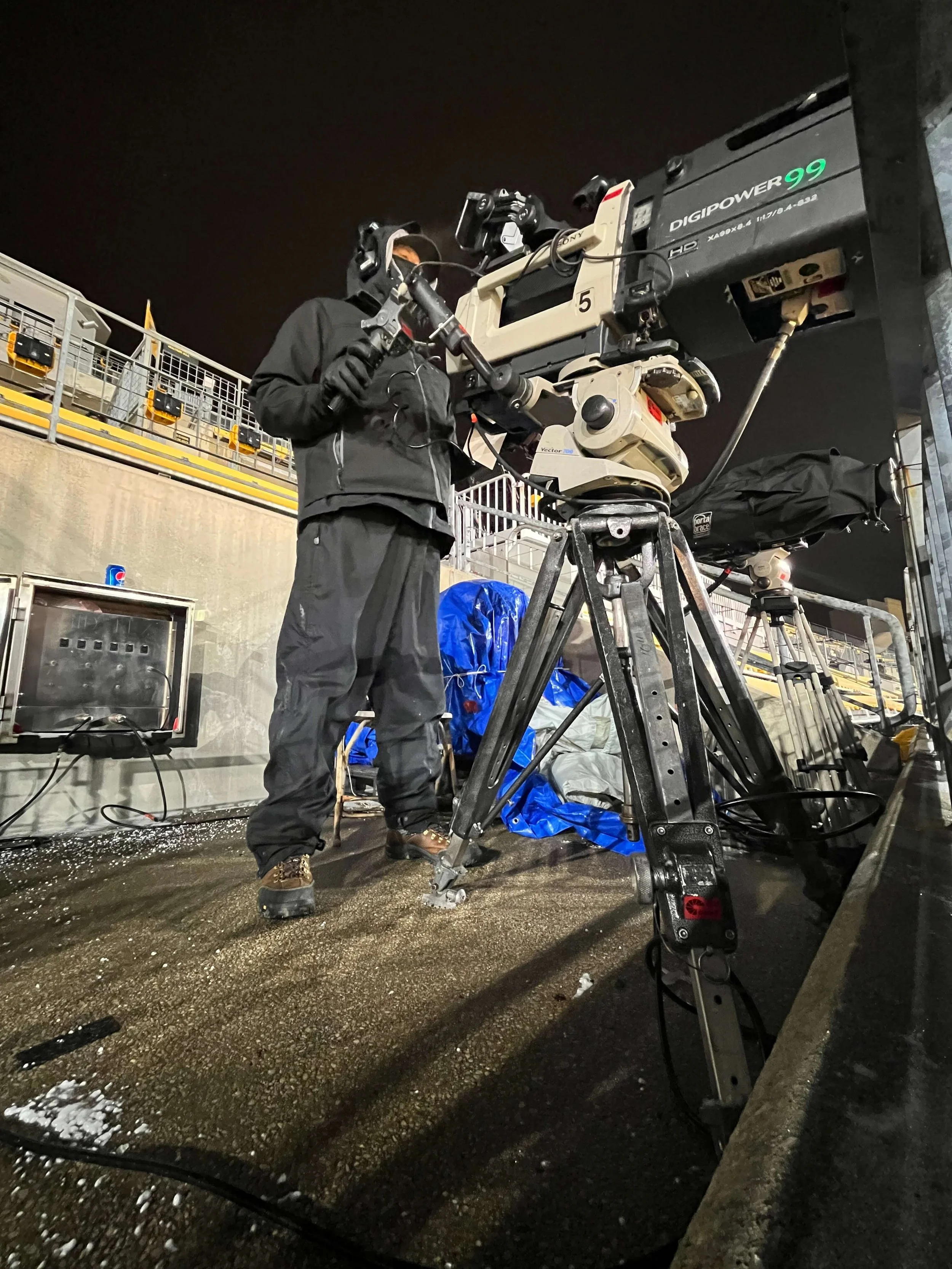
The I just experience and stories are the biggest things that I that I bring. And like you had mentioned a little bit earlier, like having that promotion background. We are, I don’t know that there’s any more, there can’t be many more versatile people than us out there. And the fact that there’s people out there who just shoot, right, who are just freelancers. But they can’t, you know, they may not be able to sit down and edit. I mean, there’s people that I work with every day on my on my football packages that I work on. They probably haven’t used Adobe Premiere or any nonlinear editing program in 10 years, at least. So they just get out of that realm. And like you said, maybe I’m not saying they’re pigeonholed, they pigeonhole themselves, but they just haven’t had the experience since, you know, where like you and I have had that hands-on nonlinear experience. So I love being able to tell stories, and the kids love, like I still shoot a lot of freelance, especially this time of year during football. The kids love my stories, they love, oh, where were where’d you go this weekend? Where’d you shoot this weekend? What camera were you on this weekend? And those are the things that I love bringing to the table because it’s not just about the X’s and O’s of editing and the X’s and O’s of Adobe Premiere, it’s about having those kids understand that there is a future out there for this if you choose it. You know, you know, I work hard and they see me working hard. And I hope that I hope they get that out of it, you know, and I and I think a lot of them do. But that’s the biggest thing, and that’s it’s motivating to me. It really is. That when I come back on a Monday, I might have traveled all weekend and got my flight might have got in Sunday night at five, six o’clock, and I’m dragging. But when I show up Monday morning and the kids say, How did it go this weekend in Denver or you know, whatever, wherever I was, there and I’m there Monday morning. That’s a I love that. That’s a good feeling for me. I love the fact that they see it, you know, and they realize it, and hopefully it’s motivating to them too.
TMac 35:18
What’s your favorite lesson to teach? Do you have them making promos?
Nate 35:23
We do, yeah, we do promos. That’s a really, really good question. My favorite, my favorite overall, I like Adobe Premiere, I really do, but what kind of brings me down on teaching Adobe Premiere in general is like if we have 15 computers in here, 13 are gonna work great, and two I’m gonna be wrestling with for a period. Yeah, you know what I mean? So there’s always that one computer that is like real slow today or Pursuit technology. I just said it, I said it today and yesterday. I said I want to put my I want to throw my computer in the parking lot, you know, because it’s it happens. So that being said, I love Photoshop. There’s a lot of lessons in Photoshop that I love because it’s instant gratification for them. You can see the light bulb go off when they can select subjects out or change, you know, they take a selfie of themselves and they just get amazed by changing the color of their hoodie and in three clicks, basically, you know, and those are the things that they can use forever, you know, whether they go into something media related or not, Photoshop is an easy software that you can buy. There’s free versions out there now that you can literally use to make their future kids graduation or birthday party, and you know, so I really do enjoy teaching Photoshop.
TMac 36:45
When you’re teaching, and one of the I think the other things that people don’t even realize about teaching, you have what’s the size of a class for you?
Nate 36:58
Some periods. I’m usually between 10 and 18 in here on any period. Yeah.
TMac 37:06
So you got 18 students, let’s say, and you have six that learn one way, or six that learn another way, right? And so I don’t think that a lot of folks when they say, you know, anybody could do that, yeah, come on, let’s let’s spend a day. Let’s spend a day. This particular person learns this way. This particular person learns a completely different way. Right? How many students have you given oral questions to because their writing skills are not what they need to be? So I say all that to say one of the biggest challenges for me as a teacher was that differentiation of all the types of learners and how you had to create those labs knowing that and accommodating for all of that. It wasn’t one way.
Nate 38:12
Correct.
TMac 38:13
It was eight, it was it could be 18 different ways, right?
Nate 38:16
Yep, and often it is. I mean, maybe not 18, but it’s it’s not every single project is multiple ways. Does that make sense? Like every single lesson, I’m doing multiple ways to make sure that kid understands it. And that’s what I mean about going station to station. I might have to say the same exact, you know, I can stand up there, I can stand up here and talk, talk, talk, and explain, explain, explain. But where, like you said, eight of them are gonna get it, but two of them are gonna be. Can I have a question, I have a question, I have a question. And then it’s me sitting down with them and going through the same instead of talking about it, I’m doing the steps for them or with them at their computer, basically. So yeah, it is, it’s a it’s a chat, it’s a constant challenge. And that’s just not just in here, it’s a chit, that’s a challenge that every teacher, probably in America, has to deal with, especially.
TMac 39:07
At every level.
Nate 39:08
Yeah, exactly. At every level. Yep.
TMac 39:11
What is your what moment in TV are you most proud of? Something that you were a part of, big moment that especially in sports, maybe in golf. What was your most proud TV moment?
Nate 39:30
Probably I would say most proud would have to be and it’s I’m only saying I’m most it’s proud because it was so early on in my career. I remember we were in Hawaii for a year, or for one of the years of my early golf days, and we were at this, I was shooting this, it was the Sony Open in Honolulu, and I had a shot where I think it was Ernie L’s went up and under a tree and rolled it up onto the green five feet, and I happened to be on camera when it was rolling, and I happened to be and I go to dinner that night, and I it was on the top ten shots on ESPN, or it was on ESPN, and I remember sitting there eating dinner, having a beverage, and seeing my shot pop up on a TV at a restaurant was definitely a feeling like I’ve made it, I did it, like I’m here, you know, like tears in your eyes, you know, still just thinking I can still take you to the barstool sitting at, you know, and that was probably I’m not saying an overall proudest moment, you know, proud, I’m really I’m proud of what I do in general, but that was like, oh my gosh, like this is real. This is you know, knowing that thousands and millions of people watch or watching what you is coming through your lens is every moment’s proud, honestly. Every time I get behind a camera, every moment’s proud.
TMac 41:01
What’s your most proud teacher moment?
Nate 41:07
That’s a real and that’s funny too, because I have I feel like I have those all the time because like I love my kids. And honestly, even like the teachers that I teach with, my co-workers now, whenever I come back from an event, like whenever I shoot freelance, either in the summer or in the fall, where I shoot more football than anything now, but it’s like why do you teach? Why don’t you just you know go out and shoot again?
TMac 41:32
And I love that question. So funny.
Nate 41:36
I know all the time. And I’m like, one, it’s not as gloars as you think when I’m living out of a suitcase. Two, I love the kids. You know, I truly do love these kids. And like I it’s weird to me that they go up and grow, they grow up and move on, but I try to keep everything the same here. And every year I have a same, you know, I have a great group of kids, and I love them with all my heart, and I really truly wish them the best, you know, and that’s what’s so like every I mean pretty much every lesson I feel proud of them, you know, when they get when something catches on, some bigger moments than others, obviously, but like our today, our morning news, like our morning news broadcast went out to the school and they watched it. And I got some emails from teachers that said, Oh, this is one of the better ones we’ve seen produced. I have a really good group of kids. So I brought the kids over and said, Hey, look what these teachers are saying, how great your broadcast was. That’s a proud moment, you know, because they wouldn’t have done any of that if I didn’t show them how to do it, if I didn’t teach them how to do that, you know. So as small as that seems, it’s big, you know, and those kids need those out of boys, they need those added girls, you know, and to keep motivated. So that’s yeah.
TMac 42:52
The other question I get, and I’m and I’m gonna ask you because I used to get it early in my teaching career, is which is which is harder? TV freelance work or teaching.
Nate 43:09
That’s a good one too. The both they’re both challenging in their own aspects, I guess. Physically hard is freelance sports, physically. Mentally hard is being here because every day you’re tested, you know, for from a kid. Every day you’re tested some way or another, you know, what your patients are tested, let’s put it that way. So I think they’re both they’re both challenging in their own ways. I think it’s maybe it’s harder to get where I am in the freelance world as far as what I’m shooting and just getting respect and getting your skill level to where you can go out and get hired. Maybe that’s a little bit more challenging than teaching, but I need it all, I need all of that to be able to teach what I teach. So
TMac 44:00
It’s interesting you frame it that way because I agree that freelancing, TV, golf, as we go subset and drill down, you know, my four degenerative discs in my back didn’t just happen. Yep. Right. It was carrying 300 pounds of gear up a golf tower and loading trucks and all of that stuff. So totally agree on the physical, but I gotta say, and I always tell this to my teacher colleagues, that teaching is way more emotionally in there’s more emotional investment in teaching. In 25 plus years of television, I never cried once. Yeah, you’re right. Zero. And I can bet you if you’ve taught more than two years, you’ve cried about something or with somebody, or on behalf of someone, right? Yep. And people look at me and go, on my worst day in TV doesn’t even come close to you know a student’s parent dies during the day, and the only person he knows to come to is me. Yeah, that’s that’s not they didn’t teach me that at Kent State’s nope industry to the classroom program. Correct. But you gotta you gotta wing that one, bro. Yeah, and I tell people all the time never cried once about TV, right? Never cried when I left TV, right? But in but in education, oh some of this stuff will break your heart. Yep. And you’re right, though. But you will willingly go back into that burning building. Yeah, yeah. Yeah, yeah, yeah. All right. Coming down a home stretch. I end with the same series of questions. And the first is for me, I sort of started as a photographer, found TV, and then when I became a teacher, I sort of rediscovered my love of photography. So I always tell people that for me, photography is good for the soul. For you, tell me how shooting at the at the levels that, at the high levels that you’ve worked at, how did that make you feel?
Nate 47:00
It makes me feel accomplished, I guess, if that makes sense. And it’s it’s bizarre because like when I get behind, it’s not so much behind a hard camera. Handheld, shooting handheld is probably one of my biggest passions in life. And I feel like it’s that way because do you’re almost I almost feel like I am part of the camera, if that makes sense. So when I get, you know, when I get behind a viewfinder and my left close my left eye and get behind a viewfinder, it almost and I kind of attribute it, I compare it to this, you know, like when you’re a little kid and you wear these glasses, you’re invisible. That’s how I feel when I’m shooting and I’m buried in a viewfinder. Like I’m part of it, and I don’t even think about what’s going on around me because I need to get a shot. I need to get a good shot. And that’s my goal, basically. And that’s and I have that mentality when I shoot everything, honestly. And because I feel like every whether it’s a hard camera or handheld camera, you’re always looking for that best shot, or the shot that one of the other cameras on the show doesn’t have, right? Because that’s the one that the director, you want that director to see and take it and get you get you, you know, your attaboy or great idea, or something along those lines. Because just like I give my attaboys to my kids, my students, or attack girls, we feed, we shooters, and I’m I’m sure you’re the same way, you feed off of attaboys on camera, right? And that’s a good a good director is gonna compliment you, compliment people periodically anyway, and they should, because we’re human beings, right? It’s our human nature to thrive well when we’re successful, right? And that’s just the reality of it. I don’t know if I even answered your question. You did.
TMac 48:46
No, totally did. So spin your hat around, other career. How does teaching all of what you just described to students make you feel?
Nate 49:00
How to explain it’s humbling, I guess, is a is a term is a is an okay term because them coming into my room for the first time, they have no idea what they’re about to do. And the fact that I can whether they’re and I always tell them when they’re in here, whether they’re gonna go into something TV or media related or not, I’m gonna change the way they view the world anyway. Right? And it’s humbling to me when they walk in here, I have no idea how to shoot, have no idea how to edit, no idea how to use Photoshop. And they walk out of here, basically, some better than others, but being able to make it a television show or a full commercial or a small production, they can do that on their own. You know, and it’s humbling to me because coming in, they knew zero. Going out, some know more than some know more than others, but going out, they can all make something. And that’s it’s 100% humbling to me. And I love every aspect of it. And I do have being at a public high school, I’m not gonna have, you know, I’m not gonna have 30 of 30 kids go into the real world doing TV, right? I might have two or three every year that go out and do it. And that’s fine, but everyone’s learning it, you know, and everyone’s gonna respect it. And that’s I love that part of it. I really, I really do.
TMac 50:22
Embedded in everything I taught in production was always a larger sense for me that I was teaching media literacy. I was teaching students how to take incoming information, story, commercial, selling, propaganda, all of that. You know, part of my mission was to teach them how to create stories, but deconstruct stories and deconstruct information that they’re getting from sort of a media literacy standpoint.
Nate 51:05
Yeah.
TMac 51:05
And I would tell them, I, you know what, Spielberg’s job’s taken. Right. However, if you can analyze and deconstruct messages, then you’re a whole lot better off in whatever you do.
Nate 51:21
Absolutely.
TMac 51:24
All right, last question. They always talk in teaching about hard skills and soft skills. You know that soft skills sometimes don’t get the run that the hard skills do. I can teach them the Adobe Suite all day long, but if they don’t have a good attitude and if they don’t understand professionalism, so tell me what kind of soft skills you teach your students that may not be on the state standards and the you know career tech website. What is a guy who’s been there and done that in the industry teaching his students?
Nate 52:15
Respect mainly. Respecting everybody and respecting your and that’s not necessarily just other teachers, which they’re obviously required to, but peers, right? You know, I run this class, not run it, that’s a bad term. This class, you know, I promote it to be a mini studio, right? Or a mini production house. And there are no enemies, you know, and so what breaks my heart is arguments, you know, and drama, you know, and I try to nip it, and I feel like I do a pretty good job of not ignoring it, but redirecting it, you know, veering it off so it doesn’t become a 1v1, you know, it’s a 5v5, which is better, you know. So from a teaching standpoint, it’s better. And it’s easier to manage, let’s put it that way, and easier to become productive from it. But so respect is a big one. Just how to you know, being a human being, you know, and loving other human beings is huge, you know, and that’s you know, if you can’t do that, you know, then you’re not you’re good luck in life, right? Because you know, it’s a cruel world out there. And I tell the kids it all the time, it’s a cruel world, right? And you’re gonna have to go out and work hard for something. So, and whether it’s media related or not, take the attitude in here and translate it out there, right? Because this is a safe place, I guess for the lack of better terms, this is a place where the kids should want to come and be that person to you know that people want to be around. So it’s I try, I mean, it’s not always the case, right? But you gotta have fun. A lot of times these kids see us more than they see their parents, right? Or relatives or whoever’s at home. And so, like the teachers that are, you know, I don’t know. I’m not gonna talk about any of the teachers. I’m just saying I love the kids and I hope they show the same love for me and love for each other because we’re all in it for the same reasons, right?
TMac 54:22
And we’re all in it together, correct. Yep, it’s how you make stuff in media. Yep. Well said. Nate chick. We’re like career doppelgangers.
Nate 54:34
We literally are, we literally are, and it’s it’s not there’s not many of us, my man. There’s not many of us.
TMac 54:39
No, there are there are a lot of folks that go and speak and do that other stuff, but there’s one guy that I know of that was crazy enough to do what I did, which is dive headfirst into K-12 education, dude, and you’re it.
Nate 54:59
Yeah. Do you remember one more one more thing? Do you remember when we sat in those Kent classes? I didn’t take the Kent classes with you, but I took the same Kent classes. I remember sitting in there scared. Like I started in the classroom first, and then, oh, by the way, next week you have to go take classes. I’m like, Well, what am I gonna do the first week? I don’t even know how to stand in front of kids, you know. And it was a time of my life where I’m like, what am I doing? But it was the most rewarding. The rewarding things I’ve ever the that schooling, the master’s program was the most rewarding classes I’ve ever taken in my life, also.
TMac 55:35
My transition was made so much easier because we were a multiple teacher program. So yeah, the great Tom Wilson who founded the program at Hoover, and when all of my higher education teaching was getting pulled out from under me, rescued me again. He was always there as a mentor. Even before, because districts now have whole programs for mentoring new teachers. It really wasn’t that big when I started, but I had it built into the program because it was a two-teacher program. Okay. And, you know, like the catcher just kind of, you know, he’d drop a sign and I’d shake him off and he’d drop it again and taught me all those, all of the art of teaching and the craft of teaching. And in teaching, I learned from my mentor that you can see things or pay attention to the little things. Behaviors sometimes mean this or that, or be yourself and be authentic. And no one would have, you know, I would have had to have taken a very long time to come up with those sorts of things, but I had not one but two, because then we started a broadcast journalism program. So there was a veteran English teacher teaching that. So I was like, I was in heaven. I you know, I could screw up, I could screw up, but I had people to say, all right, let’s debrief about this, and maybe don’t do that. Right, right. Kind of thing. So I can’t thank you enough, Nate Schick. Thank you, right, for being a part of the project and bringing your multi-talented self to the program.
Nate 57:47
Thank you very much. Thanks for having me, and best of luck to you and your podcast too. Good job. Safe travels. Thanks, buddy. Good talking to you.
TMac 58:07
Thanks again to the multi-talented Nate Schick. You can check out his work on all of his social media channels. The Zoom With Our Feet Podcast is a production of TV Commando Media. Be sure to take a peek at the blog and other episodes of the Zoom Pod at zoomwitharfeet.com. The Zoom Pod theme is by November’s and their funky groove Cloud 10. Until next time, remember there’s no greater joy than teaching and learning.
More From Nate