Better backgrounds in photography don’t require a better camera, a blurrier lens, or an AI editing tool. They require one habit most beginner photographers never develop: looking past the subject before pressing the shutter. A busy, distracting background is one of the most common reasons a well-timed, well-lit photo falls flat — and it’s entirely fixable with a single technique decision made before the shot.
Unit 2 · How Photographers Think
The Moment
You see the shot. The light is good. Your subject is right there. You raise the camera, press the shutter, and nail it.
Then you look at the image on your screen.
Behind your subject … the dreaded port-o-john. A stranger half in/half out of the frame. A photobomber. A sign that says, “No Photos.” A telephone pole growing out of somebody’s head.
The subject is fine. The busy background ruins it.
The Real Problem
Beginners focus entirely on the subject. That’s natural. The subject is what matters to you. It’s the reason you raised the camera.
But the camera doesn’t know that.
The camera records everything in the frame: the subject, the background, the space between them, and every distraction you didn’t notice because you were locked on the subject.
This is one of the most common reasons good moments become mediocre photographs. Not bad light. Not bad timing. A background that ruins the story.
The fix isn’t a filter. It isn’t cropping after the fact. It’s a decision you make before you press the shutter. Practice good technique. (And yes, I know what you’re thinking. AI can remove background items now. I’m saying save the time editing with better technique!)
The Fix
Look past your subject.
Before you shoot, scan the edges of the frame. Pro shooters — still and video — call it scanning the edges. They scan the perimeter of the frame before they settle on the subject. That’s where the port-o-johns live. That’s where the telephone pole grows out of somebody’s head. That’s where the stranger walks into your shot right before you press the shutter.
Well, actually, the fix is easy — move. Even a step or two in any direction can change everything. Drop lower (get low) and put sky behind your subject. Shift left and lose the trash can. Step closer and let the background go soft.
That last one matters: distance changes the relationship between subject and background. Move closer, and the background becomes less of the story. Move farther back, and it becomes more of the story.
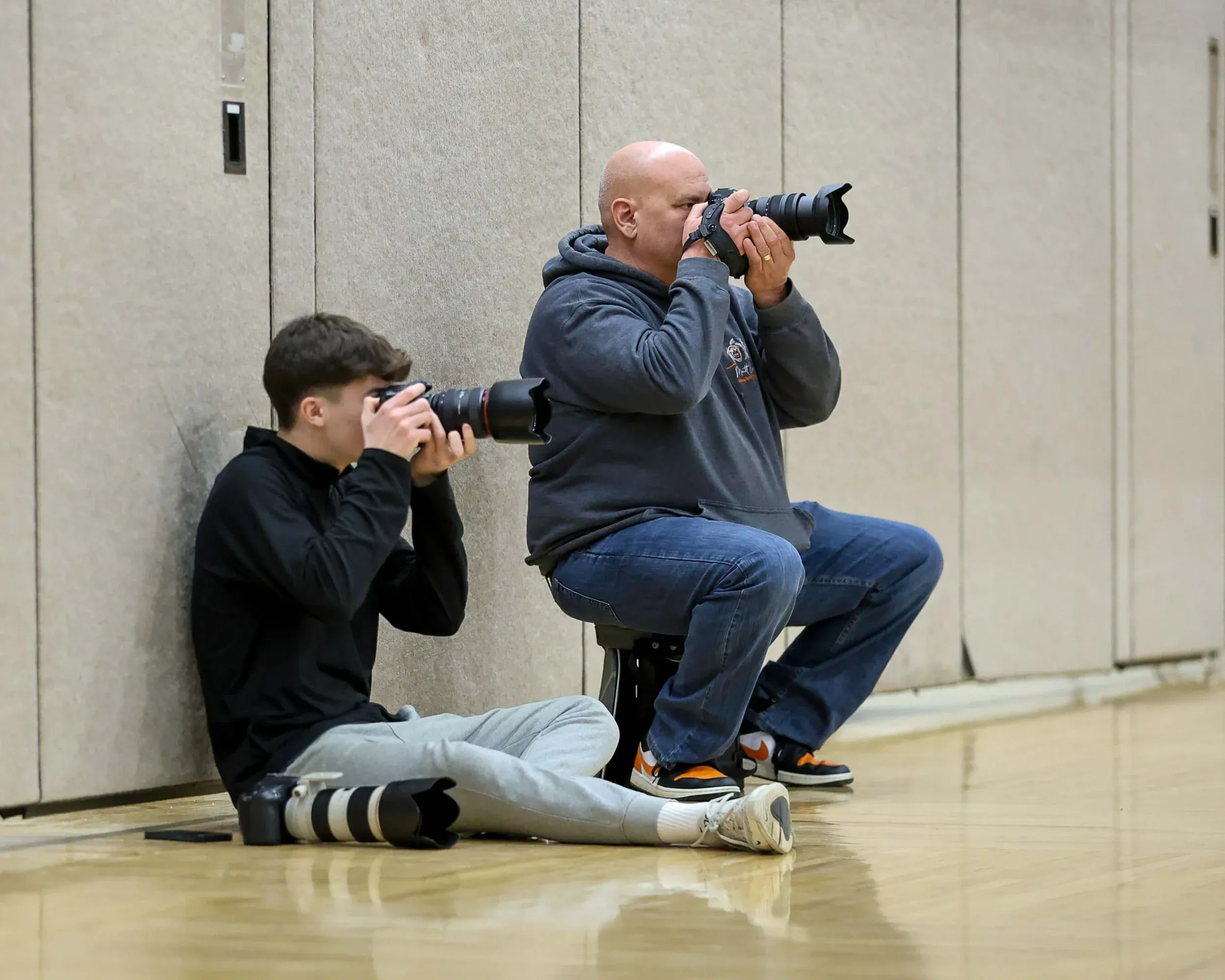
You don’t need a fancy lens or an app to blur a background. You simply need to close the distance between you and your subject. Or, as we like to say in the Photo Lab, zoom with your feet. This, is exactly what that means.
Scan the edges, then move. The background changes. Indeed, the story changes too.
The Lesson
This is Pillar 2 in action: Position Determines the Story.
When we say “distance is a decision,” this is what we mean. You are not just deciding how big your subject appears in the frame. You are deciding how the background affects the story.
A clean background says: look at your subject. A busy background says: look everywhere. Viewers follow visual hierarchy. If the background competes, you split their attention and weaken the story.
Key point: Strong photographers think about background the same way they think about light — not as a fixed condition, but as a variable they can influence and control. They move to manage it. They choose angles that simplify it. They use proximity to reduce it. All by changing your position.
The subject is the story. The background is the context. Context should support the story, not argue with it.
“Your subject is what you see. Your background is what the camera sees. One of those is your job.”
— The Photo Lab
In the Lab
Try this: Find a subject — a person, a pet, a plant, anything. Photograph it from where you’re standing. Then take three more photos: one from closer, one from a lower angle, one from a different angle.
Compare the four backgrounds. Same subject. Four completely different stories.
That’s not the camera doing the work. That’s you.
Trust it. Trust Yourself. Go back if you have to.
—TMac
Photographer | Teacher | Coach | Head Zoom Jockey, ZoomWithOurFeet
#Shooton
