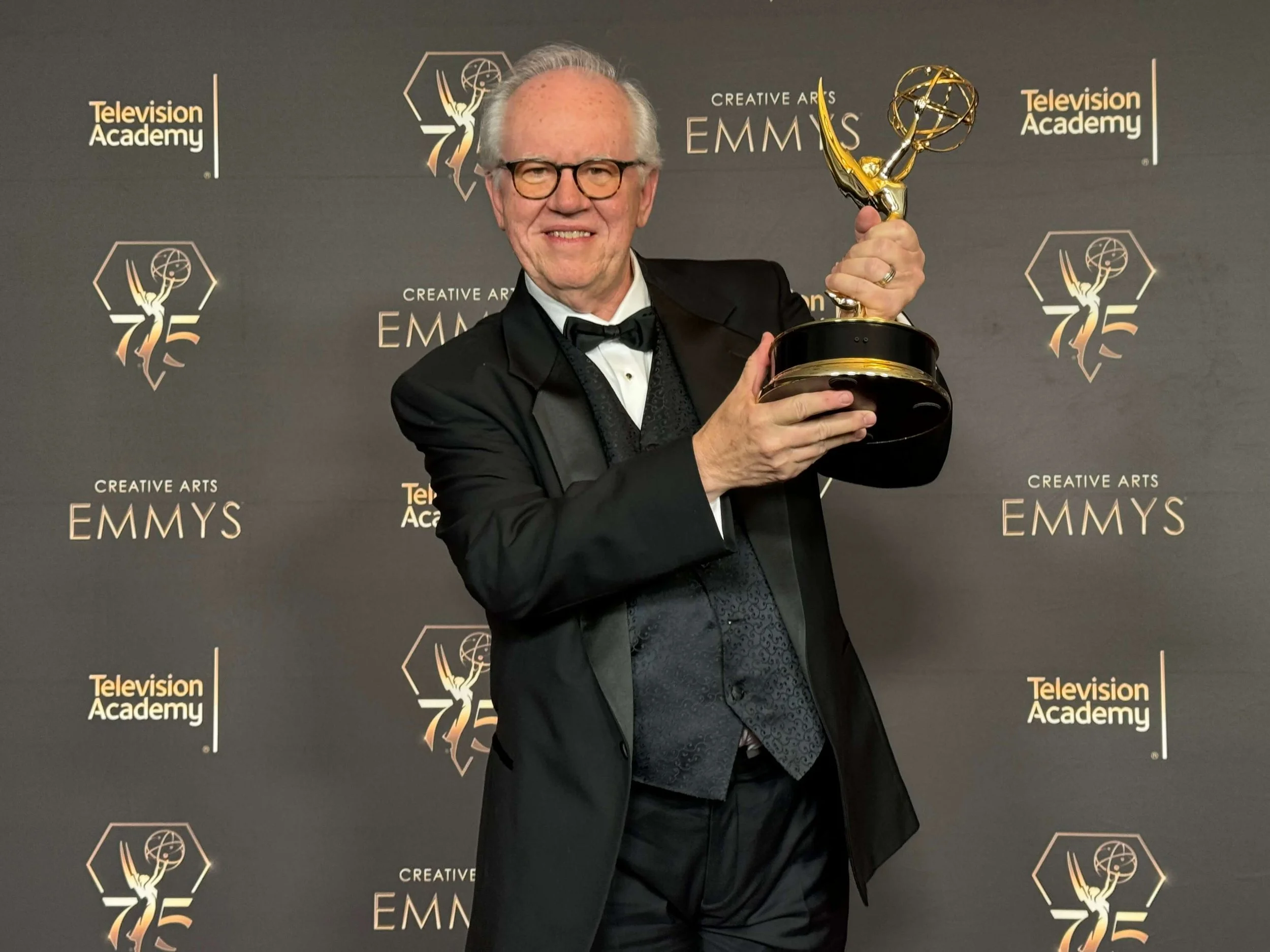
Emmett Loughran — Directing Live TV, Golf Broadcasting & Learning Your Craft One Yes at a Time
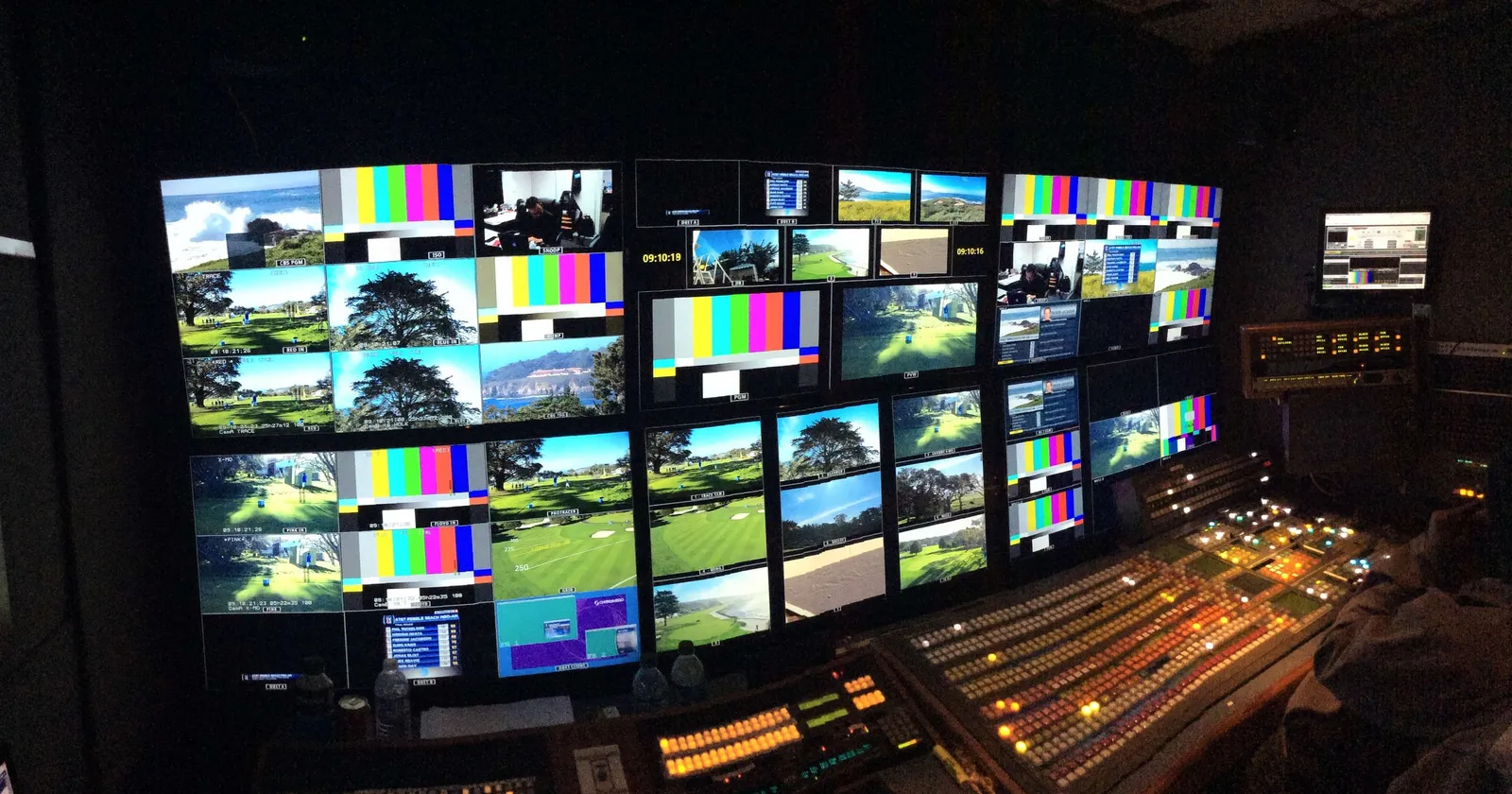
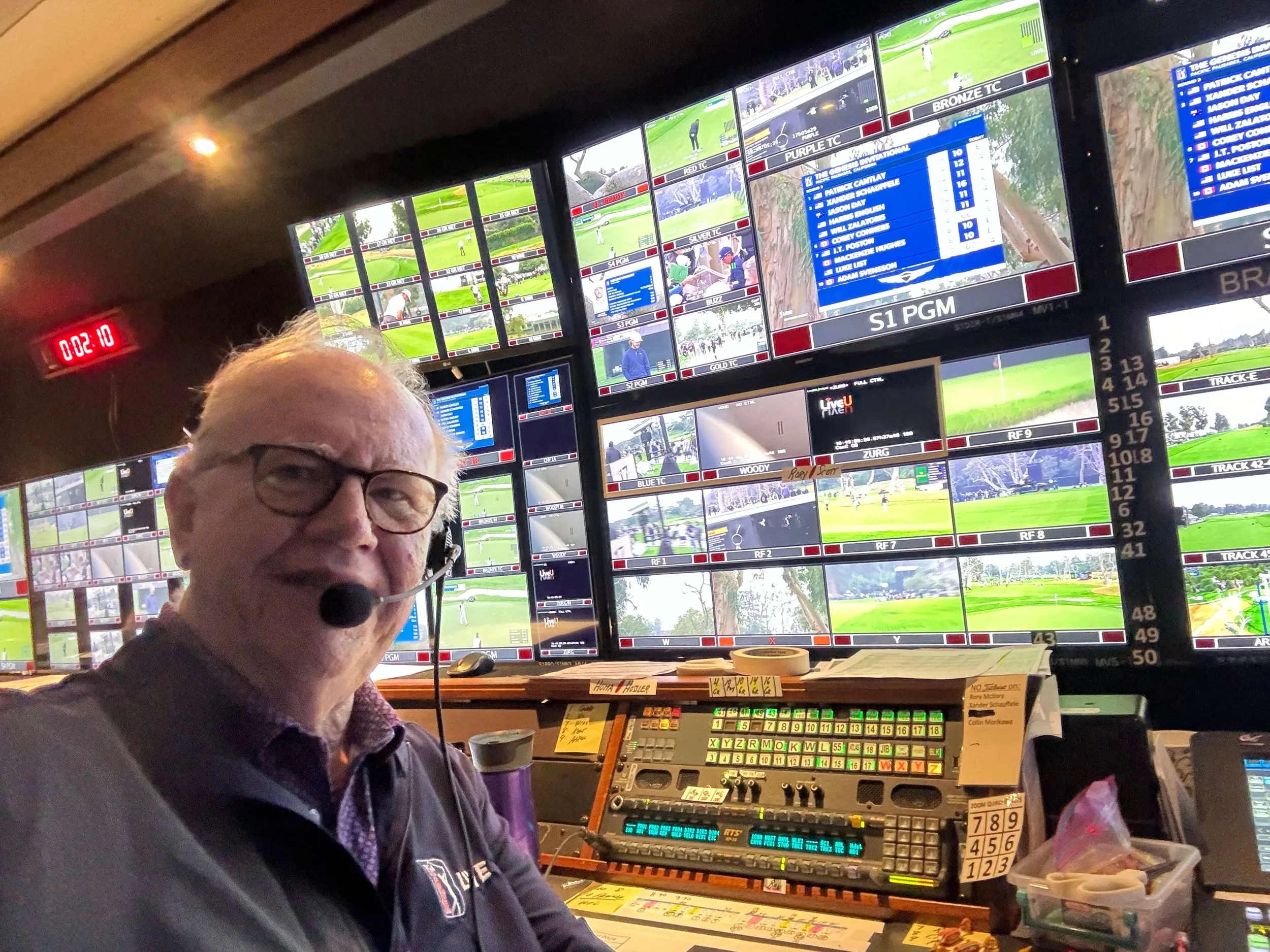
The director’s view. Every camera, every hole, every decision happening simultaneously. Photo Credit: Emmett Loughran. Used with permission.
Emmett Loughran has directed live television from golf courses to the Metropolitan Opera, working alongside legends like Don Olmeyer, Gary Halverson, and Lou Horvitz along the way. His path started with a good radio voice in high school and grew through years sitting beside both screamers and calm, collected directors, absorbing by osmosis what made each one effective.
In this episode Emmett breaks down what separates a great director from a good one, why treating your crew well determines how hard they’ll work for you, and the advice he gives anyone trying to break into live production: take every opportunity, even the ones that don’t pay.
Why It Matters
Emmett’s crew philosophy applies to anyone leading a team under pressure. Treat your people well and they’ll hold a shot steady in 40-mile-an-hour wind atop an 80-foot tower. Treat them poorly and they’ll zoom out and disengage. That’s not a sports production lesson, it’s a leadership lesson that happens to be set in a TV truck. For anyone managing a creative team, this episode applies far beyond broadcast.
About This Guest
Emmett Loughran is a veteran television director with decades of experience directing live golf broadcasts, the Metropolitan Opera, Carnegie Hall performances, and MTV Unplugged. He began his career as a camera operator and technical director before transitioning into directing, learning from a roster of mentors that includes Don Olmeyer, Gary Halverson, Lou Horvitz, and Glenn Weiss. He continues to direct both live sports and entertainment productions broadcast around the world, bringing the same disciplined, team-first approach to a golf tournament as he does to a live opera.
Emmett’s Bonafides
“
Take advantage of every opportunity. Say yes, even if it’s a last-minute call or it means driving two hours without reimbursement for gas. Just be amongst the production and have your eyes open, and you might see your future that day.
”— EMMETT LOUGHRAN, VETERAN TELEVISION DIRECTORHear This Episode
Watch Here
Episode Timestamps
Your ZoomPod — Exit Ticket
After this episode, you'll know:
- Why how you treat your crew directly determines the quality of work they deliver under pressure
- How sitting next to great directors and absorbing their habits builds skill faster than any classroom
- What it actually takes to transition from camera operator to technical director to director
- Why saying yes to every opportunity, even unpaid ones, is still the fastest way to be discovered
Gear & Affiliate Links
Trick out your kit, and your wardrobe. Both Adorama and SmallRig are having sales right now. Or wear your photography mood, grab a ZWOF set-wear tee shirt. If you use a ZWOF link, we may earn a small commission that doesn’t increase the price of your item.
Explore More
Check out our other great podcast episodes. Link and follow for more great learn-photography content: IG @zoomwithourfeet | FB @ZoomWithOurFeet.
Emmett built his career saying yes before he knew where it would lead. Same instinct belongs behind every camera you pick up.
Stop Shooting From the Stands →TMac 00:12
Hello and welcome to another edition of the Zoom Photography podcast, a thought about learning photography with me, your host, TMac, a professional photographer, a videographer, and teacher. In golf, April is like no other as it is Master’s month. If there’s a high-profile golf tournament going on, the other golf pros are working hard behind the scenes to make these technological wonders come to life. On this episode of the Zoom pod, director Emmett Lochren joins me to talk about his work directing television golf at live stage productions in New York City. This month, our guest speakers are all about TV golf. Let’s talk to the other pros. Emmett Lochren, welcome to the Zoom with our feet podcast. How are you?
Emmett 01:17
DMAC, I’m good. Thanks for having me on.
TMac 01:21
Good to see you, my friend. So tell me about your formative years in TV. How did how did your journey start?
Emmett 01:33
It’s a good question. It’s a great question, but there’s no formula to any of this, as you know. So we’re not like carpenters who watch and then become carpenters. So I was in high school, people said, Oh, you have a good voice. So I found the college that had a good radio program, and that was my path. This new TV program starting up station and it’s gonna have its own soap opera and morning news and a yoga program, and they need a crew. So instead of the classroom, give it a go. I said, sure. So that’s how it all started many, many, many moons ago.
TMac 02:16
Several presidential administrations ago.
Emmett 02:20
Exactly.
TMac 02:21
How did directing television born from that? How did that happen?
Emmett 02:27
Yeah, it followed, I think, a logical plan. I was a camera guy like yourself, I loved it. Thought I’d be a camera guy forever. So and then someone said, Oh, we had this position in the truck where you switched the show, the technical director. Sure. I’ll give that a go. I did some replay in the truck back in the days when our replay machine was 30 seconds only. So but enjoyed it. Enjoyed all that. But as I was exactly. You got it. But the technical director’s seat was right next to the director. And no names, but some were screamers and some were calm and collected, and actually got more out of their crew that way. So biosmosis that’s just came my way. And people said, Oh, you might make a good director. And sure, I said, I’ll give that a go. And I just I can readings not knowing what I was saying. You know, it’s such a different world when you become a director, but like I think the more you do it, the better you get. So I think I for most of the good qualities of what I sat next to individuals, and then you find out how valuable your crew is. It’s ironic when you first become a director of three or four cameras, you have a very green crew. And that’s really when you need real good people, maybe helping the cause. Meanwhile. You learn from that, and you get you find people’s strengths and you pull what they do and make them feel good about the job they’re doing because they’re they’re working as hard as they can, and so you can answer people. So and then that evolved to just directing and really enjoying it.
TMac 04:20
If you treat the crew right, I want to run through fire for you.
Emmett 04:27
And they will. And they will. They’re carrying a camera on their shoulder or pumping it up an 80-foot tower at Bay Hill, you know, standing as the wind is 40 miles an hour and holding a steadier shot than you could ever ask for. And or if you’re treating them poorly, they’ll just zoom out to a wide shot and kind of hang out. They’re not gonna help, they’re not gonna listen to the announcers in their ear, sell the shots, things you know what I’m talking about.
TMac 04:57
So I do indeed. So in that time, T D which in and of itself is quite the has become quite the gig as well.
Emmett 05:13
So you make the scary one to become gosh.
TMac 05:17
I look at the boards now and I just marvel at what they’ve become.
Emmett 05:25
Sure, a GD can hit this one button, it’ll take the camera, it’ll trigger an EBS machine, a graphic machine will run, a sound effect will be cued and played, all that power, but you have to be able to set it up accordingly and build your timeline and all those things. So it’s not just ready one to take one.
TMac 05:47
So in those in those early years of directing, you’ve made that transition, you see that job. Did anyone influence you?
Emmett 06:03
Good question. There’s a handful of good directors that I took positives out of. Jim Cross, who went on to Lifestyles of the Rich and Famous, but he was a life sports director early. Larry Cavalina, who became a top CBS director. Don Olmeyer, I was fortunate to sit next to Don quite a few times, skin’s games. But also Lou Hormitz, who directed the Oscars. Glenn Weiss, who directs Tony’s and Oscars, got a lot out of the entertainment. And also a European director, Brian Lawrence, who was the first opera director I knew. So Neto Vol to the current director I know, Gary Halverson, Gary who directed Friends and Everyone Loves Ray, and Thanksgiving Day Parade, but also directed the ring cycle. You know, so amazing amount of talent. I was blessed to be next to, and hopefully took something out of each one selfishly I did.
TMac 07:13
And I tell folks all the time, this is not this is like sports especially, but live television work is almost a subset of a subset in terms of specialties within a specialty.
Emmett 07:33
So many individuals are so good at what they do, and directors like myself are blessed to be able to enjoy everything that they come up by.
TMac 07:46
Yeah, yeah, yeah. I agree. So what year and what was your very first golf show? How did how did that transition happen?
Emmett 08:01
It was the mid-80s. EFM was just being created. And then I put a call into them. I was I was a camera guy, very good. The islanders that kept us very busy in New York at that time winning Stanley Cups. So we all felt very good at what we do in the basketball hockey. The golf thing, I love playing golf. That intrigue man ESPN had the champions tour, known as the senior tour way back then. As well as some PGA team events. So I got on that crew. And it was a great challenge, you know, following the golf ball. You know it very well.
TMac 08:47
Yes, I do. So now you are doing some golf. Let me let me set some context. I would love to hear your description of what is the what is the job, the role of the director in a live broadcast. You could fill in the sport, but we’re talking golf, so what is the director’s job on a golf broadcast?
Emmett 09:22
Sure. The key to a good director is a good producer. The producer tells a story, he a plan of the coverage. The director paints that picture of what the producer wants. So obviously, before show day, you huddle with your production team and your announce team, and you find out the storylines, the tea times maybe that are going to be in our broadcast window. And at least we have a plan. Then the beauty of golf, and the trap of golf, in a way, is there’s no TV timeouts, more than one ball in play. So anything can happen, and the expanse of the golf course, I don’t have to tell you. It’s not a football field or a basketball court. So with that in mind, you try to attack and have coverage, traditional coverage, but you have to have some free safeties also. Ready to chase any story that’s finishing on the front line, let’s say. And when you chase it, you might have a camera, two cameras in mind, but you have to get an audio pack out there, scoring people to keep you up to date on who’s away. So a lot of facets come together. And obviously, screaming people is the last thing is these people now have to pump a camera, tripod, backpack. Way back in the you know the day they had the antenna. It was a multi-person crew, so the key is just to deploy the troops, have a plan of the day. Have your producer and things change, or maybe the director sees a storyline developing someone like Birdie, Bertie, Birdie, then you say, Hey, you want me to start chasing that? And then you steal from one plot that you had thought out, and then you deploy those troops on the new storyline. But still keeping the tournament covered because people are just finishing, whether it’s a name player who’s having a great day or maybe not going to make the cut, with unique coverage at 18 and/or nine if they’re finishing on the front. So just to have some basics always in play, but then have the ability to chase a story or two or three as they develop.
TMac 11:38
There is from my perspective, having listened to all you directors over the years, there is the it is the for me, it is the ultimate multitasker job, but it’s also I think you have to synthesize of going all teacher on you, information quickly, and then make decisions, as you said, about what to cover, which comes from that story part, and then how to cover it, correct?
Emmett 12:24
Correct, yeah. Exactly. You’re gonna have to steal for something, you just want to borrow facilities because your limited budgets exactly. Hopefully you have plenty of good toys to play with, but and you just have to make those decisions, and then maybe equipment’s breaking down, and then you have to bypass a piece of gear, and you have to just trust those people on that, that they’re the best people putting out that fire, and you just move on and you say, Hey, we’ll we’ll put those traffics in later when it airs, or whatever the situation is. But that makes it that makes it fun as well. When you walk out of the truck after a good broadcast, you actually know if it was good or not. You get instant feedback.
TMac 13:06
So yeah, yeah, oh totally true. You’ve directed other sports. How specifically golf, how does that differ from some of the other events? You actually touched on part of it for me. I tell people that golf it yeah, Super Bowl is a super bowl, but it’s one field. Golf has 18 fields that have to be covered in a in a tournament. That’s one thing. What else do you think differs in live golf than other sports from your perspective as a director?
Emmett 13:51
Well, the possibly Super Bowl, I can imagine how many monitors Mike Darnold, people like that have. You know, with golf, you have a lot of feeds. The ability to scan, whether it’s just beauty shots or dirty putts, you know, that’s the challenge of golf. But with football, basketball, it depends if you just have your five-camera coverage or you could have 55 camera coverage, you know. So each one magna magnifies, but it comes down to some core cameras, core facilities that always have to be in play. So you just have to, you’re listening, you’re listening to people that are giving you clues that they’re in trouble, let’s say. But the key also is all the prep. You don’t you can’t find out Thursday that there’s a tree limb blocking the back left pin. You know, that’s all the prep that you do Monday, Tuesday, Wednesday. It’s it’s it’s a lot of homework and it’s redundant, but it goes from communications, making sure people see you, make sure they get tallies that they can hear, make sure they have programmed sound, make sure they can hear the announcers, which really makes you look good because they’re getting you shots based on what they’re hearing. The announcers are talking about the grip, things like that. So I kind of swing the conversation back to golf, but that all relates to basketball. If the announcer’s talking about a certain thing, guys figuring on his left ankle, let’s say, camera guys are gonna nail that shot for you. You know, not the game camera because it’s busy covering. So you just you have to give people all the tools of the tray that they need to be the best they are, and then they’ll make you the best you are as well.
TMac 15:36
So besides some snacks and a comfy chair, what is something you need when you need to have part of your kit, we photographers like to talk about, when you sit down in that chair, what else do you need?
Emmett 15:60
I like the snack part. Definitely you’re talking a lot, and you need lozenges, you just need water. That’s an important part of it. Keep the tongue, keep the eyeglasses clean throughout the show. The ability to hear people is the key. There’s a lot of channels to listen to, not all have to be at the same level, so there’s a balance. And there’s you want to hear your announcers, you want to hear the them on talk back when they’re not on the air, but they want to communicate that they’re noticing something’s going on in the playing field. Just you need the need the TD to be very comfortable on what he does, and he or she does. Same with the sound department and your tape room, which is now all digital media, graphics. Just make sure everyone hears each other and everything’s working on their end, and then you’re off, and then there’s no script, and that’s the beauty of it, actually.
TMac 16:59
And there’s no stopping.
Emmett 17:02
Exactly. Yep, and no timeouts, more than one ball in play. But that makes golf specifically fun.
TMac 17:10
I think also degree of difficulty on Thursday and Friday, especially at an open, where there’s, as you said, wall-to-wall coverage, you have golfers starting on both T’s. So everywhere you point, there’s golf. How does that on a Thursday and a Friday at the open, how does that up the up the up the ante in terms of coverage? What is that like for a director?
Emmett 17:53
Yeah, it’s it’s ante is a perfect word, Tim. It’s a different mindset. Thursday, Friday, you have cameras covering both nines because your viewers you have 144 golfers, let’s say. They just can’t tee you off the first T. The days are not long enough. So they tee them off, and not in Tucson’s like they will on the weekend, but threesomes off both T’s. So you have golfers on the first and tenth, and the marquee names, along with TV and the tour, you know, they try to put them in that window. But you could have a golfer that’s a rookie or maybe an amateur that got in on a sponsored exemption, and that already happened this year. Golfer named Dunlap won the anime. So anybody can win on every given weekend. So and those stories can develop on Thursday and Friday, which is very fun. Could be the first T, it could be on the 10th T of the first group. So you try to capture that, and someone’s all of a sudden breaking out, you try to chase that, but still have your stable coverage to provide good coverage just on the on the tournament itself.
TMac 19:09
Golf fans, and I and I’ve heard that, you know, when I was in the thick of it, I would hear it all the time. People would say, It’s so amazing that you’re you know, you’re just wiping and showing golf and showing golf. But the sausage making and the and the and the real story is a director and a producer are blending live golf with recorded golf. Explain that phenomenon and how it how it really is the engine that makes it all go.
Emmett 19:49
Again, to our viewer today, golf is happening all the time, unlike just the one ball. So as a result, maybe half the golf you see on your TV maybe happened 30 seconds ago, and that’s accepted. We don’t try to play off that we’re live and we’re perfect getting everything. We’ll just say a moment ago, you know, that kind of thing, and that’s okay. I think the educated viewer accepts that. But when you dive deeper, that pre-recorded shot had camera cuts, and they’re trusting a replay director to make cuts that you kind of hit that, what he or she can do. So that’s a little microorganism itself, which is exciting, because that person is doing different subsets of my coverage and doing a good job of it too. So and communicating to cameras and audio people with audio panels. So it’s it’s a lot behind the scenes, just like you hinted at. When it all comes together, it’s it’s extraordinary.
TMac 21:01
I liken it to steal an opera term, I like it, liken it to a symphony, and you’re the conductor, and there’s sections, and everybody’s playing, everybody’s playing hard, and you are conducting, give me a little more, right? And all of that. And I think that sort of that’s what I’ve always said to people about because I don’t think even sort of more than casual golf fans don’t really know the ins and outs of how 18 holes are covered, 144 golfers, and how it all comes together. And that the sort of point is the director making sure that what’s going out the air is out of the air is correct.
Emmett 22:04
True. And again, you have to work. Director just can’t do his own thing. Maybe he can, maybe in another sport. Golf he can’t. He really can’t because the producer has a plan. He’s in the ear, the announcers telling them what’s next. And then the director’s listening to that as well and planning how to segue to that storyline. So that’s it’s really such a team sport. And the intriguing thing is my client these days at PGA Tour and as a director I’m in a truck but I’m 3,000 miles away from Pebble Beach now to do on a show which is kind of a new way to do TV.
TMac 22:50
So I’m looking at a wall of monitors just like if I was in the Pebble Beach parking lot looking at a wall of monitors but with the technology the fiber optics that we have these days I’m getting real time outputs of all those cameramen camera people excuse me and communication is real time as if we’re within half a mile of each other so that’s a whole new chapter in your world that was that was after I left that’s crazy to me that amount of bandwidth is sent from Monterey Peninsula to Jacksonville Florida.
Emmett 23:34
Yep exactly that’s just it’s worked crazy it worked so well I miss meetings dinners hanging with my crew of course don’t have that I miss driving out on the golf cart in the morning let’s say just to see what the pins are for the day or talk to tournament officials if there’s situations things happen there’s notes to be given now we get them on a text versus I’m knocking the door so but to the viewer at home I don’t think they noticed any difference. So meanwhile I’m in a truck in the parking lot like you said in St. Augustine and there’s four different four different directors doing shows out of that one truck now. Unheard of but it’s it’s easily done meanwhile we have you know 20 30 caramen on site each island or whatever channel they need to be and providing a telecast for that director.
TMac 24:38
Pretty amazing how many opens have you worked in any capacity?
Emmett 24:47
You know luckily I’ve got to enjoy the world feed of US Open for the past 10 years. But I also did some British opens where I took the feed and made it a feed for direct TV or feature group feed.
TMac 25:06
So I didn’t have the heavy weight lifting of directing the open coverage but I got to enjoy the talent of those directors listen to them incorporate some of my cameras and that was a story that we told like I said it could be feature group or feature whole coverage gives the viewers who are watching more than one screen these days give them that option and those are fun here’s a director style question I have to tell you that it was not lost on me and maybe it was just me observing a bunch of different directors that you especially always tried to keep it light and you had your some go-to things and you made you made it you made it light how did you develop that and I’m assuming it was by design it’s a great question I just when I related earlier when I was a TD in sports I sat next to a lot of individuals directing that made everyone they feel made everyone feel uptight not the you can’t get the best out of people that way sure you lose power or audio goes dead there’s situations that raise the level in the truck but in a perfect world I always notice and I think I’m a calm person anyway but I don’t get upset if someone’s not doing their job not upset but try to redirect their focus and maybe they have a problem maybe they’re left uncovered that their viewpoint is intermittent or something like that.
Emmett 27:13
So but the key is if you can be calm it makes everyone else more relaxed they’ll perform better. It sounds like a simple formula but it but it works. So far I’m still able to do that and it’s still working.
TMac 27:33
Yeah my crew I think will be waiting at the bottom of the stairs for me if it’s not working well I can remember and this is a thousand years ago there was a mini tour event at the at the course in Concord. I happened to be in between and was home and got booked and it was the first time I had been on an Emmett show and I can remember the first time so in golf the handhelds behind the golfer but that shot you can see the tower there in the distance and in my ear I hear the following from this guy and said lift your left leg. And I didn’t it didn’t register at first and you said it again kind of like fake serious to map lift your left leg. And I’m like and everybody laughed and you know and you go but you did it and I did it and then you said something like okay everybody back to work and it was like where did this guy come from it was so cool I can tell you the brief story of where that emanated just we Luther Fisher a good friend of all of ours he was a just a cameraman and his parents would be watching broadcasts and he would always say if you see me I’ll be the camera guy that lifts in the way you’ll know what camera I’m running that week so I you know sadly I think Luther’s parents passed but we’ve continued so even last week we continue that tradition and for all of us we get it we laugh we had a great TD you remember Gary Rothman just you know he’s gone 30 years plus now already but every show we still have a round of voice as we pay homage to Gary we still do that so it just sets a good film for every so I’ve got an addition to that story okay so now I moved from the gypsy life went into education became a teacher was teaching video productions and because of my background I sort of gravitated towards we needed we needed one of the teachers to be the director so I figured there’s probably going to be no middle ground it’s either going to be I’m okay or I could just stay doing off camera. And I have to say it was so much fun to direct students like all of the good directors that I had in my that I had in my head. I still have that to say I don’t recall what the what the event was but the shot cameras in the background and I say lift your left leg and they did it love it and they did it. I just wanted to say it lives on oh that’s great that the tradition continues the tradition continues I love it that’s well good that’s great so tell me what is your in all of that golf directing what is your favorite memory and I know you love them all pick one whole in ones are fun whole in ones for the crew are fun to get to capture I had one last week and the good news is everyone’s just routine coverage in a part three ball rolls out come back to the close up you know once the hole in one happens and I have two cameras at the T so it goes on all of a sudden the camera that has the best close up is not available it’s blocked there’s another network spend in the way lucky I had access to that camera so we cut to the close up and then the cameraman that I had that got blocked he said to himself he said to himself I’m gonna get crowd and the crowd’s going nuts on the T-Box so that made for a great shot cut back to the close up that I was able to access on the network high fives are happening so you have a nice quiet sport all of a sudden things can happen that should not be missed and there’s a feel show when you can capture that and but the good news is I have some of my caramen have worn good shirts courtesy me.
Emmett 32:36
The rule is if there’s a hole in one and it’s captured right away and the ball doesn’t leave frame of the caramel I’ll be sending them shirts. I’ve been doing this for 30 years so but I’m I own a few golf shirts and belt buckles too of camera guys that played pong on their viewfinder the ball hit every corner basically and maybe left right and they’re upset at themselves I’m not upset you know they understand the ultimate is not to lose the ball to give the viewer the ultimate coverage and I’m glad to ship shirts all over the country to my crew that capture those Halloween ones so the Home Ones are fun that’s awesome do you have a favorite open memory let’s see putting you on the spot and these good I was it was actually a T D my first masters have only done a handful and they’ve always been either a world feed or feature groupie let’s say my first one was 86 and a good golfer from Ohio one named Jack Nicholson so that was pretty cool to be part of did the British Open 2015 that Johnson wins that was great but you know I’ll even do any event could be a non-signature event do you treat every event like it’s a major let’s say and the majors you treat them like every event so you just try to make all your cuts as tight as they can be just because the viewer needs to be told the storyline and throughout the broadcast I’m always showing the flag relationship to the golf and the fairway you can only assume the viewer might have just tuned in so I so there’s not really a favorite event it’s just I treat everyone at the top level like all directors do too.
TMac 34:48
So that’s what makes it fun my I don’t know if it’s my favorite memory but it was definitely burned in my memory in 2000 at Pebble Tigers lap in the field and we have a fog out on Friday wow so we got to play the end of Friday’s round on Saturday and it’s still foggy now it’s supposed to burn off they send them out and Tiger didn’t tee off I was on the fifth hole part three right next to the ocean and they’re gonna that’s everybody’s got to start where they left off and my first shot of the day is going to be Tiger Woods in the year 2000 teeing off and there’s a ton of fog. I could barely see the tee and that’s not a long hole and you’re you’re the covers you’re the you don’t have amateurs to warm up with you don’t have multiple golfers coming out of hole first all of a sudden tiger puts the ball down and he swings and returned and as he’s as he’s spiking it in the turf Bucky Guntz who directed NBC for years and years real quiet almost a whisper he goes TMac good luck I’m like that’s all you that’s all you got Bucky good luck so he hits it of course it goes up into the fog and here’s you’ll you’ll back me up in this general rule of thumb is don’t act like you lost it up and you’ve made the move at this point I’ve made the move a thousand times already so up I go I own this and I come back down and as I come back down and I stop I hear kaplunk and it was almost out but I counted it and then I just kind of fused over a little bit and then I didn’t want to do anything else and I just stopped and Bucky buck and Bucky goes nice work. That’s nice he knew how tough that was for you and video hadn’t seen the reaction of what that sky would be or fog amazing well done that’s it was it’s the one I remember I mean you know there’s golf memorable moments but I’m a camera nerd that was my that’s the one that’s the one I remember congrats well camera again for your viewers camera on golf it’s I think everyone can imagine not a big basketball not a football golf into a white sky whoa it’s amazing so kudos to you lots of lots of little tricks I learned from veterans how to how to play with contrast in all those years I never used color in the viewfinder I was always I was always black and white and then would play with blue and green and figure out which one so I was chasing a gray dot in a in a dark gray dot in a light gray sky and I forget who told me about that.
Emmett 38:25
Boy like you said some veteran guy that like you enough to shake exactly that’s that’s smart that you know it took two and a half seconds for the ball to land.
TMac 38:39
Correct you just had to do that.
Emmett 38:41
And sometimes a camera guy will miss the ball even on a sunny day and it’ll drop but then again we kind of make light of it all just say oh Sir Isaac Newton you know like it’s an apple that just fell out of the sky because the camera guy probably beat himself up but I just want to reassure him that it’s not the end of the world.
TMac 39:01
And that’s and I would smile and I would say yeah man he’s he gets it he’s with me. Right moving on exactly cool so sports and golf are not the only things you direct and I gotta admit I did a little research on you and I went oh and it isn’t that you’re doing this but you’ve done it for years sir tell me what else you’ve been directing for how many years yeah well luckily New York was a good place to be based for sports of course but also there’s the entertainment industry from New York you know operas at the Met Carnegie Hall the MTV Unplugged there’s a lot of different things in my youth that I did on the technical side and then later on in life I evolved to where I’m still doing the TD part of that but I will direct an occasional opera especially a lighting test yeah with our main director he won’t come into New York for the five or six you know the first he we have but I’ll do those and enjoy it and again more of a team thing I have a good score reader because I don’t read music but that person’s kind of marked the script when the entrances happen upstage downstage left things like that and the camera operators are hearing that as well so that’s that’s another team stuff event but there every shot is predicted once we get to the final air show which is broadcast around the world in seven languages every shot even audience shots all have a number and in a perfect world as long as we don’t lose a camera and etc sometimes director once still gator in the switcher so we were stuck on one camera for 20 minutes.
Emmett 41:06
The phones didn’t light it up people around the world just saw this one shot and life went on so but anyway the entertainment world is fun in its own right but a lot of the same rules apply so that’s what makes it fun. How many times have you seen it before you go live we’ll see yeah the opera’s a really good example we’ll see this lighting test and then we’ll have all the cameras together on a Tuesday night and Saturday we’re live for a matinee but so we’ll shoot it Tuesday night director takes his notes Thursday Friday we just watch the opera we watch a multi-screen of all the cameras but we can also access the wide shot of the house and also the big program cut can all have camera kneckers those are burnt in so we know exactly what camera is on the air in case director was fishing for shots and he just started taking cameras we’ll know what camera that was so it’s a it’s a very good process and our team has taken this to Europe west coast as well because it’s it’s a cruise you need to have lots of reps as far as they know what a second violin looks like and the cello fingers all those intricacies which make it make it fun so luckily I can be exposed to that world and still enjoying it as well.
TMac 42:49
I love that I love I was not a theater person but I married a theater person and I have seen the beauty of a really well executed play and musical and the high school kids are just so my little contribution in our school is I shoot the dress rehearsals because they’re they’re in full and it’s full lighting and many of the shows that they’re doing they only have performance rights so don’t want to tangle with the option that they’ve that they’ve purchased so I show up with my photography shelf and I take a set of pictures for all the kids in it. It’s hard and it because I’m walking in cold but it’s so rewarding to have them say yeah that this is the only chance they’re gonna get to be photographed doing their thing you’re not no one’s telling you where the name
Emmett 44:00
Explosive should be either. You’re you’re you’re you’re following your own personal lead on that.
TMac 44:08
Last question. I’m sure you get it, because I know I get it all the time. If someone comes to you and says, What do I what do I need to know to be in live television or live sports or even specifically golf or even opera and entertainment, give me the three things that you think would make a good technician, be it camera arts, playback, audio, whatever it may be, what do you think or what would you tell them they should focus on? Give me three.
Emmett 44:54
Every opportunity should be taken advantage of. If it’s a last minute call, if someone reaches out, if we need a cable polar, whether it’s a basketball game or symphony show, say yes to that. Just be amongst the production and have your eyes open, and you might see your future that day. So take advantage of it means driving two hours and not reimburse for gas, you know, put yourself up. You know, don’t make a habit of that. I’m just saying there’s no formula to this at all. So take advantage of every opportunity. That’s that’s rule number one. And rule number two is watch videos like this of other professionals, and there’ll be something in there that person will take out of. And never forget to ask questions. Never, it’s so easier now with the internet to watch a show. You can sometimes watch a show that has a controller only feed. So you’ll see the production happen. So there’s a few that I’m impressed when I see directors I know and how they cut a live show. And those cameras sometimes are recorded and available. So just watching TV, watching and listening to shows, you’ll pick up so much. You’ll see new toys that are now available, obviously the cable cams, the drones. That’s opening up a whole new world. But you know, operating a drone, anyone can buy the drone, not the professional drone, let’s say, but can try to do all the stuff they’re seeing. And it might be a day that the lead drone op is not available, and if you’re on that show and someone says, Hey, I’ve seen you work with your drone at lunch in the parking lot, you’re it. So, hey, that’s how Lenny Bernstein got his break years ago. He was the assistant to the main conductor, and the call to the bullpen went, and Lenny answered it, and the rest is history. So just thanks to everyone, takes every opportunity. That’s that’s that’s what I can leave them with.
TMac 47:18
Emmett, I can’t thank you enough for being a part of the project. I wish you safe travels.
Emmett 47:25
TMac, real pleasure. Thanks for providing the service to the viewers all over the world. I think it’s terrific. And they all follow us and reach out to us if need be with questions anytime. Hey, people ask, Paul helped us many decades ago. So that’s that’s that’s all we can do is help the future.
TMac 47:48
Talk to a pro.
Emmett 47:50
Be well, I friend.
TMac 47:60
Thanks again to veteran television director Emmett Lochren. You can see his work on TV from a golf course near you and from the Broadway stage. The Doom With Our Feet Podcast is a production of TV Commando Media. The Doom Pod theme is by November, and their funky group cloud 10. Until next time, directors, start small and dream big.
More From Emmett