Claire Komerak — Columbus Crew Photography, CBS Sports Design & When Two Crafts Make Each Other Better
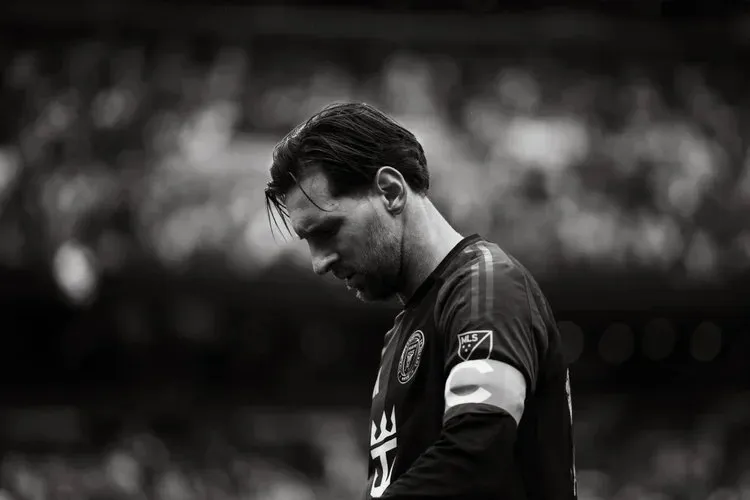
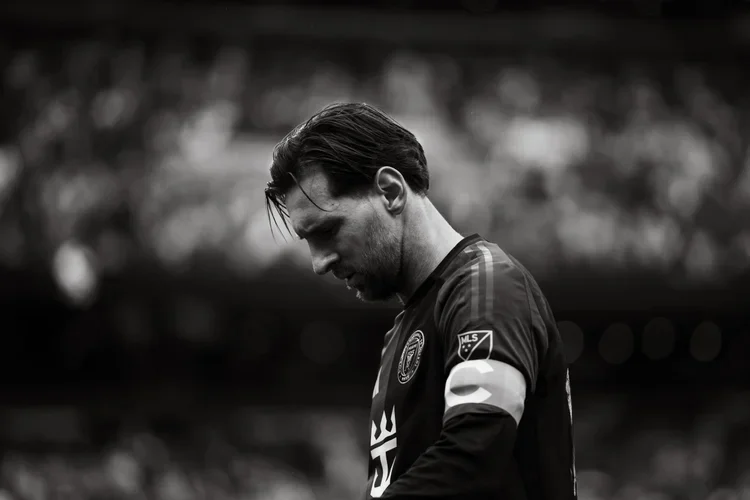
Messi. Quiet moment. Black and white. Claire Komerak saw it and knew. Photo Credit: Claire Komerak Photo. Used with permission.
Claire Komerak picks up a camera the way a designer reads a room. She shoots the Columbus Crew and designs broadcast graphics for CBS Sports, and those two disciplines don’t just coexist. They sharpen each other.
In this episode Claire traces her path from disposable cameras at the zoo to an MLS Championship sideline, and breaks down how color, brand, and light all have to speak before the viewer even processes the image.
Why It Matters
Most photographers think about what they’re capturing. Claire thinks about what the image says before anyone looks closely at it. That’s a design instinct applied to photography, and for anyone trying to make images that work for a team, a brand, or a client, it’s the difference between a good photo and one that actually does a job.
About This Guest
Claire Komerak is a sports photographer and broadcast graphic designer whose work spans collegiate athletics, professional sports, and network broadcast media. She shoots the Columbus Crew in MLS and designs graphics for CBS Sports, bringing brand thinking to every frame she makes. Her approach, building images that communicate team identity before the viewer consciously processes what they’re seeing, is the result of two disciplines informing each other over years of deliberate practice.
Claire’s Bonafides
“
I want the brand and the team to speak to you before you can even really process what that image is.
”— CLAIRE KOMERAK, COLUMBUS CREW PHOTOGRAPHER AND CBS SPORTS BROADCAST DESIGNERHear This Episode
Episode Timestamps
Your ZoomPod — Exit Ticket
After this episode, you'll know:
- Why design thinking makes you a better photographer before you ever raise the camera
- How color choices in sports photography reinforce brand identity without the viewer realizing it
- What mirrorless cameras teach beginners about exposure that DSLRs never could in real time
- Why curiosity and hunger to learn matter more than gear or credentials at the start of a career
Gear & Affiliate Links
Trick out your kit, and your wardrobe. Both Adorama and SmallRig are having sales right now. Or wear your photography mood, grab a ZWOF set-wear tee shirt. If you use a ZWOF link, we may earn a small commission that doesn’t increase the price of your item.
Claire shoots with a designer’s eye already doing the work before the shutter fires. That’s what it means to really see before you shoot.
Stop Shooting From the Stands →Claire 00:03
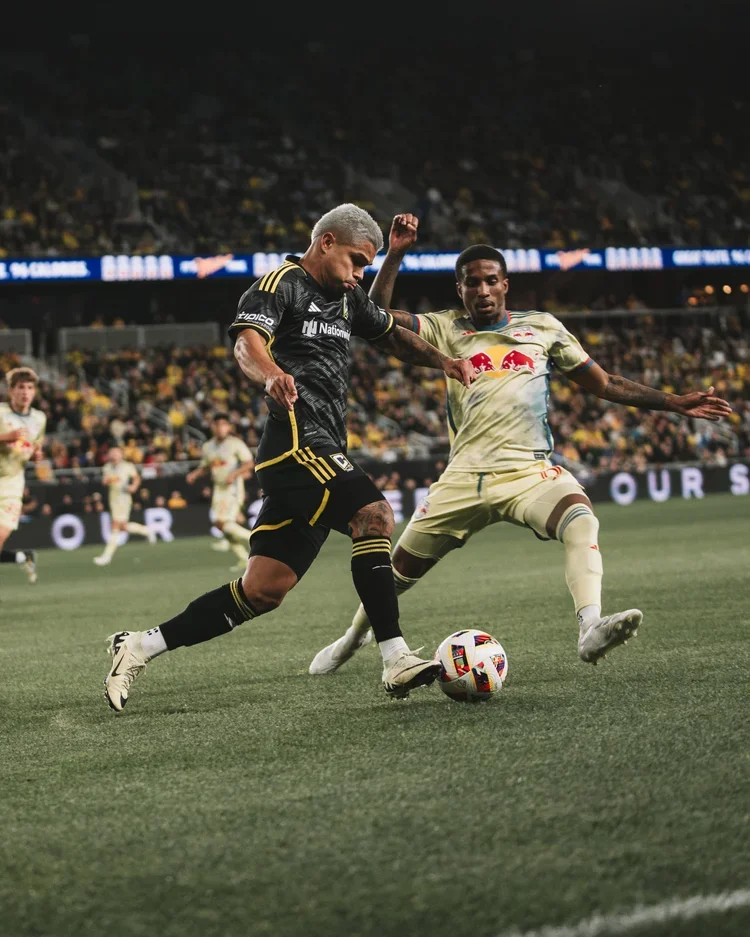
With the sports I shoot with the crew, I always go a little bit warmer, so you always see that yellow with Ohio State. I’m always making a red top so that really stands out. So you know without even really thinking that’s Ohio State or that’s the Columbus crew or that’s the Columbus Blue Jacket. Like I want I want the brand and the team to speak to you before you can even really process maybe what that image is.
TMac 00:30
Hello and welcome to another edition of the Zoom with our feet podcast, the pod about learning photography. With me, your host, TMac, professional photographer, videographer, and teacher. My next guest is the master of not one but two creative endeavors: photography, broadcast graphic design, each one informing the other to achieve amazing results.
TMac 00:57
On this episode of the Zoom Pod, Claire Komerak shares her journey behind the camera and as a graphic designer, and how it’s made her appreciate the little things in life. Our guest speaker is in the photo lab. Let’s talk to a pro. Claire Komerak, welcome to the Zoom with our feet podcast. How are you?
Claire 01:27
I’m good. How are you?
TMac 01:29
I am well. Thank you for doing this.
Claire 01:31
Thank you for having me. I’m excited.
TMac 01:33
You have many, you wear many hats in the in the broadcast and photography business. So let’s let’s do photography first. Okay.
Claire 01:60
That’s a really hard question. And it’s something that I struggle with pinning down myself. From my memory, when I was younger, my grandma and I used to go to zoos all the time, and she would give me a disposable camera, and I would go and take photos. I was a huge, like Steve Irwin Jack Hannah kid. Still love animals. And I remember them telling me that I was good, but I didn’t think that they would tell a five-year-old they sucked, so I kind of never paid any mind to it. And then in high school, I for something to do joined yearbook, my junior and senior year, and I was taking a little Canon Rebel T3i on sport mode to the boys’ soccer games because I had to go anyways, and shooting, and I was looking at my yearbook that I did a couple of a couple weeks ago, and it’s funny looking back that far and seeing like the composition was there. I’ve got some crisp like slide tackles. So I think that’s probably when it started, but I didn’t pick up a camera again in for sports specifically until 2022.
TMac 03:07
Where I wow, that’s a big break.
Claire 03:13
I just was doing it for fun. I didn’t really think anything of it. I liked doing it, and I think playing soccer for so long and having that knowledge of the game did most of the heavy lifting for me. I knew kind of what to expect, so I wasn’t relying on the camera as much. But yeah, it’s it was it was a pretty big jump from there to post grad.
TMac 03:36
So the hot stuff five-year-old with a camera, was that a real camera? Was that a film? What was your first camera that you recall?
Claire 03:46
It was a disposable film camera from Walgreens or something that we would go get developed. I don’t have any of those pictures anymore, and I don’t couldn’t tell you if they were good or not. But I just remember that my grandma told me about it a couple years ago, and I’m like, oh, okay. Like I started having somewhat of an interest in it when I was really young. I’d love to say I’ve been doing this my entire life, but not really.
TMac 04:12
But it’s I think that all of that photography that you did, you were you were beginning to learn composition and what looked good and what didn’t look good. And so the fact that people were noticing back then is a tribute to sort of a natural, it sounds to me like you had a natural feel for composition.
Claire 04:40
I agree, especially looking back and seeing what I was capturing on a little rebel, wasn’t shooting manual, only knew the rule of thirds, so was on sport mode. And to look back and to see that I kind of had it not nailed, but like I had a really good idea. I mean, they were crisp shots, they were in focus. Like I’ve got mid-kick, I’ve got slide tackles centered. So, I mean, for the basics and having a pretty at the time like bare bones camera, I did really well. It kind of has always feeled felt, sorry, felt like something that maybe I’m just kind of good at. Like this is just what I was supposed to do, which has been cool to kind of find my way back to that in
Claire 05:19
A sense. Yeah.
TMac 05:23
How did you get from sport mode to understanding the exposure triangle?
Claire 05:31
It’s just trial and error. I am a very I feel like I’ve always been a very innately curious kid. So when I really like something, I want to learn as much as I can. So I don’t remember exactly how I came about it, but knowing me now, probably researching it online, YouTube videos, or just going out and trying things and see what worked and see what didn’t work, I always I feel like I’m also very observant. So I would go and kind of just like, what do other people’s photos look like? And how can I kind of mimic that?
TMac 06:04
And there’s a part that I try to explain to people, which is exactly that. We all experimented. Okay, so if I change one of the three, what happens to the other two? What how do they interrelate? How do they the fact that you started on film for me is kind of cool because I’m not gonna say, but you know, Nikon F was gifted to me when I was 10. So it was all experimentation and a lot of burned rolls of film about learning about what each one did and how they interrelate. And unless you take that journey on your own, I don’t think that you that you really can learn it. It’s it can be explained to you, but man, you have a camera in your hands and ready to shoot anything and everything and work those yourself. Agree.
Claire 07:08
Oh yeah, and I lucked out when I got to TCU postgrad. That’s when I picked up my first mirrorless camera, and that’s when it really clicked for me because I could see in real time what they were doing, and that kind of really made me understand. So I typically, I’m like, if you guys have the money, go you should go to mirrorless, but obviously that’s where technology is going. But also I think it really clicked for me once I had that camera in my hand, they can see in real time without having to take test shots of what each setting did and how it affected the photos.
TMac 07:37
Right. And you know, aperture here, you know, and you can I tell everybody it’s these two, it’s these two fingers, and how you can how you can do that dance. I agree. I mean I shot a number of different DSLRs from like the 30 D up on the Canon size to like the 5D Mark IV, which was just you know a tank and loud and but it made good pictures and it helped me learn the learn the process. And you’re right, I switched to the R6 first in mirrorless, and I was like, wait a minute, the viewfinder is changing. Oh I think I like this. And for those that don’t know, in the mirrorless camera, it’s an electronic viewfinder. So when you change an aperture setting, it gets brighter, it gets darker. You change your ISO, it gets brighter, it gets darker. You know that you know it’s it’s it’s really awesome. Like you said, having come from viewfinders that never changed, and you sort of had to go and shoot again.
TMac 09:02
Dearless mirrorless cameras are the way to go. So now high school yearbook, lots of testing, lots of exploring. But then you’re you graduated. When did you when did you buy this mirrorless camera?
Claire 09:22
I bought my Sony in 2022. So I didn’t touch a camera in college really at all. I did end up buying another Canon Rebel around my senior year just because hey, well, I was off doing something else. I decided with doing graphic design, I wanted to make myself more marketable. So I was like, oh, I’ve taken camera, like I’ve taken photos before, so I’m just gonna go buy a camera and just I started taking portraits for other graduating seniors for like $75 a pop, just to kind of get that down, just to say I have photo experience. I don’t did not translate to sports, but I just wanted to say that I had that on my resume to help maybe make myself a little bit more marketable for jobs.
TMac 10:10
And again, learning on a new system. Where did you I don’t want to say diverge, but when did you sort of fork down another path in broadcast graphic design?
TMac 10:28
How did how did that come about?
Claire 10:31
Yeah, so I went to Ohio State and I was a sport industry major, and my junior year, I think we were doing, I was in a sport marketing class. We had to pick a draft pick and really make like a marketing campaign for them, and I picked Chase Young. I figured he was going second overall to the Washington Commanders, and I ended up being right. And Dwayne Haskins at the time was there, and his nickname at Ohio State Football was Simba. So, and Chase Young’s nickname was the predator from the movie, but I was going like a predator prey route. So to play off the big cat thing with Dwayne Haskins. So I was trying to mock up a GQ cover of Dwayne Haskins sitting in a like not Dwayne, sorry, Chase Young in a suit with big cats around him, and I was like playing around in Photoshop with this. And in your book, I had very bare bones knowledge of Photoshop, just a little bit of how the tools worked, and I got in there and I kind of picked it up pretty really quickly. I’m a I’m a really fast learner, and then that they looked bad not looking back at them, but at the time they were fine. And then COVID hit, so then I had a lot of time on my hands. I was working at the athletic department, and that’s basically all I was doing. So when I’d get my school work done, I’d just start messing around in Photoshop and following different tutorials on YouTube.
TMac 11:52
Wow, that’s I think what’s interesting about that is you could have just sort of but you just you just wanted to learn a new tool that I’m sure ultimately built your portfolio. How did your did you have an intermediate step before your current job? Because you’re talking about working at Ohio State. Was there a job immediately after graduation that led
TMac 12:26
We’ll talk about your current job here in a minute?
Claire 12:29
Yeah, and to be clear, I was cleaning locker rooms at Ohio State. I was not doing graphic design. I had a two-month internship with Marshall Football doing graphics, it was very short-lived. That just kind of helped a little bit of giving me more things to do instead of just following YouTube tutorials. And then when I graduated, so about six months into graphic design, I got a position with TCU football as a graduate assistant. So I moved down there in August of 2021 and was doing like the recruiting graphics. And then early 2022 pivoted over to athletics, and the only graphic designer at athletics at the time had left. So I was given the keys to the brand for the spring and told to run with it. Yeah. So about a year into doing graphic design, I was leading the brand voice and imagery of a D D1 athletic program.
TMac 13:22
Program good for you.
Claire 13:24
Thank you.
TMac 13:26
And did you also learn if you’re if you’re the leader, you’re also learning about leadership, right?
Claire 13:35
Yeah, I had a team of interns under me, who I’m very thankful for. There was a senior at the time who was way better than me, and he I could give him a sport and really trusted that he could handle it all himself. And then I had a some other interns that would help me with templated work just to take that off my plate so I could focus a lot of time and energy on really creating a visual identity for these different sports in the spring. It did it taught me a lot about leadership, especially when a lot of the kids that I was leading were six
Claire 14:05
Months younger than me. So it was it was a fine dance between friendship and leadership that I’m really thankful that I learned so early on. I think that whole experience, I was quite literally thrown into the deep end. But I swam. So I think that built a lot of confidence in myself. And then I’ve learned I learned a lot from that experience. I was only there for a year, but I ended up learning so much.
TMac 14:31
That’s a good year. So now you got years worth of well, let me let me ask you this. I think what I’m fascinated about is so you’re so you’re in charge of the look and the brand and all that entails, but it also includes photography and media days and stuff like that, which is ironic now that you’ve sort of I don’t want to give away the game, but you’ve come back to photography. So you were you had an early window into that sort of thing from the team perspective.
Claire 15:16
Yeah.
TMac 15:17
No?
Claire 15:17
Yeah, I started with teams. I’ve never really had to do, I did, like I said, I did gearbook a little bit in high school, but I’ve never done the whole like youth sports working into a team thing. I started off with a team. We had a freelance photographer that handled all of our sports and media days just because we were really TCU was one of the smallest athletic departments in the P5 or P4 now RIP to the Pac-12.
Claire 15:42
They’re one of the smallest athletic departments, so we had a freelancer that helped us out with all of that. I never had to run media days. I helped with a couple recruiting shoots and then I did a jersey reveal for track. But yeah, that was a that was a it was nice to kind of see everything come together from the photography. And that’s when I really started to get into photography was at TCU. So being able to take photos and then use them on my graphics and realize what worked in graphic design, I think really made me a better photographer very quickly. And I need this specific photo, I can go take it. So it made it was it was really fulfilling to be able to take something that I took a photo of and then the finished product be a graphic that’s going on our social platforms.
TMac 16:30
For marketing purposes, too. I mean, you know, having done just a little, I know that is that is different than editorial photography. You are literally and figuratively selling and creating imagery and brand, you mentioned that. That is a different animal.
Claire 16:55
Yeah, and I think that I don’t classify myself as an editorial photographer. I think I’m way more documentary style and more like storytelling focused, necessarily, if that makes sense. So totally when it comes to how I approach games, it’s both what do I like about being a fan, and also what’s going to make fans want to come to games? Like, what are the things that are going to make someone at home go, I want to be a part of that? And that’s been something that’s been instilled in me since college, learning about it in my major, and then living it at TCU and now living it now with what I do.
TMac 17:34
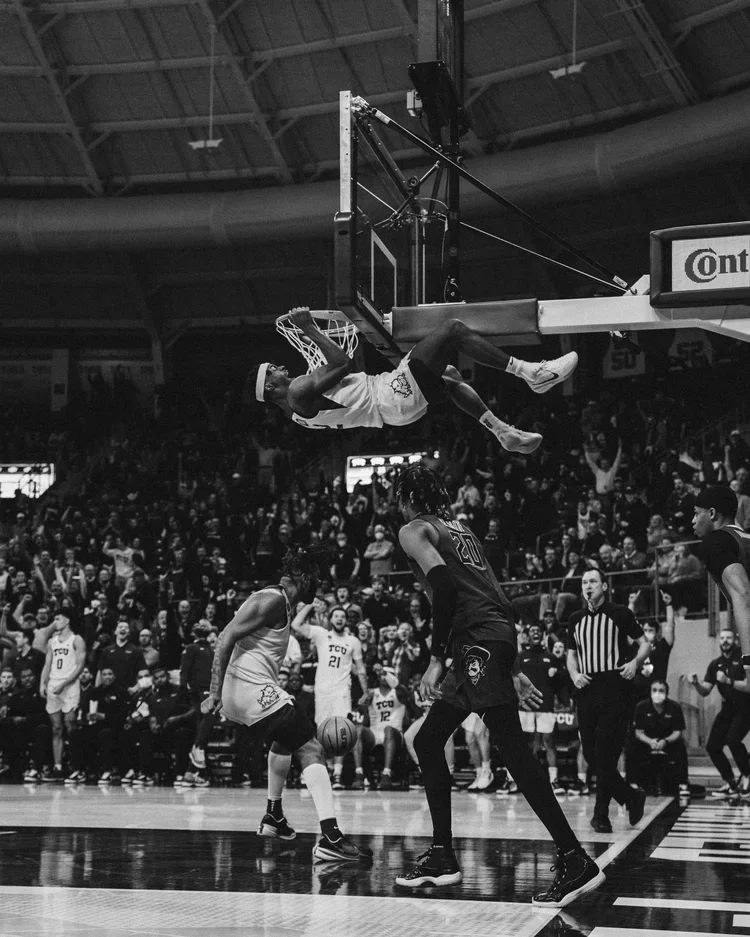
Man, your work is your work with the Columbus crew is just outstanding. I love seeing your take on because there’s, you know, there’s every 10 feet there’s a sports photographer. But your I love you mixing in black and white, using the smoke, you know, I’m over there old school cursing the smoke, and you’re making it just come alive in your images. I’m so impressed with your take on the same event where I’m just trying to get the you know sports stuff and your stuff is way outside that box.
Claire 18:32
Thank you. Thank you. I like I said earlier, I grew up playing soccer, so it almost feels like this is a language I’ve been speaking my entire life, and I get emotional talking about it, but being able to still be in a sport that was my first love and to be able to show people how I see the game and hopefully
Claire 18:54
Feel what I feel when I’m on the sidelines is a priceless thing to me. And I’m really, really grateful for the opportunities that the crew have given me, and then I work with the sports commission in Columbus as well, and that’s how I get into a lot of other sports. So I’m really grateful for those opportunities, and I’m glad that’s at least one person sees what I’m seeing and sees my vision with what I’m trying to do there.
TMac 19:16
Well, we I go back a thousand years in soccer in the state of Ohio. I was playing before it was even sanctioned in Ohio. In oh God, I’m gonna date myself. In 1979, there was no, you know, official soccer. It didn’t come until the early 80s. And I played in, you know, in the one league that I played, it was basically an open league. So there were ex-pros, semi-pros, college players, and just some knucklehead who liked to play. I’ve been around it all my life. Played, coached a little bit. My youngest played D2. She just graduated in 24. So it’s it’s been a it’s been a and I and I totally get what you’re saying about sort of knowing what’s gonna happen. I know when they’re gonna come together. I know you know, how they’re they’re moving. I think my experience my experience with the crew is it’s just the speed at which they move. But just aesthetically, I just wanted to say that about the sort of lane that soccer’s in, but you can’t take the girl out of marketing, is basically what I’m telling you.
Claire 20:47
Yeah, I’m always thinking about stuff like that, and I’m always thinking about brands. So how I’m editing kind of ties into either storytelling or trying to. I always have with the sports I shoot with the crew, I always go a little bit warmer, so you always see that yellow with Ohio State. I’m always making the red pop so that really stands out, so you know
Claire 21:07
Without even really thinking that’s Ohio State or that’s the Columbus crew or that’s the Columbus Blue Jacket. Like I want, I want the brand and the team to speak to you before you can even really process maybe what that image is.
TMac 21:21
And that understanding, so in your images, your the it’s the feeling, it’s the psychology, it’s way different level than you know my two guys coming together and just a standard editorial color. What’s what’s interesting, and I ultimately think one of the reasons I want to talk to you is the graphics informs the photography, and photography informs the graphics. So when did a real life professional graphic design gig come to you? How did it come to you?
Claire 22:02
Yeah, so I post a lot of my work on Twitter. That’s kind of where I’ve networked the most. I’m a really big proponent of you need to be seen to be able to get opportunities. So I’ve been posting on TikTok recently, Instagram, Twitter, like basically anywhere that I can get my work out and can talk about my work. One because I love to, and then also opportunities come from that. I initially started at CBS on the social team, and so my manager at the time saw my work on Twitter. There’s a couple graphics that I make that I integrated football with flowers, and that’s kind of like my thing. I like to mix the like hyper masculine with something feminine and kind of
Claire 22:45
Fuse it in some way and just kind of add like a little bit of a feminine touch to sports, and it works.
TMac 22:53
That’s a signature, that’s a signature, you know. People have signature looks and styles. That’s a signature piece, man. That’s awesome.
Claire 23:00
Thank you. I haven’t made one recently. I kind of thought I got stale, but yeah, he had seen that work because that’s probably like my most seen graphics that I’ve made. And he DM’d me on Twitter and asked if I wanted to apply for a job. Interviewed once and then got the gig with the social team at CBS Sports, and have been on various teams at CBS, but have been with CBS ever since.
TMac 23:26
The zoom pod will be right back. Need something for your kit? Check out our Adorama and Small Rig affiliate links in the show notes and in the YouTube description. From cameras to cages, lighting to audio, Adorama and Small Rig have everything you need to trick out your kit. Remember, if you use one of our links to purchase, we may make a small commission that doesn’t affect the price of your item. Use our links today to help us bring you more great Zoom pod guests.
TMac 23:52
And now back to the show. So explain especially to my sort of aspiring audience how so you are 100% remote, correct? Yes, living in Ohio, but you are you are full-time producing graphics right where you’re sitting, yes, for a major television network and a major sports television network. So talk people through what that workflow is, obviously online, obviously remote, computer based, everything is now, right? So what’s what’s the workflow for a remote graphic designer at CBS Sports?
Claire 24:44
Yeah, so it depends on the team. My current team now, I’m on the creative services team through marketing. So I’m doing a lot of banners, I’m doing slates that are gonna pop up on TV. If you see a count on Sunday NFL ad, I’ve probably touched it. I’ve seen billboards from Paramount
Claire 25:04
That I’ve kind of touched around here. And so we have a project management system and we have a marketing team with project managers who send the request in. I get it, we work on Airtable. There’s a few other project management platforms that I’ve used there, but Airtable is the current one. And I we have a server from a couple, we have multiple design teams. So there’s a broadcast design team, there’s a team that kind of creates all of the looks. So the NFL look that you see for CBS was created by a separate team. They pass that work off to me in the server. I have the specs that I need, and then I kind of just go from there. It’s a lot of production work, which I like, and then there’s things about it that I don’t like because I don’t feel necessarily that I can add my creative touch to everything all the time. But social was kind of reinventing the wheel all the time, and I feel like I got burnout from that. So I like kind of having a mix of both where I have some stuff that’s pretty just production work, just pushing out 20 to 30 sizes of one thing, and then I like having stuff that I can kind of veer off and add my touch to.
TMac 26:12
So let me let me translate some of that. 20 to 30 sizes of a graphic means you are pushing out broadcast TV, right? You are pushing out social. What else?
Claire 26:28
We don’t, so we have a social design team that kind of focuses on our CBS sports Instagram page, NFL and CBS sports, college football and CBS, all of that is mainly handled by the social team. We do a my team does a lot of stuff with like original programming. So if there’s an ad for example, NFL today, my team works on it. So a lot of it is ads. I’ve also worked on our fantasy football and March Madness Fantasy on the back end of that, doing designs of like newsletters and ads you’re gonna see on that. And we worked on the lobby for that and the logos, and I’ve made physical marketing materials. I made some banners the other day, flyers, email newsletters. A lot of my stuff is going to come to you as an ad.
TMac 27:21
Promos.
Claire 27:22
Promos, yeah. I work mainly with promo. We have a broadcast team, so anything like the scorebug or anything that you see on broadcast for the most part is the broadcast team. We work on tickers, which kind of pop up at the bottom to advertise another
Claire 27:36
Game. I just did what game was it? Colorado State and Washington State. So if you see anything from that on a ticker, I did that ticker. So we have a pretty big team and we all kind of touch different things, but a lot of the stuff that I do is promo work right now.
TMac 27:53
Is your is it nine to five? Is it whenever the jobs come in? Are weekends in play because of the NFL and college football?
Claire 28:04
We all try to have a pretty good work-life balance. We all work nine to five, so a lot of our stuff gets shipped off by Friday. I know broadcast and social, there’s times I was working on the weekends, there’s times I was working late nights. PCU, especially, I was working on the weekends. In sports, that’s kind of something that you’re just gonna have to accept that you’re gonna be working late nights and on the weekends at times. But with CBS being such a large corporation, there are certain teams that can get away with only working nine to five. And there are some instances where I might have to work on the weekends, but a lot of times I don’t end up doing that just because they know that I’m with the crew. So my Saturdays I normally can’t when they ask me to. Some of that stuff is like masters of something might pop up over the weekend that we have to edit really quickly, but it’s not that often.
TMac 28:55
So now you’re full-on broadcast design and you got this CBS gig. Where did the where did the Columbus crew photography come from?
Claire 29:07
Yeah, I was an intern at the Columbus crew. It was my first big girl sports internship. I was a marketing activation intern in 2020. So I was only there for like two months before COVID ruined it. But I just kind of already knew some of the people on staff. And through networking, they had a photographer that I’m now in the position of who was moving, and they I was kind of helping out on social, and now I work mainly with corporate partnerships. So I’m doing a lot of sponsored content. That’s mainly what I’m doing. So I filled in that position, and I’ve been doing that. This is my second full season doing that.
TMac 29:46
So it’s funny we’re switching back and forth. Okay, we’re back at photographer now.
Claire 29:50
I get a lot.
TMac 29:52
What is the job? But I love your path, man. It’s so again, it does, you know, it sort of rotates. So now we’re back in photography, people. What are your responsibilities on a game day for the crew?
Claire 30:10
Yeah, so like I said, I work mainly with corporate sponsor or cur corporate partnerships teams. Oh my god, today is such a Monday. And so pre-game, I’m on the plaza shooting every tent from every company that’s up. That also means I could be shooting the ads on the video board on the plaza for proof of partnership. Basically, I don’t know the exact process with the crew, but in a generalized sense, in business will say we will pay you X amount of dollars to have our ad go live during on the plaza or during your match. They sign that contract, and then we provide imagery to say this happened, we fulfilled our end of the deal. So there’s, as you can assume, there’s a lot of sponsored content. So games themselves can be sponsored by a company, and those are the title sponsors. All 90 minutes of the game, there’s ads going on the fishbowl banners in on the field, there’s banners in the stands now, and then there’s a video board. So mainly what I am doing is sitting there and taking photos of a video board, and then I do have gaps, and that’s when I sneak my action stuff in there, but a lot of it is shooting sponsored content.
TMac 31:24
Yeah, well, that’s that’s a part of it. It’s almost like the back end. There’s a proof that it ran kind of kind of thing that has to be done.
Claire 31:37
Yeah.
TMac 31:38
Is it gear of choice, gear you pick up at the at the stadium? What how does your equipment work on the photography side for the crew?
Claire 31:53
It’s gear of choice for me personally, because I’m a freelancer. I know there’s some teams that have an on-staff
Claire 32:00
Corporate partnerships photographer, and then they get to work team-issued gear, but everything that I have is I’ve bought and paid for myself.
TMac 32:08
And that, what’s your what’s your brand of choice?
Claire 32:11
Sony.
TMac 32:13
Nice. What is your okay? Now we’re getting into photo nerd stuff. What is your camera lens combination favorite?
Claire 32:26
A 70 to 200. I own two lenses. I have a pretty bare bones kit. I don’t really think shooting sports you need much else. I probably couldn’t get a 400, but I shoot on a 7 or Sony AR7V, and then I have a 70 to 200 2.8 Sony Gmaster. That’s my main body, and then I have a Sony A73 with a Sigma 24 to 70 2.8 on that.
TMac 32:53
That’s a cool lens.
Claire 32:55
Yeah, I didn’t want I, you know, I saw the price change and I was watching some reviews on it, and I didn’t feel as if the quality shifted enough that it was worth the extra money. So I tell people a lot, I’m like, if you I because I think it’s really important to invest in good lenses, Sigma makes fantastic lenses, similar quality to Sony and Canon, and they’re a fraction of the cost.
TMac 33:20
If I didn’t have a shelf full of canon glass back there, I do a bit of I do the photography, but I also do a bit of video. I came from television production, but started when I was young in photography, kind of put it away when I did TV, came back, there’s all my education stuff in there. But literally, I would for my video work, if I didn’t have a shelf full of canon glass, I would go to the little FX series and buy the lenses. I’m telling you what, the stuff that I’ve seen from the cinema guys are fantastic. And I love Sony’s color science. It’s but to your point, it’s all about the lenses, and I would have to buy separate lenses for the canon body, and I’m just not at that scale, yeah, you know, having a full-time job and doing it. I’m a semi with the boys. I’m happy to be in the room. I’m working for Gary Moody and his operation, like Rick and some of the other boys, but I just I can’t price it out right now. It’s just it’s just out of my league, as it were. But I see you sporting the Sony gear and then see the result, and man, it works.
Claire 34:54
Oh yeah. I that’s what I picked up and kind of learned on it TCU. So when it was time to buy my own camera, I just was like, this is because kind of the natural direction
Claire 35:04
For me to go in because I was already familiar with the brand, and I was shooting on an AR7 or A73 at TCU, so that’s what I ended up buying.
TMac 35:15
That was the classic beginning of the series. Yeah, that’s a that’s still a great camera.
Claire 35:23
Oh, yeah.
TMac 35:24
I would send people to that camera to learn it’s that. Yeah, that’s what I’m doing. Well, go ahead. Go ahead.
Claire 35:33
I was gonna say that’s what I typically tell people as well. Like if you gonna if you’re gonna start in Sony, pick up that one. I just picked up the AR75 a couple months ago. So I just upgraded. I saw the shutter count on my Sony a73, and I was like, it’s yeah, we’re we’re running a risk right now.
TMac 35:51
Right, I gotta get bigger cards. So let me ask you this. So when you’re doing a game and you got your you got your kitchen described, other than camera lens, what is your must-have piece of gear? I love asking this to the photographers because I get all kinds of crazy answers. So, what is the must-have accoutrement that you need when you’re shooting crew?
Claire 36:22
Oh, I don’t probably my harness right now, so I can I don’t drop anything. I’m rather clumsy, but I’m this is a bad answer. My phone, too. Like I have my shot list as a bullet pointed list on my phone. I have to have my phone on me just so for communication purposes, if something changes on the fly, or I was helping out with social at the match on Saturday, something was popping up, someone can’t cover something, I fill in, I had a gap, I went over and covered it. So I’m glued to my phone as gen Z of an answer as that is. That’s probably the most essential thing that I have. And then the harness, so I don’t drop anything when I’m running across the field, but the phone is kind of my lifeline.
TMac 37:06
Harness, that’s good. I love it. You kind of defended or defined your sort of aesthetic style. I get it. What’s
TMac 37:20
The what’s the craziest thing that’s happened to you during a crew game?
Claire 37:28
During a crew game, I’ve been really blessed because I’ve been able to shoot an MLS Cup win and then the next year shot a League Cup win. So the photos I have back here are all from the Leagues Cup final, and to be able to be on the field to capture such a big moment for the club is so cool. The parade was on my birthday, which was fun too. So it’s just it’s really to be able to be with a team from the beginning of the season and then to end with an MLS cup. It that’s part obviously growing up playing soccer and like being a part of a team is just like it’s it’s something that you can’t really emulate. And obviously, I’m not out there playing, but there’s just a camaradity and a feeling of family, and you almost feel like you did it too. Like it’s just very special to be able to be a part of that journey
Claire 38:23
With all of those, all of those people.
TMac 38:28
In any one of those big games, give me one shot you’re really proud of, part A, part B. Tell me how you got it.
Claire 38:41
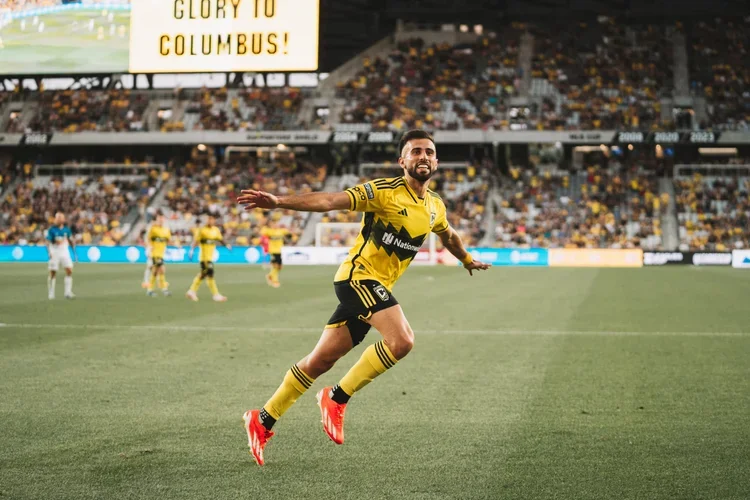
The one that you can kind of see, you can’t see it very well, but that is the winning goal of the League Cup final. It’s Jason Russell Rowe running to the fans to celebrate. We’ve got Cheba jumping on his back, and then Alex Maton kind of looking off to the side and smiling. And the angle of that photo, the smokes behind them, you can see the fans behind them going nuts, and it just it was just a moment of pure victory. And I kind of blacked out when I was shooting that. I don’t I just shudder, just shut up and shudder. That’s all I was doing. So I that happened to be.
TMac 39:20
I’m stealing that. I’m totally stealing that by the way. Shut up and shutter.
Claire 39:25
We had our new striker West scored his first home goal for the crew, and I just I’m like, just put your finger down and just hope for the best. So I was shooting for the tournament for that shot in specific specifics. Leagues Cup had me out for the entire tournament. So I got to be there for every single game and to be able to be on the sidelines for that moment. It’s my favorite, and to be down there with everybody celebrating and confetti and the cup and just all of it was it was surreal.
TMac 39:58
My experience in that kind of sort of realm was the opposite. In 1997, I was in Florida for game seven against I think it was ’97, Miami with the Cleveland Indians. And before the game, they assigned who was gonna go between the two of us that were doing handheld, who’s gonna go in what locker. And there was a guy from Florida and myself from Cleveland, and the director doesn’t know anything. And he says to me, I’m going in the Miami locker room, and he says to him, You’re going in the Cleveland locker room, and he gave us all our instructions, and we’re like, good. And he leaves, and the guy looks at me and he goes, I’ve been covering this team all year. I said, same thing. And he goes, He’ll never know. So we switched roles. So I was literally in the locker room when who’s the pitcher? Jose Maisto was snapping off 55-foot sliders, and I’m from that area, so I was like, Oh, this is not gonna end well. And I was just
TMac 41:05
Trying to figure out how to make my exit, but I had these delusions that I was gonna get the champagne and all the stuff. No, I got escorted out.
Claire 41:15
Yeah, I got for the MLS cup parade, I got champagne in the face, and I’m like, I’m good. I’m fine.
TMac 41:22
It’s actually not fun.
Claire 41:24
No, it I made a mark on one of my lenses. I was like, oh god, okay, whatever. I it was it was great. It’s I would have done it again, but getting it was kind of cold and just having champagne get sprayed at you. You’re like, oh gosh, no, now I’m sticky and I’m outside and it’s cold.
TMac 41:40
And yeah, I always tell people that photography is good for the soul. Tell me what photography is to you.
Claire 41:55
Oh gosh. Like I said earlier, soccer has been something that’s been a constant my entire life. And my favorite part of soccer, well, there’s two things, is like the mental, the mental game. I love watching the chess match happen on the field. And then the second part is it’s a game that kind of transcends cultures, it trains it transcends language barriers. I play pick up with a bunch of guys that don’t speak a lot of English, but we understand each other. And I just think that makes it the most beautiful game in the world. And be able to have the opportunity again to translate what I see on the field to people online or people on the social media accounts or fans of whoever may see my photos, and hopefully they see what I see is really special to me. And then another thing that I’ve noticed about photography is it’s made me appreciate little things more. I’ll be driving and I notice how the light comes through a tree, and I wouldn’t appreciate that otherwise. Like I see those little things, how lights coming through trees, or like how these colors on these people’s shirts are popping against the chairs that they’re sitting in, and it just has really made me kind of be in the moment more and not so autopilot, which is pretty easy, I feel like, to do now. So I really like to the observation of it all. I think you learn so much when you just kind of sit back and observe, and that’s what photography is to me, is just sitting back and learning and observing and appreciating the moment for what it is, and hopefully translating that to somebody else.
TMac 43:36
Ugh, so well said. There’s a spot on the far around the corner, so you’re looking west, and there’s
TMac 43:44
Those sort of triangular sections where the sun comes through, and at the right time it’s all orange back there. And then the yellow smoke, and man, there’s some just in that one spot. So even at the beginning, where I’m supposed to be around the on the end, I will sneak around the corner just so I can get down the line of the crazies, but that corner with the sun setting is just gorgeous.
Claire 44:15
Oh, yeah. I just got a fan shot over there a couple weeks ago. He’s in yellow, the sun’s coming through, it’s pretty harsh. It’s so it’s looking really yellow. Yellow smoke’s coming up. We just scored, so he’s really hazy, but you can almost like see his silhouette in the smoke. And I really I bumped that yellow on that because I just really liked how he looked so engulfed in it, both in sun and like drenched in this smoke. I thought it looked so cool, but that’s being able to like play around with light is so fun. I love the stadium lights on the it’s probably the east side, and just like sitting so low and having the players shooting up, and it’s just lights in black. That’s I have a photo of Cucho that I sent you. That’s one of my favorite photos. I just I love how that stadium is lit, it’s so fun to play with.
TMac 45:05
I call it dancing with light. It’s a dance. All right. Last question. Tell me what you would tell aspiring photographers, a you know, 17-year-old Claire, about what skills they should have, what they should know, attitudes about there’s a lot of people saying they want to work in this business, but what do you think they should work on or learn and or learn in this crazy media business?
Claire 45:48
Yeah, I think the big thing that I’ve taken out of this job and just kind of life in general of the short 26 years that I’ve been on this planet is being open to learn at all times, and being curious and being hungry
Claire 46:05
To learn. And that could be, I had interns that would always text me, I don’t care if I’ve never done video before and you need video help, if I want to learn, or teach me how to do this, or how did you come up with this? What was your thought process? How did you get to where you are? Just being innately really curious. And I also think taking that and running with it outside of sports and outside of whatever niche that you’re in, whether it’s design, photo, video. I love to read books, and I think that really translates into my photography because I love, I’ve always loved stories. A lot of my inspiration for design and photography comes outside of the sports world. So I’ve never really been into movies, but recently I’ve been watching more movies and going, why are they framing it like this? Why are they lighting it like this? Why are they using this music? What emotions are that in? What is like what are that, what is that eliciting in me? And how can I translate that to my work in sports? So I like to absorb and learn as much as I can all of the time. I think that kind of comes in with the innately curious part of me. I think that’s really important. And then also just like you have to work hard. You also have to work very smart. So you have to kind of position yourself to be in the right place at the right time, but also be willing to go and do the long hours and ask for more work and kind of put in the dirty, kind of gritty hours we’ve all had to put in. If you don’t want to do that, then sports probably isn’t the place for you, unfortunately.
TMac 47:45
Again, a great way to frame it. Wanting to learn. See, at the end of the day, you can’t beat that.
Claire 47:55
Yeah.
TMac 47:57
Claire, it’s been awesome having you on. Thank you for being a part of the project.
Claire 48:03
Thank you so much for having me. I love talking about this.
TMac 48:06
Yeah, man. See you on the pitch.
Claire 48:09
Yeah, I’ll see you soon.
TMac 48:16
Thanks again to the award-winning photographer, Claire Komerak. She’s the photographer for the Columbus crew and broadcast graphic designer for CBS Sports. You can check out all of her work on ClaireCamerack.com and on her IG, Claire Komerak Photo. Photo nerds. Are we looking for gear? A cool photography t-shirt? You can trick out your kit and your wardrobe in the shop. Use our affiliate links for small rig, Adorama, and Print Teak. Remember, anytime you make a purchase using our links, we may get a small commission that doesn’t affect the price of your item. The Zoom With Our Feed podcast is a production of TV Commando Media. Until next time, storytellers, the beauty of photography is it forces you to notice the little moments in life.
More From Claire